
Advice
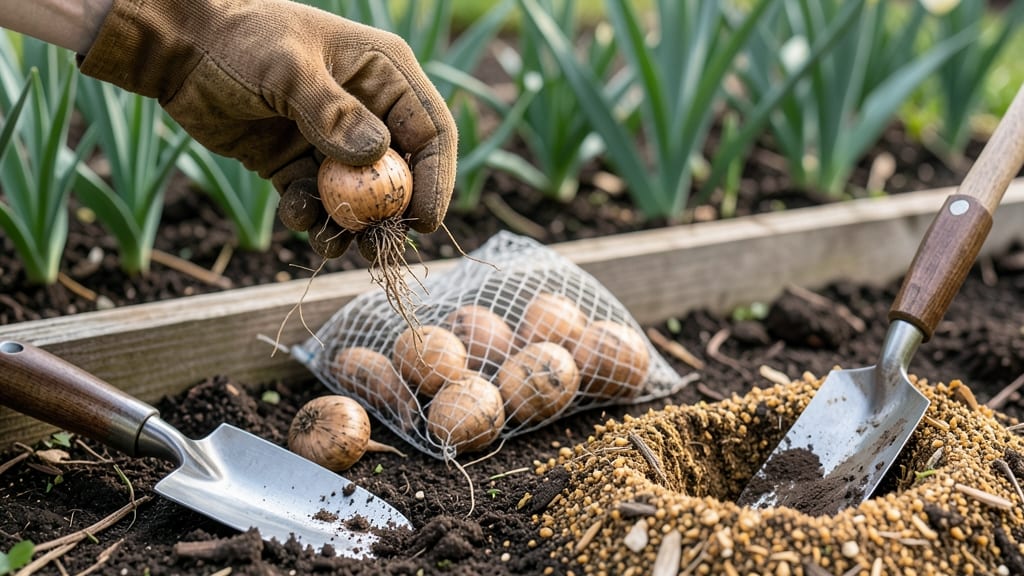
Yes, tulip bulbs can be replanted for next year’s blooms by carefully digging them up after foliage dies back, curing them in a dry place, and storing them in a cool, dark spot until spring planting. Proper timing and handling maximize regrowth potential.
Tulip bulbs store energy in their foliage during the growing season, which they need to produce strong blooms the following year. 🌱 Once the leaves turn yellow and wilt—typically 6-8 weeks after flowering—it’s time to dig them up.
I’ve found that waiting until the foliage completely browns and dies back reduces the risk of fungal diseases while ensuring the bulb has absorbed all the nutrients it needs. Store them in a well-ventilated area with temperatures between 40-50°F until replanting in fall, when soil temperatures drop below 60°F.
Proper replanting depth is crucial—place bulbs 6-8 inches deep, with the pointed end facing upward, in loose, well-draining soil. 🌿 Adding a 2-inch layer of compost at planting time gives bulbs a nutrient boost for next season.
Many gardeners mistakenly assume tulips need full sun year-round, but they actually benefit from partial shade during the summer months to prevent premature bulb drying.
💡 In This Article
- When and Why to Replant Tulip Bulbs
- Step-by-Step Guide to Replanting Tulip Bulbs
When and why to replant tulip bulbs
The biological process behind replanting tulip bulbs begins with their natural dormancy cycle. Tulips store energy in their foliage during the growing season, which they convert into nutrients for next year’s blooms. This process, called photosynthesis, continues even after the flowers fade—through the green leaves.
When you see those leaves turn yellow and wilt (usually 6-8 weeks after flowering), it signals the bulb has absorbed all the energy it needs for dormancy. 🌱
Timing is everything—replanting too early can leave bulbs vulnerable to rot, while waiting too long risks losing their stored energy. The ideal window is late summer or early fall, when soil temperatures drop below 60°F. This mimics the natural cooling period tulips experience in their native habitats, triggering dormancy.
In my experience, bulbs dug up when foliage is 60-70% brown (not completely dead) have the highest regrowth success rates. The key is balance: enough time for nutrient absorption, but not so late that the bulb weakens.
Why does this matter? Tulips are biennial perennials, meaning they need two growing seasons to reach full bloom potential. If you replant too soon, the bulb may not complete its energy storage cycle, resulting in smaller or fewer flowers next spring.
Conversely, leaving bulbs in the ground too long can lead to fungal infections or pest damage. The foliage acts like a solar panel—keeping it until it naturally dies back ensures your bulbs get the full photosynthetic boost they need for vibrant blooms. 💫
Another critical factor is the bulb’s natural defense mechanism against disease. When foliage dies back completely, it signals the bulb to harden off, forming a protective layer that prevents moisture loss and fungal entry points.
This is why I always recommend waiting until the leaves are fully brown and crispy before digging—it’s nature’s way of preparing the bulb for storage. The same principle applies to garlic and onions, which also rely on foliage for energy storage before dormancy.
Consider the climate too—bulbs in warmer zones (USDA zones 7-9) may need earlier replanting (late summer) compared to cooler zones (zones 3-6), where fall planting works better. The goal is to mimic the bulb’s natural cycle: a period of active growth followed by a cool, dry dormancy phase.
This rhythm is what allows tulips to thrive year after year with minimal effort from gardeners. 🌿
What most people don’t realize is that tulip bulbs actually increase in size when replanted correctly. Each year, a healthy bulb produces new smaller bulbs (called offsets) around its base. These offsets can be separated and replanted to create new plants.
This natural propagation is why tulips can multiply over time—if you replant with care, you might end up with twice as many bulbs in just a few seasons! The key is giving them the right conditions to focus their energy on growth rather than defense.