
Transplanting
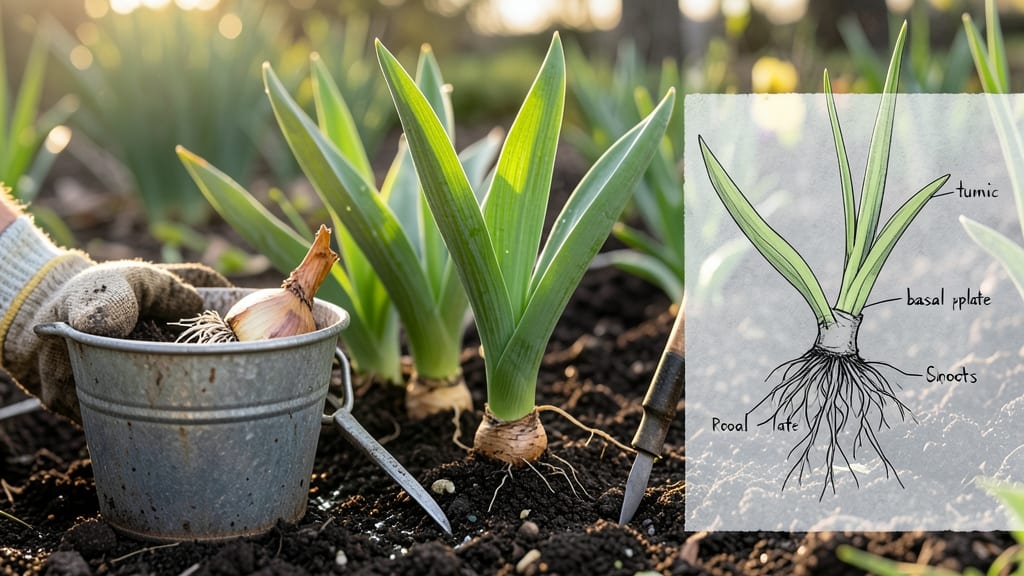
You can move bulbs while they are growing, but timing is critical: transplant during early growth (before leaves appear) or after flowering to reduce stress, and always water deeply before and after moving.
Bulbs develop delicate root systems that make them particularly vulnerable during active growth phases. 🌱 The key is understanding their natural cycles—roots are least stressed when bulbs are either just waking up in early spring or have finished blooming in late summer.
I've found that waiting until foliage fully matures (when leaves turn yellow) is another safe window, as the bulb has already stored nutrients for next season. The goal is always to minimize root disruption while ensuring the plant has enough energy to recover.
What separates successful bulb transplants from failed ones is preparation. Using a sharp spade to lift bulbs with intact soil clumps preserves root integrity, while amending the new planting area with compost creates an ideal environment for recovery.
I recommend marking the transplant location if you're unsure where you're moving them—bulbs often take 2-3 weeks to show signs of adjustment, and patience is just as important as technique.
💡 In This Article
- When and Why Bulb Root Systems Are Most Transplant-Friendly
- Step-by-Step Bulb Transplanting Guide for Minimal Stress
When and why bulb root systems are most transplant-friendly
Bulbs follow a predictable growth cycle where root development happens in distinct phases.
The most critical window occurs during early spring when roots begin forming but foliage hasn't emerged yet—this is when bulbs have stored enough energy to support new growth while still being flexible enough to adapt to new environments.
The root system at this stage is typically 1-2 inches deep and fibrous, making it easier to relocate without severe damage. 🌱 What's happening biologically is that the bulb is transitioning from dormancy, and its metabolic rate increases just enough to handle minor stress.
Flowering marks another safe period because the bulb has already allocated resources to blooms and foliage, meaning it's less dependent on new root growth for immediate survival. After flowering, bulbs enter a nutrient-storage phase where they're actively converting leaf energy into bulb reserves.
This makes them more resilient to transplanting, as they're preparing for dormancy anyway. The key difference between these stages is energy allocation: early growth focuses on root expansion, while post-bloom prioritizes storage—both phases offer different advantages for successful relocation.
The science behind root shock explains why timing matters so much. When you disturb roots during active growth (when leaves are fully emerged), you're interrupting the plant's water and nutrient uptake systems.
Bulbs like daffodils or tulips can lose 30-50% of their root mass during improper handling, significantly reducing their ability to recover.
The ideal transplant scenario maintains at least 70% of the original root structure, which is why lifting bulbs with a soil ball is so effective—it preserves that critical root network while minimizing exposure to air and light.
Seasonal variations also play a role in transplant success rates. Spring transplants benefit from warmer soil temperatures that encourage faster root regrowth, while fall transplants take advantage of cooler conditions that reduce water loss.
I've observed that bulbs transplanted in early fall (September-October) often establish better because they have several weeks to develop new roots before winter dormancy. The opposite is true for late summer transplants, which may struggle if moved too close to frost.
Consider the example of hyacinths: when transplanted immediately after flowering (late May-June), they typically recover within 4-6 weeks because their energy is already directed toward bulb expansion rather than foliage maintenance. In contrast, moving them during peak bloom (April) can result in 50% flower loss next season due to stress.
The lesson here is that bulbs have built-in resilience during specific growth phases—understanding these windows is what separates successful gardeners from those who struggle with bulb transplants.
One advanced technique I've found effective is the "root pruning" method for larger bulbs like dahlias. By carefully trimming 1/3 of the root mass during transplanting, you encourage the plant to focus its energy on developing a more compact, robust system in the new location.
This works particularly well for bulbs with extensive root networks that might otherwise become tangled during relocation. 💫