
Orchid Care
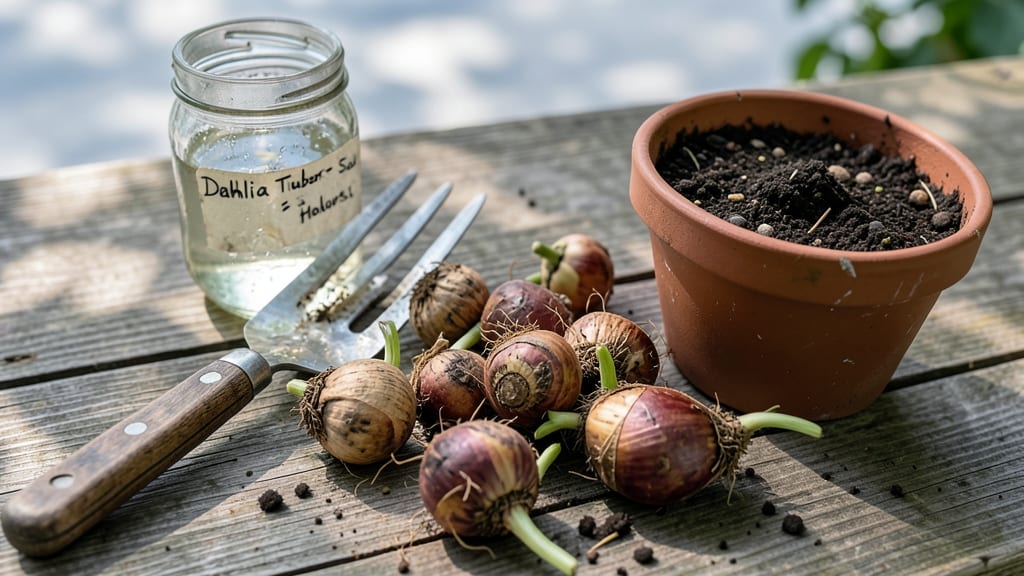
Dahlia bulbs are technically perennial plants, but their tuberous roots make them behave like annuals in cold climates unless you take steps to protect them through winter.
Dahlias thrive as perennials in frost-free zones because their thick, fleshy tubers store nutrients to regrow each spring. 🌱 However, when temperatures drop below 30°F, the tubers freeze and die—unless you dig them up before the first frost.
This is why gardeners in colder regions treat them like annuals, replanting fresh tubers each season. The key difference lies in their underground storage system: while true perennials like peonies have hardy root systems, dahlias rely on delicate tubers that need careful handling to survive winter.
Even in mild climates, proper overwintering extends your dahlias' lifespan. I've seen gardeners in Zone 7 successfully regrow the same varieties for decades by storing tubers in dry, cool conditions.
The trick is timing—dig them after the first frost blackens the foliage but before the ground freezes solid. Without this care, you'll lose your prized dahlias to winter's chill.
💡 In This Article
- Dahlia Growth Cycle: Why They’re Perennial in Warm Climates
- Step-by-Step Guide to Overwintering Dahlia Tubers
Dahlia growth cycle: why they’re perennial in warm climates
Dahlias are classified as tuberous perennials because their underground storage organs—thick, fleshy tubers—store carbohydrates and nutrients during dormancy, enabling regrowth each spring. Unlike true perennials with woody stems (like peonies), dahlias rely entirely on these tubers for survival.
When temperatures stay above 30°F year-round, the tubers remain active, sprouting fresh shoots in early spring without human intervention. This natural cycle explains why they thrive as perennials in frost-free zones like Zone 10 or coastal regions.
The magic happens in their dormancy period, triggered by shortening daylight and cooler temperatures. During this phase, the plant redirects energy from leaves to tubers, which swell with stored starches—similar to how potatoes develop in the soil.
What sets dahlias apart is their sensitivity to frost: tubers contain 80-90% water, which expands and ruptures cell walls when frozen, causing irreversible damage.
Even a light frost (28°F) can kill tubers left in the ground, which is why gardeners in colder zones must act before winter sets in.
Consider the Café au Lait variety—a popular dinner-plate dahlia with creamy yellow blooms. In Zone 7, this plant will naturally regrow from its tubers each spring if left undisturbed, producing flowers by mid-July without replanting.
The key difference between perennial behavior and annual treatment comes down to climate: in warmer areas, the tubers survive winter's chill naturally, while colder regions require human intervention to mimic these conditions indoors.
What most gardeners don't realize is that dahlias actually produce multiple tubers per plant—each capable of growing into its own mature specimen. These "pups" form along the main tuber's base, creating a natural propagation system.
In ideal conditions, a single dahlia plant can generate 5-10 tubers by fall, each storing enough energy to support a full-sized plant the following season. This biological adaptation explains why dahlias can become garden staples when properly cared for.
The science of tuber development involves a fascinating interplay between photosynthesis and starch conversion. During the growing season, leaves capture sunlight to produce sugars, which are transported to the tubers and converted into insoluble starch for storage.
This process peaks in late summer when daylight shortens, signaling the plant to prepare for dormancy. The resulting tubers can weigh between 2-10 ounces depending on variety and growing conditions—a testament to nature's efficient energy storage system.
For gardeners in transitional zones (Zone 6-8), understanding this cycle helps explain why some years produce stronger regrowth than others. A mild winter with temperatures hovering around 25°F might allow tubers to survive in the ground, while a harsh freeze (15°F) will require digging.
The key takeaway is that dahlias aren't inherently annual—they're perennials adapted to warm climates, and with proper care, they can thrive year after year in any garden.