
Orchid Care
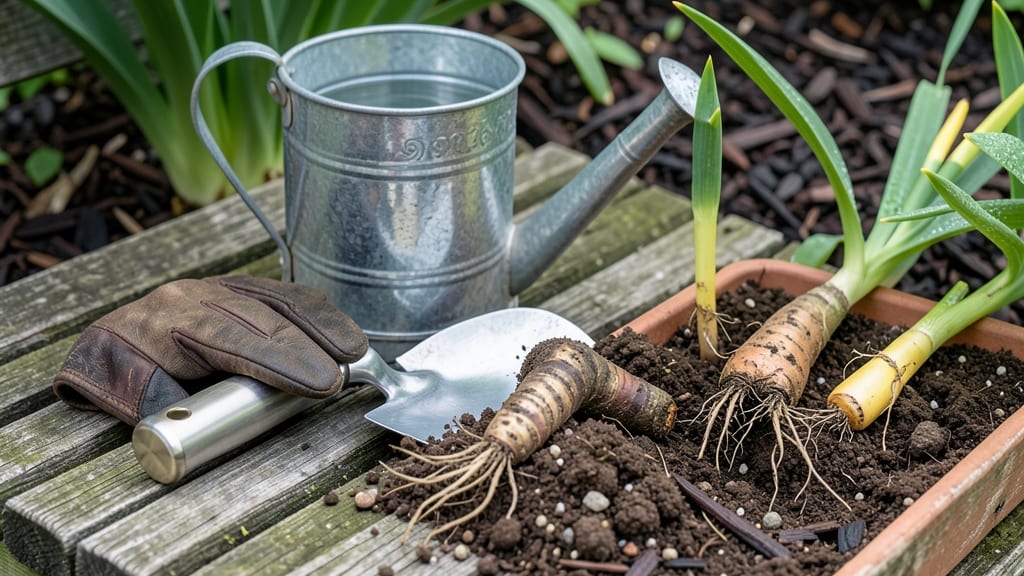
Iris bulbs are actually rhizomes—thick, horizontal root systems that store nutrients and allow these plants to thrive for years with minimal care. Their hardy nature means they'll regrow annually in the right conditions, producing striking blooms each spring and summer when planted correctly in well-drained soil and full sunlight.
These rhizomes act like nature's built-in survival system. Unlike true bulbs that store energy underground in a round shape, iris rhizomes spread horizontally, developing fibrous roots along their length.
This design lets them absorb moisture and nutrients efficiently while resisting rot when planted at the right depth—about 2 inches below soil with the crown exposed. 🌱 The key to their perennial success lies in this balance: too deep, and they'll suffocate; too shallow, and they'll dry out.
Many gardeners discover their irises multiply naturally over time, creating dense clumps that return year after year with proper winter mulching.
What makes irises particularly resilient is their dormancy cycle. After blooming, the foliage yellows and dies back—this isn't a sign of failure, but rather the plant's way of conserving energy for next season. Cold-hardy varieties like bearded irises actually benefit from winter's chill, which helps break dormancy in spring.
The secret to long-term survival isn't complicated: give them good drainage, full sun, and a little winter protection, and these perennials will reward you with vibrant blooms for decades.
💡 In This Article
- Why Iris Rhizomes Survive as Perennials
- Optimal Planting Depth and Soil for Long-Term Iris Growth
Why iris rhizomes survive as perennials
The secret to iris rhizomes' perennial success lies in their unique underground structure. Unlike true bulbs like tulips, which store nutrients in a compact, rounded shape, iris rhizomes grow horizontally and develop fibrous roots along their length.
This horizontal spread allows them to anchor deeply while maintaining flexibility—critical for withstanding seasonal soil shifts without breaking. The fibrous roots also create a vast network for absorbing water and nutrients, making them far more drought-resistant than true bulbs.
What most gardeners don't realize is how this rhizome structure prevents rot. When planted at the correct 2-inch depth with the crown exposed, excess moisture drains away from the critical growth zone.
The exposed crown dries between rainfalls, while the rhizome's thick, fleshy texture stores enough moisture to survive dry spells. This design contrasts sharply with true bulbs, which require complete soil coverage to prevent drying out—making irises far more forgiving for beginners.
Their dormancy cycle is another survival superpower. After blooming, the foliage yellows and dies back—a natural process that conserves energy for next season. Cold-hardy varieties like bearded irises actually need winter's chill to break dormancy in spring.
This vernalization process (a cold requirement for flowering) explains why irises planted in warm climates may bloom less reliably. The key difference from true bulbs is that iris rhizomes can regenerate from just a small piece left in the soil, while true bulbs need their entire structure intact.
Consider this comparison: A tulip bulb stores all its energy in one place, making it vulnerable to rot if planted too deep or frozen if exposed. An iris rhizome, however, spreads its risk—if one section fails, others continue growing.
This redundancy is why established iris beds can thrive for decades with minimal intervention, while tulip beds often require annual replanting. The trade-off? Iris rhizomes need that precise 2-inch planting depth—any deeper, and they suffocate; any shallower, and they dry out.
Here's what's actually happening underground during winter: The rhizome's thick skin acts as insulation, protecting it from freezing temperatures. Meanwhile, the fibrous roots remain active in mild winters, absorbing any available moisture. This dual system explains why irises often outlast other perennials in harsh climates.
For example, in Zone 5 gardens, bearded irises return year after year with proper winter mulching, while many true bulbs require annual digging and storage.
The science behind their longevity also involves their growth habit. Iris rhizomes grow 1-2 inches per year, naturally outpacing soil compaction. This gradual spread creates dense clumps that shade out weeds while maintaining excellent airflow—critical for preventing fungal diseases.
The contrast with true bulbs couldn't be more striking: While tulips produce one bloom stalk per bulb, a mature iris rhizome can produce 5-10 stems from a single planting. 🌱