
Orchid Care
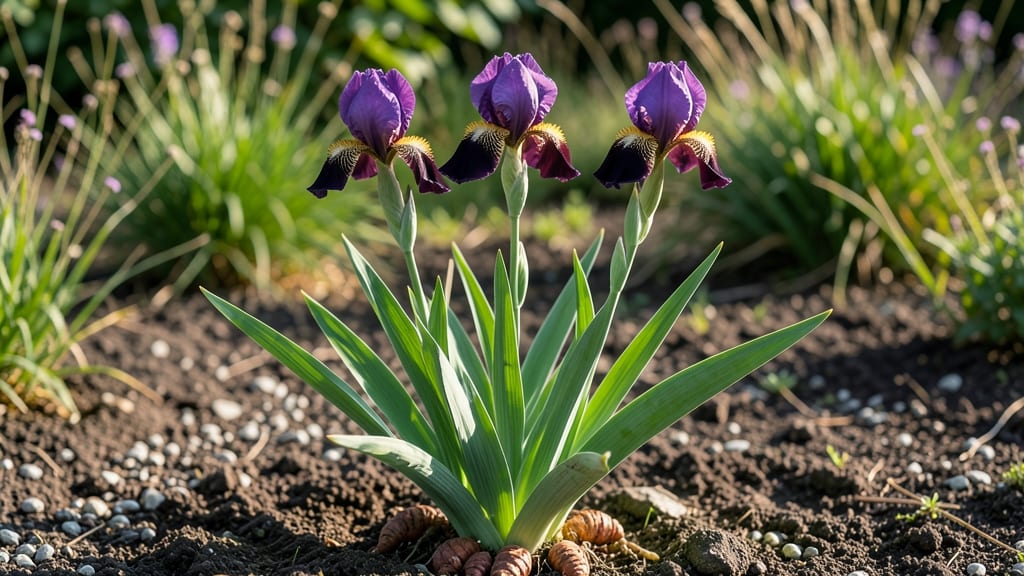
Irises aren't bulbs—they grow from thick, fleshy rhizomes that spread horizontally just below the soil, storing nutrients for their seasonal blooms and robust regrowth each year.
This distinction matters because rhizomes behave differently than traditional bulbs like tulips.
Unlike bulbs that store nutrients underground in rounded structures, iris rhizomes grow horizontally, forming thick, knobby stems that spread outward. 🌱 They don't go dormant completely—they stay semi-active, which is why they bloom reliably year after year with proper care.
The rhizome's position just below the soil surface also means they need specific planting techniques to thrive, including proper spacing and exposure to sunlight.
Many gardeners confuse irises with bulbs because of their similar above-ground blooms, but their underground growth habits require completely different care approaches. For example, while you'd plant a tulip bulb 6-8 inches deep, iris rhizomes should sit partially exposed to sunlight to prevent rot.
Understanding this difference helps explain why some gardening advice for bulbs doesn't work for irises—and why they often outperform other perennials in long-term garden performance.
💡 In This Article
- How Iris Rhizomes Differ From True Bulbs
- Dividing and Planting Iris Rhizomes for Long-Term Growth
How iris rhizomes differ from true bulbs
Iris rhizomes are actually thick, fleshy underground stems that grow horizontally just below the soil surface, unlike true bulbs which form rounded, layered structures.
These rhizomes store nutrients in their thick, knobby segments—each node can produce new growth, creating a network that spreads outward over time. 🌱 For comparison, a tulip bulb stores energy in concentric layers, while an iris rhizome distributes nutrients along its length, allowing it to send up multiple shoots from different points.
The rhizome's position—typically only 1-2 inches below soil level—means it needs partial exposure to sunlight to prevent rot, unlike bulbs that thrive when completely buried. This shallow planting also explains why irises often bloom more reliably than bulbs: their rhizomes stay semi-active year-round, only entering a brief dormancy after flowering.
True bulbs, like daffodils, go through a deeper dormancy cycle, requiring more precise timing for planting and watering.
Another key difference is how they multiply. Iris rhizomes naturally divide and spread, creating new plants along their length—this is why established clumps often need dividing every 3-5 years. True bulbs, however, multiply primarily through offsets (small bulbs that form around the parent bulb), a slower process.
The rhizome's horizontal growth also makes irises more resilient: even if part of the plant is damaged, remaining segments can regenerate, whereas a damaged bulb may not recover.
Soil contact plays a crucial role too. Rhizomes need well-draining soil to prevent rot, while bulbs can tolerate slightly more moisture retention. This is why gardeners often amend planting areas with gritty materials like sand or perlite when establishing irises—a practice that wouldn't benefit bulb plants.
The rhizome's structure also means it can handle warmer soil temperatures better than bulbs, which is why irises often bloom earlier in spring.
Consider the classic bearded iris: its rhizome can reach 12-18 inches in length over time, with each segment capable of producing a new fan of leaves and flower stalk. This sprawling growth habit contrasts sharply with bulb plants that remain compact.
The rhizome's ability to photosynthesize slightly through its exposed top further explains why it thrives in partial sun conditions that would stress bulb plants.
Understanding these differences helps explain why traditional bulb-care advice often fails with irises. For example, over-mulching can smother rhizomes, while bulbs benefit from thick winter mulch. The rhizome's horizontal spread also means it competes differently with surrounding plants—a factor that affects both spacing requirements and weed control strategies. 💫