
Planting
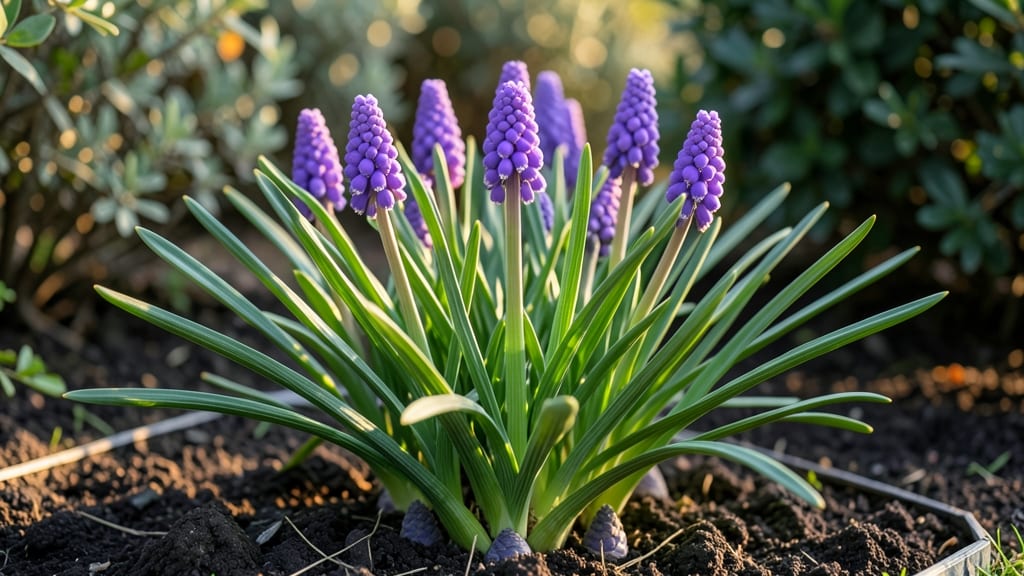
Planting grape hyacinth bulbs (Muscari armeniacum) is like adding a splash of bold blue to your shady garden corners—just drop them in the fall and watch them multiply. 💙 I’ve grown these for years, and they’ve become my go-to for filling gaps under trees or along fences where other plants struggle.
The secret? They’re tougher than they look, thriving where most bulbs give up, and their grape-like clusters of flowers smell faintly sweet when you brush past them.
You’ll need well-draining soil (even clay works if amended with compost) and partial to full shade—they’ll even grow under evergreens. Plant bulbs 6 inches deep and 3 inches apart in fall, about 6-8 weeks before the ground freezes.
No fancy prep needed; just dig, drop, and cover. They’ll naturalize over time, spreading into cheerful carpets of blue that bloom in late spring, often when little else is flowering.
Water them lightly after planting, then let nature take over—they’re drought-tolerant once established. Deer and rodents usually leave them alone, and they rarely need dividing (though you can split clumps every 3-4 years if they get too crowded).
The flowers may fade, but the sword-like foliage stays neat and tidy until summer, making them a low-maintenance star.
Pair them with hostas, ferns, or hellebores for a shade-loving dream team. They’ll come back year after year, proving that shade gardens can be just as vibrant as sunny ones—with zero effort. Ready to try them?
📚 In This Guide
- What you need
- Instructions
- Tips and common mistakes
- Wrapping up and next steps
What you need
- ● Grape Hyacinth Bulbs (Muscari armeniacum): Quantity: 10–20 bulbs (for a small cluster) or 50+ bulbs (for a bold, naturalized look). Size: Medium to large bulbs (1.5–2 inches in diameter) for best blooms.
- ● Well-draining potting mix or garden soil: For containers: Use a light, airy mix (e.g., 60% potting soil + 30% perlite + 10% compost). For ground planting: Amend heavy clay soil with compost or sand to improve drainage.
- ● Planting location: Partial to full shade (3–6 hours of sunlight max). Protect from strong winds (they prefer sheltered spots).
- ○ Garden trowel or bulb planter (for digging). Gloves (to protect your hands—those bulbs can be tough!). Watering can or hose with a gentle spray nozzle (avoid soaking the soil). Mulch (optional): 2–3 inches of shredded bark or straw to retain moisture and suppress weeds. Fertilizer (optional): Balanced 10-10-10 fertilizer (sprinkle lightly at planting time). Bone meal (for extra phosphorus to encourage blooms).
- ● Container with drainage holes (if planting in pots): Minimum size: 6-inch diameter for 3–5 bulbs (or larger for more).
Step-by-step instructions for planting grape hyacinth bulbs
Here’s how to create stunning blue clusters that multiply year after year with minimal effort.
🌱 Step 1: Choose the Perfect Planting Location
Grape hyacinths thrive in partial to full shade, making them ideal for under trees or along north-facing foundations. I always test the spot by placing a white plate where I plan to plant—if it stays mostly shaded by midday, it’s perfect. Avoid soggy areas; their bulbs rot easily in waterlogged soil.
These bulbs tolerate a range of soil types but prefer well-draining, slightly alkaline conditions. If your soil is heavy clay, mix in 2-3 inches of compost to improve drainage. The key is mimicking their natural woodland habitat—moist but never waterlogged, with dappled sunlight filtering through.
🌱 Step 2: Prepare the Soil and Plant at the Right Depth
Loosen the soil to a depth of 8-10 inches with a garden fork, breaking up any compacted layers. Grape hyacinth bulbs should sit 4-6 inches deep, about 3 times their diameter. Planting too shallow risks frost heave in winter, while burying them too deep delays blooming.
Space bulbs 3-4 inches apart in rows 6 inches apart for a dense, carpet-like effect. I like to plant them in clusters of 5-7 bulbs to create natural-looking drifts. After placing each bulb, backfill with soil and press gently to remove air pockets—this ensures roots make immediate contact with moisture.
💧 Step 3: Water and Mulch for Winter Hardiness
Water the planting area deeply right after planting to settle the soil and encourage root growth. Keep the soil evenly moist but not soggy for the first 2-3 weeks, which helps roots establish before dormancy. Once leaves yellow in late summer, reduce watering—this signals the bulbs to prepare for winter.
Apply a 2-inch layer of mulch (like shredded bark or pine needles) after the first frost to insulate the soil. This protects bulbs from temperature swings and prevents heaving. In spring, remove the mulch once shoots emerge—you’ll see narrow, grass-like leaves before the familiar blue clusters appear.
☀️ Step 4: Maintain Through the Growing Season
Grape hyacinths need minimal care once established. Fertilize lightly in early spring with a balanced, slow-release fertilizer (like 10-10-10) to support blooming. Too much nitrogen produces lush foliage but fewer flowers—stick to the recommended rate on the package.
Deadhead spent blooms by snipping the flower stalks at the base with clean pruners. This redirects energy to bulb division rather than seed production. By mid-summer, the foliage will yellow naturally—never cut it back until it browns completely. This ensures the bulbs store enough nutrients for next year’s display.
⏰ Step 5: Divide and Expand Every 3-4 Years
These bulbs multiply aggressively, so dig up and divide clumps in early fall or spring when foliage is dormant. Lift the entire cluster with a fork, then separate individual bulbs by gently pulling them apart. Discard any that are soft, moldy, or shriveled—healthy bulbs feel firm and papery-skinned.
Replant the divisions immediately in fresh soil, following the same depth guidelines. You’ll often find dozens of new bulbs from a single clump—enough to share with neighbors or expand your garden’s blue accents. Overcrowding reduces flower size, so dividing keeps displays vibrant and full.
Tips & tricks for perfect grape hyacinth plantings
These simple strategies will help your grape hyacinths thrive and multiply beautifully year after year.
Location Secret: The white plate test is your best friend for finding the perfect spot. Place it where you plan to plant and check it every few hours—if it stays mostly shaded by midday, you’ve found your ideal location. I’ve learned this the hard way after watching grape hyacinths struggle in areas that seemed shady but actually got too much sun in the afternoon.
Soil Preparation: When loosening soil to 8-10 inches deep, focus on breaking up any compacted layers while leaving the natural soil structure intact. Think of it like fluffing a pillow—you want to create space for roots without destroying the soil’s natural composition. This careful approach prevents disturbing the bulb’s delicate root system during planting.
Planting Depth: The 4-6 inch depth guideline is crucial for preventing frost heave and ensuring timely blooming. To visualize this, imagine your bulb sitting at about three times its diameter. If you’re unsure, plant slightly deeper rather than shallower—it’s easier to fix depth issues later than to deal with frost damage or delayed blooms.
Watering Wisdom: During those first 2-3 weeks after planting, aim for consistently moist soil—think of a well-wrung sponge. Overwatering can lead to bulb rot, while underwatering stresses the plants. I set a reminder on my phone to check moisture levels daily during this critical establishment period. A simple finger test (inserting your finger 1-2 inches into the soil) works perfectly.
Pro Tips for Grape Hyacinth Bulbs Muscari Armeniacum
- These simple strategies will help your grape hyacinths thrive and multiply beautifully year after year.
- Location Secret: The white plate test is your best friend for finding the perfect spot.
- Soil Preparation: When loosening soil to 8-10 inches deep, focus on breaking up any compacted layers while leaving the natural soil structure intact.
Frequently asked questions
Got questions about growing Muscari armeniacum? You’re not alone! Here are some of the most common queries—and their easy answers—to help you cultivate stunning grape hyacinths with confidence.
How deep should I plant grape hyacinth bulbs?
Plant Muscari armeniacum bulbs 3–4 inches deep, with the pointed end facing upward. Since they thrive in cooler soil, deeper planting helps protect them from harsh winters. For rocky or shallow soil, a depth of 2–3 inches still works—just add a light mulch layer for extra insulation.
When is the best time to plant grape hyacinth bulbs?
Fall is the ideal time (6–8 weeks before the ground freezes). For zones 7–9, aim for October–November. In colder climates (zones 3–6), plant in September to allow roots to establish before winter. Spring planting is possible but may delay flowering—bulbs need time to naturalize!
How often should I water grape hyacinth bulbs?
Water sparingly after planting to encourage root growth, but avoid soggy soil—these bulbs hate rot! Once established, they’re drought-tolerant. During flowering (spring), a weekly deep watering keeps them vibrant. After foliage dies back, reduce watering entirely until fall.
Can grape hyacinths grow in full shade?
Muscari armeniacum thrives in partial to full shade (2–6 hours of sun daily). They’re perfect for under trees, along north-facing walls, or in woodland gardens. Just ensure the soil drains well—shady spots can get waterlogged, which harms bulbs. A mulch layer helps regulate moisture.
Why aren’t my grape hyacinths blooming?
No flowers? Check these fixes:
- Insufficient sunlight: Move to a slightly sunnier spot (even morning sun helps).
- Overcrowding: Divide bulbs every 3–4 years to prevent competition.
- Poor soil: Amend with compost for better nutrients.
- Too young: Bulbs often need 1–2 years to establish before blooming.
Patience pays off—once happy, they’ll reward you with months of blue clusters!
Wrapping up and next steps
Transforming your shady garden into a vibrant blue paradise with grape hyacinth bulbs (Muscari armeniacum) is easier—and more rewarding—than you think! These hardy, low-maintenance beauties bring effortless charm with their striking clusters, perfect for adding height, texture, and bold color to even the trickiest spots.
Whether you’re a seasoned gardener or a beginner, their resilience and adaptability make them a must-have for any shade-loving palette.
Ready to dive in? Start small—plant a few bulbs in a pot or along a pathway—and watch your confidence (and your garden!) grow.
Before you know it, you’ll be experimenting with bold combos, sharing tips, and maybe even gifting these little blue wonders to fellow plant lovers. Your future shade garden is waiting—go make it pop! ✨