
Watering
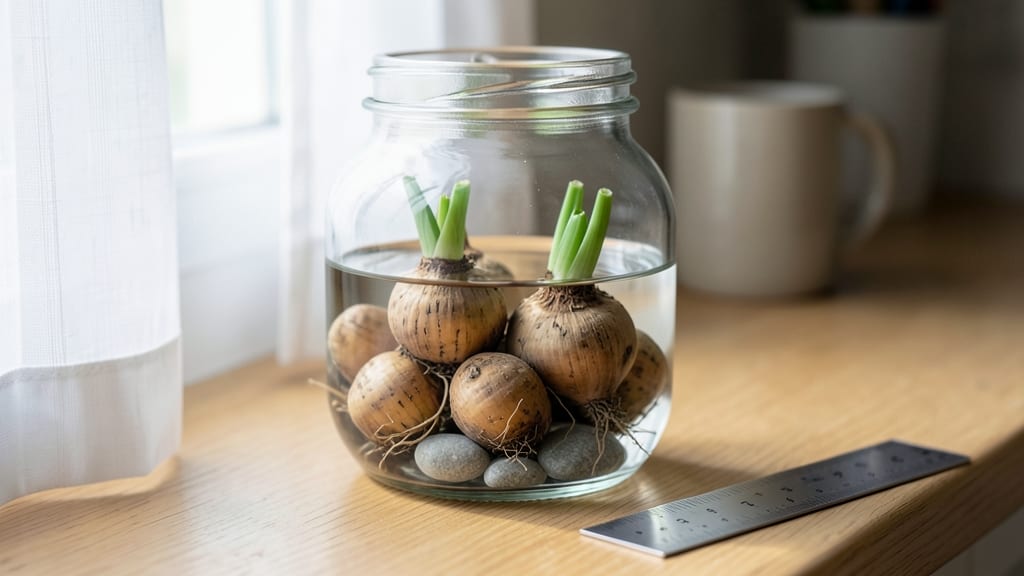
You can put tulip bulbs in water to grow them without soil, but they’ll produce fewer blooms than when planted in garden beds. Use a clear vase with pebbles, change water weekly, and place in bright indirect light for best results.
Growing tulip bulbs in water is a fascinating way to observe their natural growth process without the commitment of planting in soil. 🌱 The bulbs absorb moisture through their base, encouraging root development that eventually supports stem growth—though the blooms will be smaller and shorter-lived compared to garden-planted tulips.
This method is perfect for indoor enthusiasts who want to enjoy the beauty of tulips year-round in a controlled environment.
For best results, select firm, healthy bulbs and place them in a clear vase filled with clean water and decorative pebbles to keep them stable. Tulips thrive in bright, indirect sunlight, so a spot near an east-facing window is ideal.
Remember to refresh the water every 3-4 days to prevent bacterial growth, which can weaken the stems and shorten the plant's lifespan.
💡 In This Article
- How Water-Grown Tulip Bulbs Work and What to Expect
- Step-by-Step Guide to Growing Tulips in Water at Home
How water-grown tulip bulbs work and what to expect
The magic of growing tulip bulbs in water lies in their natural ability to absorb moisture through their basal plate—the flat bottom where roots emerge. Unlike soil-grown bulbs that rely on capillary action to draw up water and nutrients, water-grown tulips depend entirely on direct hydration.
This process triggers the bulb's dormant cells to activate, producing roots that can grow 1-2 inches per week under ideal conditions. However, the trade-off is that without soil's nutrient reservoir, the stems develop weaker structural support, typically reaching only 12-18 inches tall compared to 24-36 inches for garden-planted varieties.
The biological mechanism involves osmosis: water molecules move into the bulb's cells through the basal plate, creating turgor pressure that pushes the stem upward. Without soil's microbial activity and organic matter, the bulb lacks access to essential nutrients like phosphorus and potassium, which are crucial for robust flower development.
This explains why water-grown tulips often produce smaller blooms (2-3 inches wide) that last only 3-5 days instead of the 5-7 days seen in soil-grown specimens. The lack of mycorrhizal fungi—beneficial soil microbes—also limits the bulb's ability to store energy for future growth.
What's fascinating is how the bulb's energy allocation shifts when grown in water. Normally, 60-70% of a tulip's energy goes toward root and stem development in soil, with the remainder supporting flower production.
In water, this ratio flips: up to 80% of the bulb's energy focuses on root growth to stabilize the plant, leaving minimal resources for blooming. This is why you'll often see lush green foliage but sparse, underdeveloped flowers—a clear trade-off for the convenience of indoor growing.
Light plays a critical role in this process too. Tulip bulbs need 12-14 hours of daylight to trigger flowering, but they're sensitive to direct sunlight which can scorch their delicate petals.
In water, the stems become more prone to bending under their own weight without soil's structural support, so positioning the vase near a bright, indirect light source (like an east-facing window) helps maintain upright growth.
The lack of soil also means the bulb can't regulate temperature as effectively, making it more vulnerable to sudden drafts or heat fluctuations.
One surprising benefit of water-growing is the accelerated growth timeline. While soil-planted tulips may take 6-8 weeks to bloom, water-grown varieties often sprout roots within 3-5 days and can produce stems in as little as 2-3 weeks.
This rapid development makes water-growing ideal for forcing bulbs indoors during winter months when natural light is scarce. However, the blooms will typically last only half as long as their soil-grown counterparts due to the bulb's depleted energy reserves.
For those expecting garden-quality blooms, water-growing is a compromise—but one that offers unique rewards. The process reveals the bulb's inner workings in real time, from root emergence to stem elongation, making it an educational experience.
Plus, the smaller blooms often develop more vibrant colors due to concentrated pigment production in the limited available energy. 🌸
If you're considering this method, remember that water-grown tulips are a one-time display. Unlike soil-planted bulbs that can be left in the ground to multiply, water-grown bulbs typically won't survive long enough to regrow—making each vase a temporary but beautiful centerpiece.