
Advice
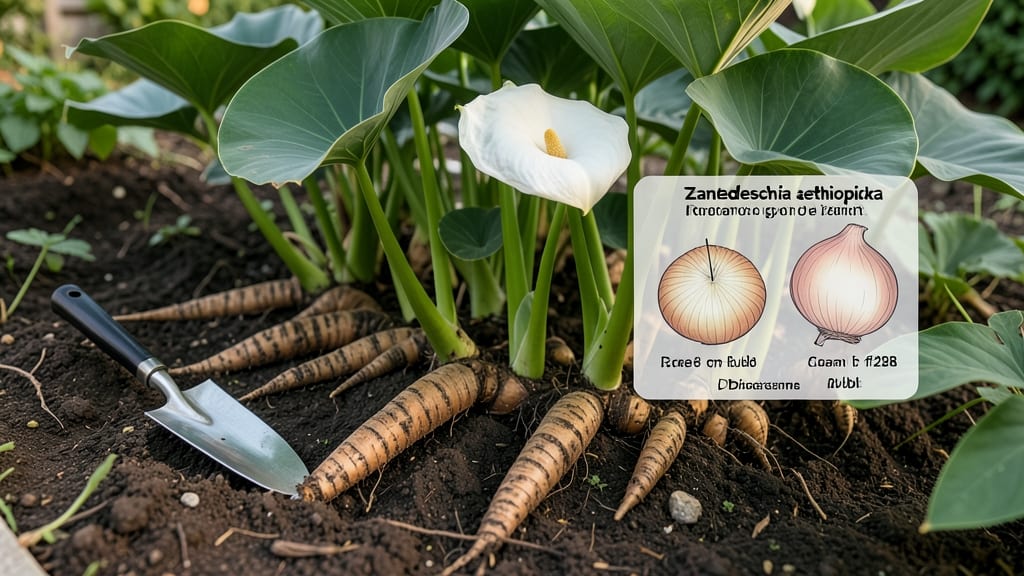
Calla lilies do not have bulbs—they develop from thick, fleshy rhizomes that store nutrients and produce new growth each season, making them hardier and easier to propagate than bulb-based plants.
These underground stems spread horizontally, unlike bulbs that grow vertically, which explains why calla lilies thrive in similar conditions year after year. 🌱 The rhizome system allows them to regenerate from small fragments, a trait that makes division and replanting straightforward for gardeners.
Unlike bulb plants that need complete dormancy, calla lilies stay semi-active through mild winters, which is why they're perfect for both containers and garden beds in zones 8-11.
When planting, place rhizomes just below soil level—never bury them too deep—and space them 12-18 inches apart to prevent overcrowding. The key is keeping the soil consistently moist but well-draining, as soggy conditions can rot these nutrient-rich stems.
I've found that adding a layer of mulch helps maintain even moisture while protecting the rhizomes from temperature swings.
💡 In This Article
- How Calla Lily Rhizomes Differ From Bulbs
- Planting and Caring for Calla Lily Rhizomes
How calla lily rhizomes differ from bulbs
Calla lilies rely on rhizomes—thick, horizontal underground stems that store carbohydrates and nutrients—rather than traditional bulbs. Unlike bulbs, which grow vertically and contain layered growth rings, calla rhizomes spread outward from the parent plant, forming a network of fleshy stems.
This horizontal growth pattern allows them to regenerate from even small fragments, a trait that makes them incredibly resilient. 🌿 For example, a single rhizome can produce multiple shoots in a season, creating dense foliage and abundant blooms.
Botanically, rhizomes function like a plant's energy bank. They store starches and sugars produced through photosynthesis, which fuels new growth in spring. This stored energy lets calla lilies recover quickly from winter dormancy or damage, unlike bulb plants that must rely on seasonal cycles to rebuild reserves.
The rhizome's thick, waxy skin also helps prevent moisture loss, making it more drought-tolerant than bulb-based plants. When you handle a healthy rhizome, you'll notice its firm, cork-like texture—this indicates it's ready for planting.
This growth pattern affects overwintering strategies too. While bulb plants need complete dormancy, calla rhizomes can survive mild winters with just a layer of mulch. In colder zones, they enter a semi-dormant state where growth slows but doesn't stop entirely.
This adaptability explains why calla lilies thrive in containers—they can be moved indoors during frost or kept in protected microclimates. The rhizome's ability to regenerate from fragments also means you can propagate entire plants from just a 2-inch section, unlike bulbs that require careful handling.
One key difference is how they handle division. Calla rhizomes can be split and replanted at any time during the growing season, while bulb division is best done after flowering. This flexibility makes them ideal for gardeners who want to expand their plants quickly.
For instance, a mature calla clump with multiple rhizomes can be divided into 3-5 smaller sections, each capable of producing a new plant. The rhizomes' horizontal spread also means they naturally prevent overcrowding, reducing the need for frequent transplanting.
Understanding these differences changes how you care for calla lilies. For example, you should never bury rhizomes deeply—they need to stay within 1-2 inches of the soil surface to prevent rot.
Unlike bulbs that need well-draining soil to avoid moisture buildup, calla rhizomes prefer consistently moist conditions, especially during their active growing season. This moisture requirement explains why they're often found growing near water sources in their native habitats.
Consider this comparison: A daffodil bulb stores energy in concentric layers, while a calla rhizome stores energy along its length. This structural difference means calla lilies can produce multiple blooms from a single rhizome, whereas bulb plants typically flower from a single point.
The rhizome's ability to generate new growth points along its length also means you can propagate entire plants from just a small section, unlike bulbs that require careful handling of the entire structure. 🌺