
Advice
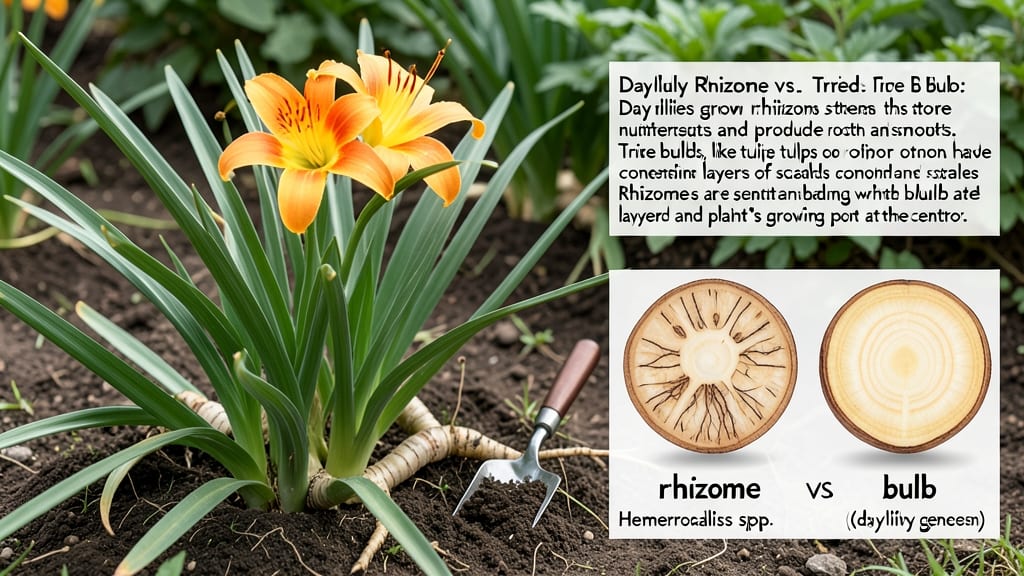
Daylilies don't have bulbs—they grow from thick, creeping rhizomes that store nutrients underground, making them hardy perennials that return year after year without needing replanting.
These horizontal, fleshy stems spread just below the soil surface, creating a network that absorbs moisture and nutrients efficiently.
Unlike true bulbs, which are layered storage organs, daylily rhizomes allow the plant to recover quickly from frost and drought. 🌱 I've seen them bounce back even after being divided—simply replanting a section with at least one bud ensures new growth within weeks.
The key to their resilience lies in this underground system, which stores energy for next season's blooms.
This unique growth structure also explains why daylilies thrive in various climates—from USDA zones 3 to 9—without needing winter protection. The rhizomes act like natural batteries, storing carbohydrates that fuel early spring growth before leaves even emerge.
When planting, I always recommend burying them just below soil level (about 1 inch deep) to encourage proper root development.
💡 In This Article
- How Daylily Rhizomes Differ from True Bulbs
- Planting and Caring for Daylily Rhizomes
How daylily rhizomes differ from true bulbs
Daylilies rely on rhizomes—thick, horizontal underground stems—rather than true bulbs like tulips or onions. These rhizomes store carbohydrates and nutrients in their fleshy, segmented structure, which spreads outward from the plant's center.
Unlike layered bulbs (which have concentric rings of scales), daylily rhizomes grow along the soil surface, creating a web-like system that absorbs water and nutrients efficiently. 🌱 This horizontal growth pattern allows them to recover quickly from damage or division, as each segment contains growth buds capable of producing new shoots.
The key difference lies in their biological function: true bulbs act as storage organs that protect the plant through dormancy, while daylily rhizomes serve as both storage and growth engines.
For example, a 2-inch-long rhizome segment with a single bud can regenerate into a full plant within 4-6 weeks under optimal conditions.
This adaptability explains why daylilies thrive in USDA zones 3-9—their rhizomes can tolerate freezing temperatures by drawing on stored energy, unlike delicate bulbs that often rot in wet winters.
Rhizomes also enable daylilies to spread naturally, forming dense clumps over time. This contrasts with bulb plants, which typically multiply by producing offsets (small bulbs) around the parent bulb. The rhizome system allows daylilies to colonize space efficiently, making them ideal for ground cover or mass planting.
When you see a mature daylily patch, you're looking at years of this underground network expanding—each rhizome segment contributing to the plant's resilience. 💫
Another critical advantage is their regenerative capacity. Even if a rhizome is damaged or partially eaten by pests, the remaining healthy segments will continue growing.
This is why gardeners often divide daylilies every 3-5 years—not because the plant needs it, but to control their spread and ensure each section has enough resources to bloom vigorously. True bulbs, by comparison, require careful handling during division to avoid damaging their delicate layers.
Consider the texture: daylily rhizomes feel firm yet slightly spongy, with visible nodes where roots and shoots emerge. True bulbs, like daffodils, have a papery outer layer protecting layered scales inside.
When you handle daylily rhizomes during transplanting, you'll notice how they bend easily—a trait that helps them navigate uneven soil without breaking. This flexibility is part of what makes them so adaptable to different garden conditions. 🌿
Understanding this structure explains why daylilies are often called "the perfect perennial." Their rhizomes allow them to:
- Survive harsh winters by tapping into stored nutrients
- Recover from damage through multiple growth points
- Spread naturally without requiring offsets
- Thrive in various soils from sandy to clay