
Planting
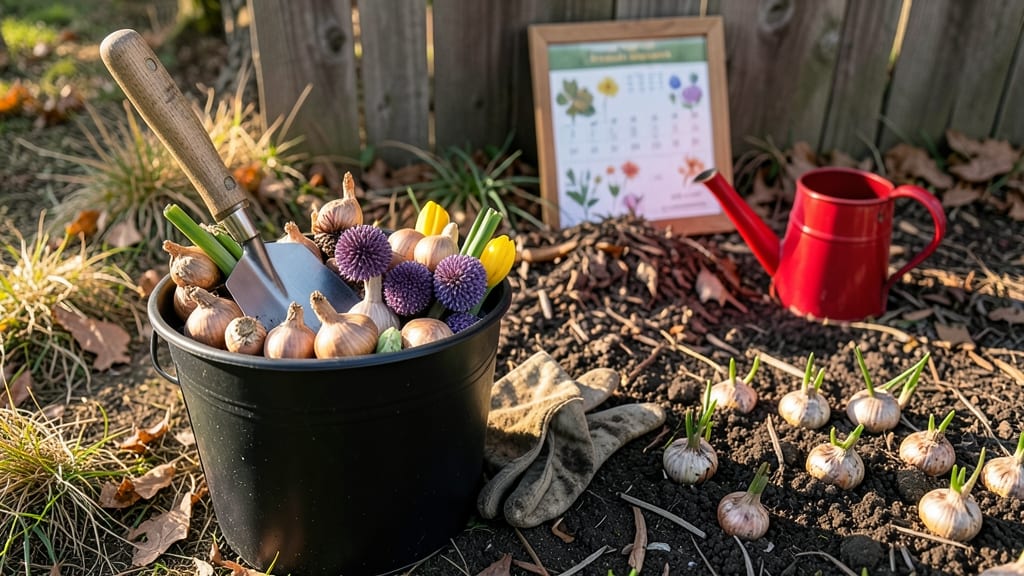
It is too late to plant bulbs only if you’ve already passed your USDA zone’s last frost date—usually between October and November. Cold-hardy varieties like tulips and daffodils can even handle planting 4–6 weeks before the ground freezes, giving roots time to establish before winter sets in.
Your local climate dictates the exact window—northern zones (like 3–5) need bulbs in the ground by early October, while milder areas (zones 7–10) can wait until December. 🌱 The key is soil temperature: bulbs require 40–50°F soil to root properly, so check your zone’s frost calendar.
Even late plantings can succeed if you choose fast-sprouting perennials like snowdrops or alliums, which tolerate colder soils better than delicate spring bloomers.
For fastest results, focus on bulbs with high cold tolerance—these establish roots even in chilly conditions. A thick layer of mulch (3–4 inches) acts like insulation, protecting newly planted bulbs from freeze-thaw cycles.
If you’re in a Mediterranean climate (like Southern California), you can plant bulbs in winter months when temperatures drop naturally.
💡 In This Article
- Bulb Planting Deadlines by USDA Zone
- Fastest-Growing Bulbs for Late-Season Planting
Bulb planting deadlines by USDA zone
The exact timing for planting bulbs hinges on your USDA zone and the first frost date. In zones 3–5 (northern climates), bulbs must be in the ground by mid-October—roots need 6–8 weeks to establish before winter.
The soil temperature drops below 40°F by November, halting root growth. In contrast, zones 6–7 can plant until late November, while zones 8–10 (milder climates) allow planting until December or even early January.
Here’s what’s actually happening underground: bulbs require 40–50°F soil to trigger root growth. If planted too late, the roots won’t have time to anchor before the ground freezes, leaving bulbs vulnerable to heaving (being pushed out by freeze-thaw cycles).
For example, in zone 4, planting tulips after October 15 risks poor survival, while zone 8 can handle late plantings until December 1 due to milder winters. 🌱
Climate plays a critical role—Mediterranean zones (like Southern California) have wet winters and dry summers, allowing bulb planting in December–January when temperatures drop naturally. Meanwhile, continental climates (e.g., Midwest) demand earlier planting to avoid winter desiccation.
The key is aligning planting with your region’s frost calendar and soil temperature trends.
For those in transitional zones (e.g., zone 6–74–6 week buffer before the first frost ensures roots establish. For instance, if your first frost is November 15, aim to plant by October 1.
This window maximizes root growth before dormancy sets in. Mulching with 3–4 inches of straw or leaves insulates bulbs, extending the safe planting period by 2–3 weeks.
Exceptions exist for bulbs with higher cold tolerance, like snowdrops or crocuses, which can handle planting until January in zones 5–7. These perennials prioritize root survival over rapid growth, making them ideal for late-season plantings.
Always verify your zone’s frost date—local weather stations or university extension services provide precise data.
Pro tip: Use a soil thermometer to confirm 40–50°F soil before planting. If temperatures are colder, wait or opt for cold-hardy bulbs like alliums, which tolerate 32°F soil. This small step can mean the difference between thriving blooms and next-spring disappointments. ❄️