
Pests
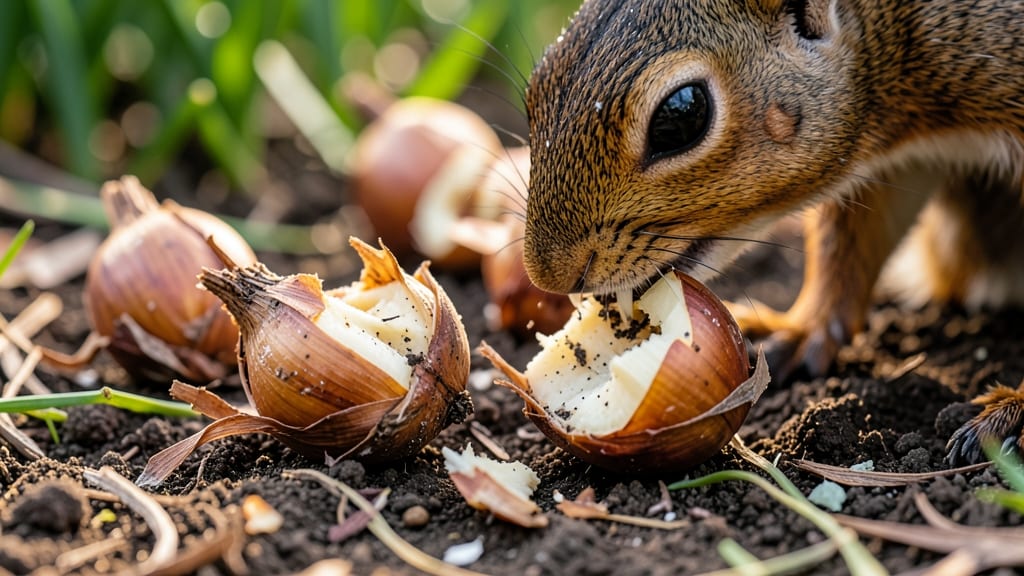
Squirrels do eat flower bulbs, especially tulips, daffodils, and hyacinths, because they contain high-energy carbohydrates. They dig up bulbs in fall and winter for food storage, often destroying entire gardens in the process. Protecting bulbs requires physical barriers or repellents.
Squirrels treat flower bulbs like nature's snack packs, thanks to the concentrated energy stored in their roots and stems. 🌱 When they dig up bulbs, they're not just being destructive—they're following an ancient survival instinct to stockpile food for lean months.
I've seen them bury entire bulbs in my garden, only to forget where they hid them, leaving empty holes behind. This behavior peaks in late summer and fall, when squirrels prepare for winter.
If you're dealing with a squirrel problem, the key is to make bulbs harder to access. Planting deeper than 8 inches can help, since squirrels typically dig only about 6 inches deep.
For extra protection, consider wrapping bulbs in chicken wire before planting or using commercial bulb cages. Natural repellents like cayenne pepper or predator urine can also deter them without harming the plants.
💡 In This Article
- Why Squirrels Target Flower Bulbs
- Effective Ways to Deter Squirrels from Bulbs
Why squirrels target flower bulbs
Squirrels view flower bulbs as nature's energy bars, packed with concentrated carbohydrates that fuel their high-metabolism bodies. Bulbs like tulips and daffodils contain 20-30% starch by weight—about the same carbohydrate density as a potato. This makes them ideal for squirrels preparing for winter when natural food sources dwindle.
The bulbs' compact size also makes them perfect for burying and retrieving later, a behavior known as "scatter-hoarding" that's hardwired into their survival instincts.
What makes certain bulbs more tempting than others? Squirrels particularly target tulips because their papery outer layers are easier to dig through than the tougher skins of daffodils.
The bulbs' scent also plays a role—tulips release volatile compounds that squirrels can detect from 10-15 feet away, while hyacinths emit a strong fragrance that may attract them even more aggressively. 🌸 Interestingly, squirrels often ignore crocus bulbs because their bitter taste makes them less appealing as a food source, even though they contain similar carbohydrates.
The timing of this behavior is crucial: squirrels begin their bulb-digging frenzy in late summer when they sense the approach of winter. Their digging isn't random—they use their powerful front claws to sense vibrations in the soil, locating bulbs with remarkable accuracy.
Studies show that squirrels can detect buried bulbs 90% of the time when digging in familiar areas, which explains why they often return to the same garden spots year after year. This precision digging creates the telltale empty holes that gardeners find so frustrating.
There's a fascinating psychological aspect too: squirrels develop "memory maps" of their digging sites, using both spatial memory and scent trails. When they bury a bulb, they often leave a small pile of soil nearby as a marker.
This explains why you might find multiple empty holes in a single garden bed—each represents a failed retrieval attempt after the squirrel forgot where it buried its food.
The deeper the bulb was planted, the harder it is for squirrels to locate, which is why planting depth becomes such an important protective measure.
What most people don't realize is that squirrels don't actually eat the entire bulb—they typically consume about 30-50% of the fleshy base before losing interest. The rest often rots underground or gets forgotten entirely.
This partial consumption explains why some bulbs might still sprout after being partially eaten, though they'll often produce weaker flowers. The destruction, however, is still significant when considering entire garden beds.
The real damage comes from the digging itself. A single squirrel can create 50-100 holes in a season, each about 2-3 inches wide. This not only destroys the bulbs but also compacts the soil, making it harder for other plants to establish roots.
The combination of food theft and soil disruption makes squirrels one of the most destructive garden pests for bulb lovers. 🐿️