
Planting
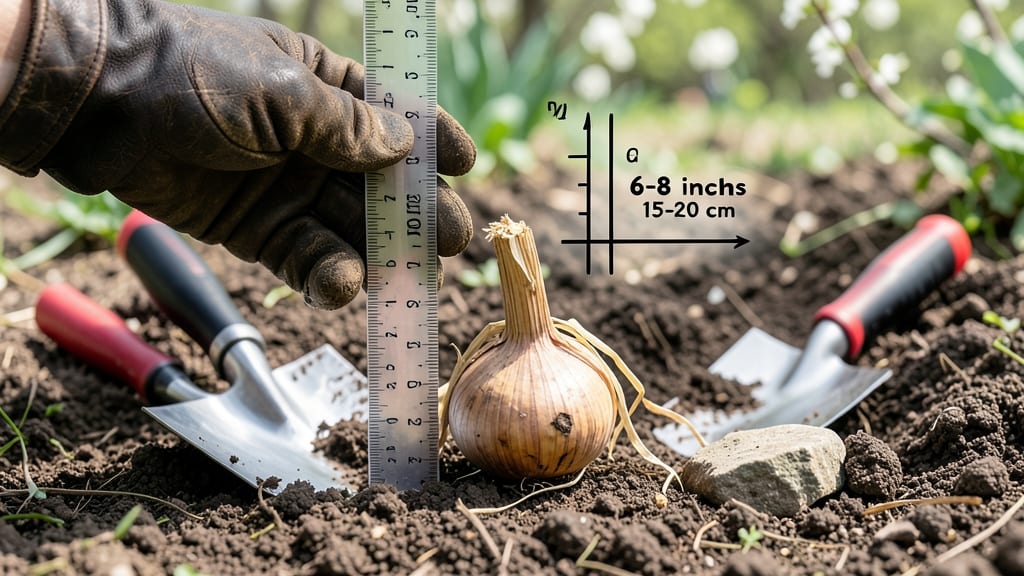
To bury tulip bulbs properly, plant them 6 to 8 inches deep in most climates, adjusting 2 inches deeper in colder regions to protect against winter frost. Shallow planting (2-3 inches) or burying too deep (6+ inches) can cause poor blooms or rot, so aim for this sweet spot while keeping the pointy end facing upward and spacing bulbs 4-6 inches apart.
Getting the depth right creates the perfect balance for root development and frost protection. 🌱 Tulip bulbs need enough soil coverage to anchor their roots while avoiding suffocation—think of it like a cozy blanket that keeps them stable without smothering.
Larger varieties like Darwin hybrids might need the deeper end of the range, while smaller species can thrive with slightly shallower planting. The key is matching the bulb size to your local climate's freeze-thaw cycles.
Your soil type also plays a role: sandy soils drain faster, so you might need to plant slightly deeper to maintain moisture, while clay soils can hold water too well, requiring better drainage adjustments.
Always plant in fall when temperatures consistently drop below 60°F—this gives roots time to establish before winter sets in.
💡 In This Article
- Tulip Bulb Planting Depth Science: Why It Matters for Root Growth
- Step-by-Step Guide: Perfecting Tulip Bulb Depth by Climate and Soil Type
Tulip bulb planting depth science: why it matters for root growth
The ideal planting depth of 6 to 8 inches isn't arbitrary—it's rooted in how tulip bulbs develop their root systems.
When planted at this depth, the bulb's basal plate (where roots emerge) sits just below the frost line in most regions, allowing roots to grow downward while the shoot pushes upward through the soil. This balance ensures the bulb receives both moisture and stability without suffocating from excess soil pressure.
Think of the bulb like a tiny underground battery: the roots need space to spread out and absorb nutrients, while the shoot requires access to sunlight.
Larger bulbs, like Darwin hybrid tulips (which can reach 2-3 inches in diameter), need deeper planting—8 inches or more—to accommodate their size and prevent rot. Smaller species tulips, such as Tulipa greigii, thrive at 5-6 inches because their compact structure doesn't require as much depth.
The rule of thumb is to bury the bulb at a depth equal to 3 times its height.
Frost protection is another critical factor. In colder climates (USDA zones 3-5), the extra 2 inches of soil acts as insulation, shielding the bulb from extreme temperature fluctuations that can cause freeze-thaw damage.
This is why gardeners in Minnesota or upstate New York often plant tulips deeper than those in California or the Pacific Northwest. The soil's thermal mass helps regulate temperature, creating a microclimate that mimics the bulb's natural habitat in Central Asia.
Moisture balance is equally important. Planting too shallow (2-3 inches) exposes the bulb to rapid drying, while burying too deep (10+ inches) can trap excess moisture, leading to rot. The 6-8 inch range allows water to penetrate just enough to hydrate the bulb without waterlogging.
In sandy soils, where drainage is excellent, you might plant slightly deeper (7-8 inches) to retain moisture longer, whereas clay soils—where water pools—require amending with organic matter to improve drainage before planting.
Here's what happens when you get it wrong: shallow planting (2-3 inches) often results in weak stems that flop over or fail to bloom entirely, while over-deep planting (10+ inches) can cause the bulb to exhaust its energy reserves trying to push through the soil, leading to stunted growth or no flowers at all.
The 6-8 inch sweet spot gives the bulb just enough "room to breathe" while providing the stability it needs to thrive.
For visual learners, imagine the bulb as a clock face: the pointy end (the shoot) should face up like the 12 o'clock position, and the flat base (where roots emerge) should sit at the bottom.
This orientation ensures the bulb grows correctly, with roots spreading downward and the stem reaching upward toward sunlight. Spacing bulbs 4-6 inches apart prevents overcrowding, which can lead to competition for nutrients and weaker blooms.
Pro tip: If you're planting in an area with heavy rainfall or poor drainage, consider adding a 1-inch layer of gravel at the bottom of the planting hole to improve aeration and prevent water from pooling directly around the bulb.
This small adjustment can make a big difference in bulb longevity and bloom quality. 🌱