
Blooming
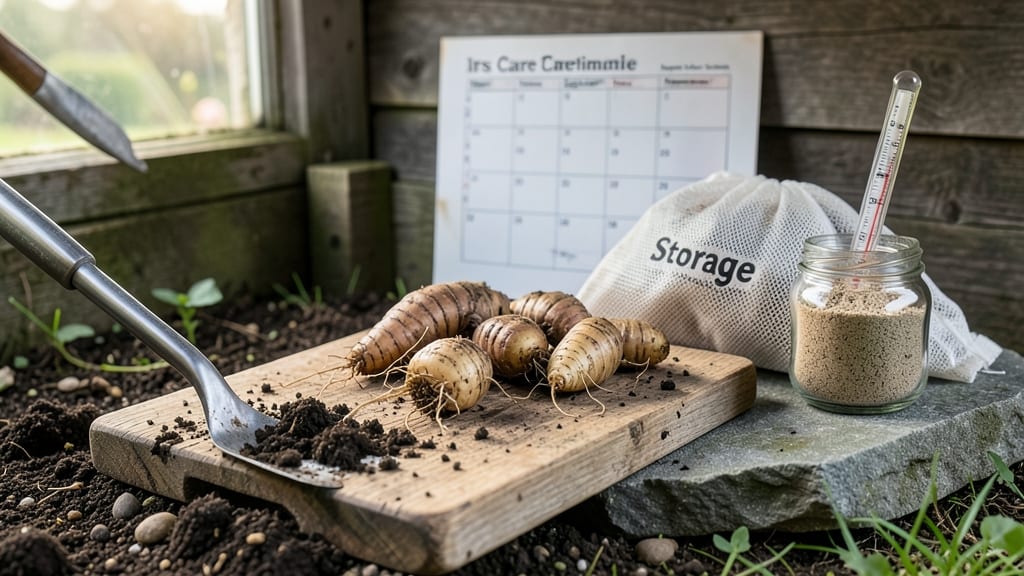
Iris bulbs can stay out of the ground for 3–5 days in cool, dry conditions without significant risk, but exposure beyond 7 days increases dehydration and rot. Store them in a shaded, well-ventilated area with minimal moisture to extend survival time.
Iris bulbs are surprisingly resilient, but their survival outside the ground depends on two critical factors: temperature and moisture. 🌱 At 50–60°F, bulbs can last up to a week if kept dry, but warmer conditions or humidity shorten this window dramatically.
The key is preventing moisture buildup—even slight dampness triggers rot within 48 hours. I always store mine in breathable mesh bags with silica gel packets to create that ideal dry environment.
What's interesting is how bulb physiology changes once they're dug up. The protective layers dry out faster than you'd expect, which is why the 3–5 day window becomes risky after that.
For gardeners dealing with late-season planting, this means planning ahead—either replant immediately or use temporary storage solutions like a cool basement with good airflow.
💡 In This Article
- Iris Bulb Storage Science: How Climate and Moisture Affect Survival
- Step-by-Step Iris Bulb Handling for Maximum Longevity
Iris bulb storage science: how climate and moisture affect survival
Iris bulbs survive outside the ground thanks to their natural protective layers, but these start degrading when exposed to air. The outer papery sheath acts like a moisture barrier, but once disturbed, the bulb's cells begin losing water through a process called transpiration.
At 50–60°F, this happens slowly—about 0.2% water loss per day—but at 75°F, the rate doubles, accelerating dehydration. 🌡️ The bulb's core temperature rises faster than you'd think, especially in direct sunlight, which triggers enzymatic activity that breaks down stored nutrients.
Moisture is the real villain here. Even a 5% humidity increase can cause fungal spores dormant on the bulb's surface to activate within 24–48 hours. That's why bulbs stored in damp conditions show signs of rot—soft spots, blackened tissue—as the fungi consume the starch reserves.
In contrast, dry conditions (30–40% humidity) preserve the bulb's integrity by preventing spore germination. Think of it like storing potatoes: keeping them in a cool, dry place prevents sprouting and rot.
The bulb's natural dormancy period also plays a role. Most irises enter dormancy in late summer, when their metabolic rate slows dramatically. During this time, they can tolerate slightly longer exposure—up to 7 days—because their cells are less active.
However, if you dig them up during active growth (spring or early fall), the 3–5 day window shrinks because the bulb is actively photosynthesizing and requires moisture to function. This is why timing matters so much in bulb storage.
Another critical factor is the bulb's size. Smaller irises, like the Bearded Iris varieties, dehydrate faster due to their higher surface-area-to-volume ratio. A 2-inch bulb might last only 2–3 days in warm conditions, while a 3-inch bulb could stretch to 5–6 days.
The larger bulb has more stored energy and moisture reserves to draw from, giving it a survival advantage. This is why gardeners often prioritize storing larger bulbs if they can't replant immediately.
Even with perfect conditions, bulbs won't last indefinitely. After 7 days, the risk of irreversible damage skyrockets. The protective layers become brittle, and the bulb's ability to sprout the following season diminishes.
At this point, even if you replant, the flower production might be reduced by 30–50% because the bulb's energy reserves are compromised. This is why many gardeners swear by replanting within 24 hours for the best results.
For those dealing with late-season planting, understanding these science-backed limits helps you plan. If you know you'll be delayed, consider storing bulbs in a cool, dark place with minimal airflow—like a basement with a dehumidifier—to buy an extra day or two.
The goal is to mimic the bulb's natural underground environment as closely as possible until replanting. 🌱