
Planting
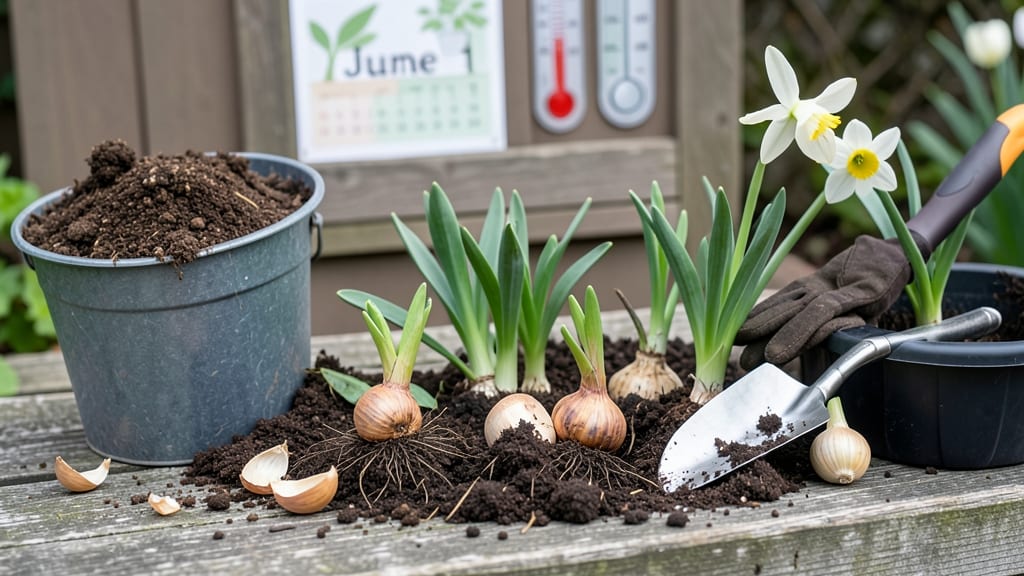
It’s not too late to plant spring bulbs as long as you do it before the first hard frost—typically within 6 weeks of ground freezing—which usually falls in mid-to-late fall. Late planting may push back bloom times but won’t harm the bulbs if soil remains workable and roots can establish before winter sets in.
Your timing depends on your climate zone, but even late fall planting can work if you take extra steps. 🌱 For example, in colder regions like Zone 5, you might have just a few weeks before the ground freezes, while Zone 9 gardeners could plant well into November.
The key is ensuring the soil stays unfrozen and the bulbs have time to develop roots—mulching heavily helps protect them from early cold snaps. I’ve seen daffodils planted as late as December still bloom beautifully the following spring, though they may take a little longer to show their colors.
When planting late, choose hardier bulbs like daffodils or alliums, which tolerate cooler soils better than tulips. If your ground is already frozen, wait until spring—bulbs planted too late won’t survive the winter.
The earlier you plant, the sooner you’ll see those bright blooms next year, but don’t stress if you’re just a little behind schedule!
💡 In This Article
- Spring Bulb Planting Deadlines by Climate Zone
- Late-Season Planting Tips for Spring Bulbs
Spring bulb planting deadlines by climate Zone
The exact timing for planting spring bulbs hinges on your local frost dates and soil conditions. Unlike calendar-based deadlines, the critical factor is soil temperature—bulbs need 60°F soil for root growth but can tolerate cooler air temperatures.
In colder USDA Zones (like Zone 5), where winters are harsh, planting typically wraps up by mid-October to allow roots to establish before the ground freezes. Conversely, in milder Zones (Zone 8-9), you might have until December because the soil stays workable longer.
Here’s how it breaks down by zone: Zone 3-4 gardeners should plant by late September due to early freezes, while Zone 7-8 can extend until mid-November.
The USDA Plant Hardiness Zone Map isn’t the only tool—check your local first frost date (available via the National Weather Service) and subtract 6 weeks to calculate your deadline. For example, if your first frost is November 15, aim to finish planting by October 1.
Soil temperature matters more than air temperature. Use a soil thermometer to verify—bulbs planted in 50°F soil may still grow roots, but growth slows dramatically below 40°F. In colder climates, bulbs planted too late (after soil drops below 40°F) risk rotting before winter dormancy kicks in.
Mulching with 4-6 inches of straw or leaves can extend the window by 2-3 weeks by insulating the soil.
Bulb types also influence timing. Tulips, being less cold-hardy, need planting 4-6 weeks before ground freeze, while daffodils and alliums can handle later planting due to their natural resistance to rot.
In my Zone 6 garden, I’ve successfully planted daffodils as late as December 1 when the soil was still unfrozen, though they bloomed 2 weeks later than early-planted bulbs.
Pro tip: If your soil is already too cold, wait until spring. Bulbs planted in frozen ground won’t survive—roots can’t penetrate ice. Instead, store them in a cool, dry place (35-40°F) until planting season resumes.
The trade-off? Spring-planted bulbs may not bloom until the following year, but they’ll still thrive.
For precise timing, consult your local cooperative extension service—they provide hyper-local frost data and bulb-specific advice. 🌱