
Plants
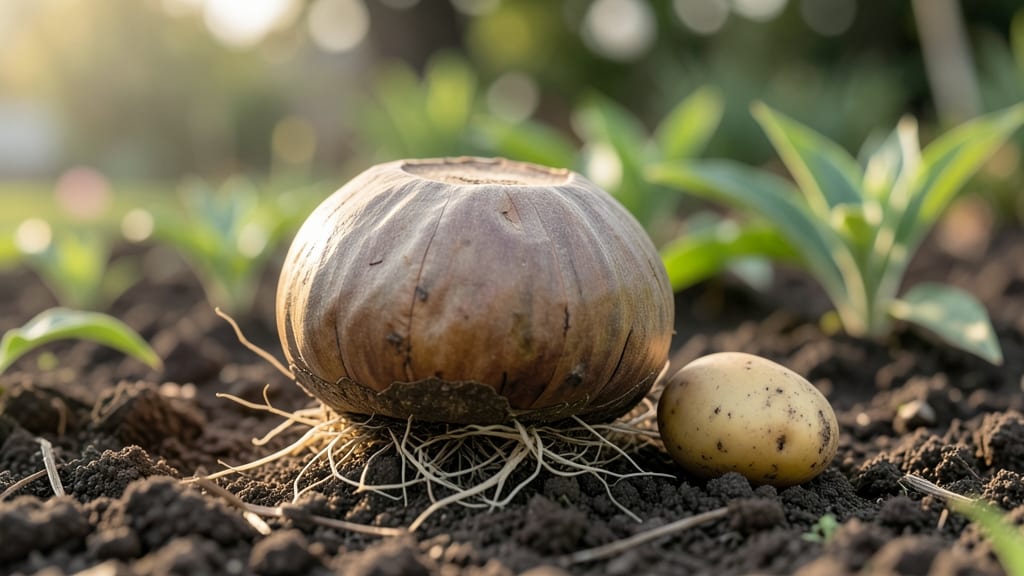
Peony bulbs look like large, gnarled, woody knots with a rough, bark-like exterior and multiple eyes or buds clustered around the crown. They grow 3–6 inches wide, often resembling a swollen, irregular root mass rather than a traditional bulb.
Peony bulbs aren't your typical round, layered bulbs like tulips—they're more like thick, irregular root clusters with a tough, fibrous exterior. 🌱 These woody masses can weigh several pounds and develop a network of fibrous roots that spread outward, anchoring the plant firmly in the soil.
The crown area, where buds form, is especially distinctive, often appearing as a dense cluster of small knobs ready to sprout into next year's blooms.
What makes them stand out is their lack of papery tunics (the dry outer layers found on tulip or daffodil bulbs). Instead, peony bulbs feel more like gnarled tree roots, with a texture that's rough to the touch.
This unique structure helps them survive harsh winters, storing energy in their thick, fibrous mass for spring growth.
💡 In This Article
- Identifying Peony Bulbs by Physical Characteristics
- How to Distinguish Peony Bulbs from Other Perennial Roots
Identifying peony bulbs by physical characteristics
Peony bulbs don't follow the classic onion-like structure of tulips or daffodils. Instead, they develop as thick, irregular root masses called tuberous roots, growing 3–8 inches in diameter with a rough, bark-like exterior.
The surface often appears deeply grooved and segmented, resembling a swollen, knotted tree root. This woody texture serves as natural protection against frost and pests during dormancy.
The most distinctive feature is the crown—a dense cluster of small, pea-sized buds (called eyes) that form at the top. These buds are the plant's growth points for next season's foliage and flowers.
Unlike true bulbs, peony crowns don't have protective layers; they're exposed and vulnerable, which is why they need careful handling when dividing. The fibrous roots radiate outward from the base, forming a network that can spread 12–18 inches across in mature plants.
Seasonal changes dramatically alter their appearance. In summer, the bulb stores energy in its thickened roots, while the top growth dies back. By fall, the roots shrink slightly but remain firm. In winter, they become dormant, with the crown appearing almost skeletal.
This cycle explains why peonies thrive in USDA zones 3–8—their unique structure allows them to survive freezing temperatures while other tender bulbs would perish.
Texture plays a crucial role in identification. Run your fingers over a peony bulb, and you'll feel a coarse, almost papery surface that's surprisingly lightweight for its size. This contrasts sharply with true bulbs like lilies, which have smooth, papery skins.
The weight difference is also telling: a mature peony bulb can weigh 1–3 pounds, while a comparable-sized tulip bulb would be much lighter due to its air-filled layers.
What confuses many gardeners is how peony bulbs increase in size annually. Each year, new roots form around the original crown, creating concentric layers that resemble tree rings. This growth pattern makes them appear more like a living, breathing root system than a static storage organ.
The older the plant, the more complex and gnarled the bulb becomes—some mature specimens develop 50+ buds on a single crown!
One fascinating adaptation is how peony bulbs self-mulch. As the fibrous roots die back in autumn, they decompose into the soil, creating a natural mulch layer that protects the crown.
This self-sustaining system reduces the need for gardeners to add organic matter, though well-draining soil remains essential for preventing rot in their dense root structure.