
Plants
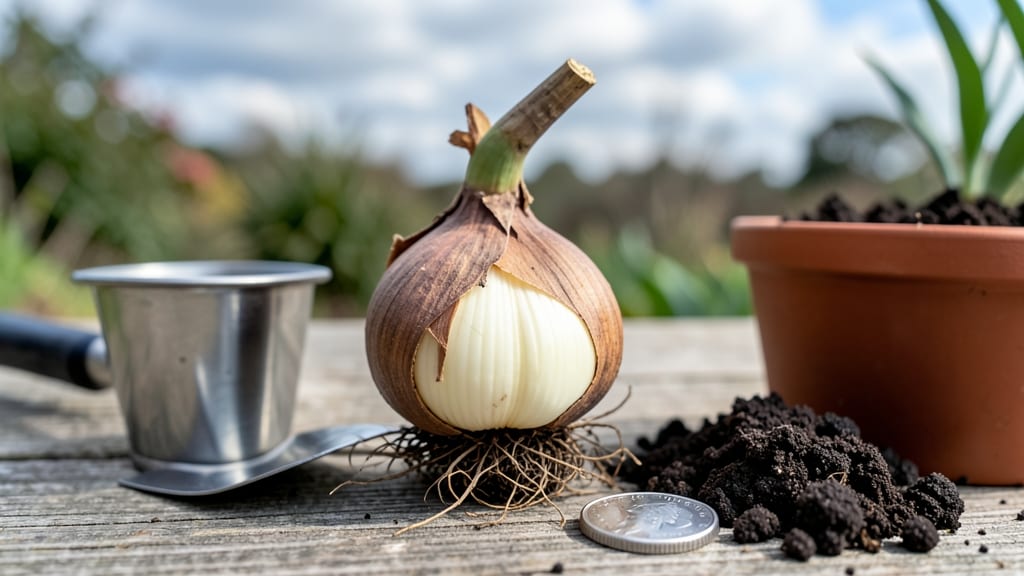
Tulip bulbs look like rounded, papery-skinned onions about 2 to 3 inches in diameter, with a flat base and a single pointed shoot. Their outer layers are brownish-gray, while the inner scales are cream or tan, often with a slight papery texture.
Tulip bulbs resemble oversized, teardrop-shaped onions with a distinctive papery husk that protects their delicate inner layers. 🌱 The flat base is where roots emerge, while the single pointed shoot is the future stem that will push through soil in spring.
Unlike garlic or shallots, tulip bulbs don't form clusters—instead, they grow singly, making them easy to identify even when buried in garden soil. Their brownish-gray outer skin contrasts sharply with the creamy inner scales, which store nutrients for next year's blooms.
What sets tulip bulbs apart is their smooth, almost waxy texture when healthy.
Damaged bulbs often feel soft or mushy, with signs of mold or shriveled scales. 💫 I always check for firmness when buying bulbs—this simple test tells me whether they'll survive winter storage and produce vibrant flowers in spring.
Some hybrid varieties may appear slightly larger (up to 3.5 inches), but the basic shape remains consistent across species.
💡 In This Article
- Tulip Bulb Anatomy: Key Features and Variations
- How to Identify and Store Tulip Bulbs Properly
Tulip bulb anatomy: key features and variations
The anatomy of a tulip bulb reveals its botanical brilliance. At its core, a tulip bulb is a modified stem called a geophyte, designed to store energy in layers of fleshy scales.
These scales—typically cream to light tan—are arranged in concentric circles, resembling the pages of an old book. Each scale contains starch and sugars that fuel the plant's growth during dormancy.
The outer papery husk, which ranges from brownish-gray to reddish-brown, acts as a protective barrier against moisture loss and physical damage.
Size varies significantly by species: standard tulips average 2 to 3 inches in diameter, while hybrid varieties like Darwin tulips can reach 3.5 inches or larger. The flat base is where roots emerge, and it's often slightly rougher than the smooth shoot tip.
Wild tulips, such as Tulipa tarda, tend to have smaller bulbs (1.5 to 2 inches) with more pronounced papery layers, while cultivated hybrids may have thicker, more uniform scales. 🌱 The shoot tip is particularly delicate—it's the first part to emerge in spring and contains the genetic blueprint for next year's flower.
Healthy bulbs have a firm, almost springy texture when gently squeezed. Damaged bulbs, on the other hand, feel soft or hollow, with signs of mold, shriveled scales, or insect holes. The papery husk should peel back easily to reveal the inner scales, which should be plump and free of discoloration.
Some gardeners swear by the "float test"—healthy bulbs sink in water, while rotten ones float due to trapped air pockets. This simple trick can save you from planting compromised bulbs that won't bloom.
Hybrid tulips often exhibit subtle differences in scale color and thickness. For example, Parrot tulips may have slightly thicker scales due to their larger blooms, while Fosteriana tulips (early bloomers) tend to have a deeper reddish-brown husk.
The shoot tip also varies: some species like Tulipa greigii have a more pronounced, almost conical shoot, while others are flatter. These variations help gardeners identify bulbs at a glance, especially when shopping from mixed lots.
What most people don't realize is how the bulb's structure changes seasonally. After flowering, the bulb diverts energy from the stem to the scales, increasing their thickness by up to 30% by late summer.
This process, called bulbification, ensures the plant has enough reserves to survive winter and produce another bloom. The shoot tip remains dormant until temperatures rise, when it breaks through the soil in a process called vernalization—a biological trigger that prepares the plant for spring growth. ✨
For gardeners, understanding these details means better care. Bulbs with thicker scales, for instance, store more water and can tolerate slightly drier conditions. Meanwhile, those with thinner scales need consistent moisture to prevent shriveling. Knowing these nuances helps you choose the right bulbs for your climate and garden conditions.