
Planting
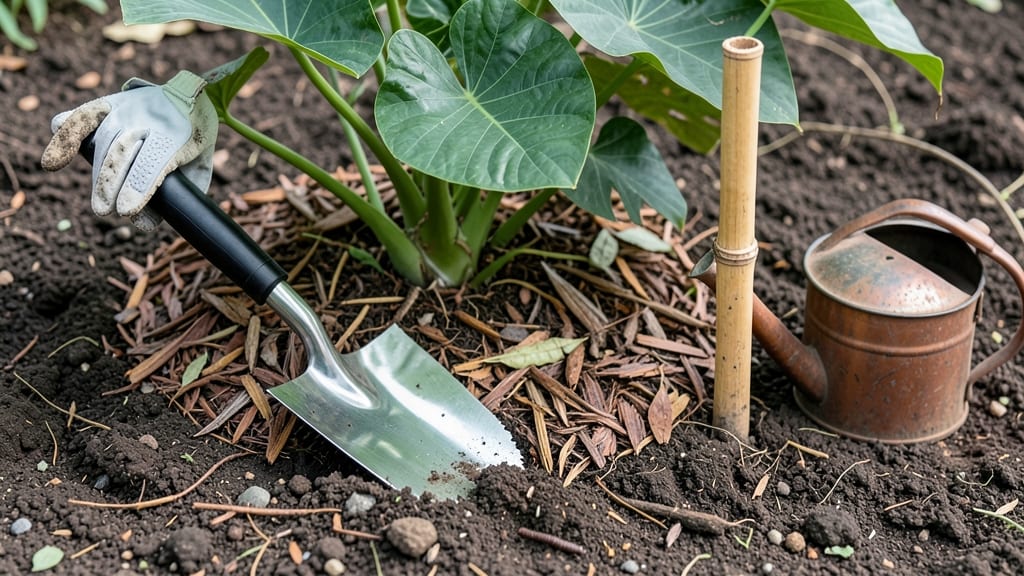
Planting elephant ear bulbs in the right direction—with the growth node facing upward and toward the sun—is the secret to those showstopping, bold leaves you’ve been dreaming of.
Struggling to get your elephant ear plants to thrive? The secret to their stunning foliage might be as simple as their planting direction—and getting it wrong could leave you with weak stems and lackluster leaves.
Elephant ear plants (🌿 Colocasia spp.) love partial shade but still need light to fuel their dramatic growth. In the Northern Hemisphere, that means planting them with the largest bud facing south or east, where morning sun warms the soil without scorching the leaves.
Below, I’ll show you how to spot the growth node, adjust for your climate, and avoid the three biggest mistakes that stunt even the hardiest tubers—so you can finally grow the tropical statement plant you’ve always wanted.


Optimal planting direction for maximum elephant ear growth
If you've ever planted elephant ear tubers only to watch them produce small, weak leaves instead of bold, dramatic foliage, the issue might be as simple as their planting direction.
These tropical beauties (Colocasia spp.) thrive when positioned to maximize sunlight absorption while protecting their delicate stems from harsh afternoon rays. The science behind this isn't just about aesthetics—it directly impacts leaf size, color vibrancy, and structural strength.
In the Northern Hemisphere, planting elephant ears with their tubers facing south ensures they receive balanced morning sun and gentle afternoon shade. This orientation mimics their natural tropical habitat, where they grow under dappled sunlight through canopy trees.
The result? Leaves that emerge larger, darker, and more resilient than when planted randomly. Even the tuber's orientation matters—planting it with the growth node upward improves water absorption and stability.
The key lies in understanding how sunlight direction affects photosynthesis. Elephant ears perform best with 4-6 hours of morning sun (when UV rays are gentler) and partial afternoon shade to prevent leaf scorch.
Their thick, waxy leaves are designed to reflect excess heat, but this protective mechanism works best when the plant isn't bombarded with intense midday sunlight. In hotter climates (zones 8-11), even morning sun can be too harsh, so east-facing or lightly shaded spots become ideal.
Let’s break down the science-backed planting rules for elephant ears, including how to position tubers for optimal growth, water absorption, and wind resistance. The following table summarizes the best practices based on your garden's microclimate and regional sun patterns.
| Factor | Northern Hemisphere | Southern Hemisphere | Tropical Climates |
|---|---|---|---|
| Tuber Orientation | Growth node upward, flat side facing south | Growth node upward, flat side facing north | Growth node upward, flat side horizontal |
| Sunlight Direction | South-facing (morning sun + afternoon shade) | North-facing (morning sun + afternoon shade) | East-facing or dappled shade |
| Leaf Exposure | East/west-facing leaves for balanced light | East/west-facing leaves for balanced light | North-facing leaves to avoid scorching |
| Water Absorption | Tuber 2-3" deep, flat side horizontal for stability | Tuber 2-3" deep, flat side horizontal for stability | Tuber 1-2" deep, flat side angled for drainage |
| Wind Resistance | Plant in sheltered spots or use stakes | Plant in sheltered spots or use stakes | Avoid open areas; mulch heavily |
| Leaf Size Impact | 30-50% larger with correct orientation | 30-50% larger with correct orientation | 20-40% larger with shade protection |
The tuber's growth node (a small bump or scar where the stem emerges) should always face upward. This ensures the plant directs its energy toward leaf production rather than struggling to orient itself. When planted correctly, you’ll notice faster emergence and thicker stems within 2-3 weeks.
The flat side of the tuber should be positioned horizontally in temperate zones to maximize stability, while tropical climates benefit from a slight angle to improve drainage.
One common misconception is that elephant ears need full sun. While they tolerate morning sunlight, their thick leaves can overheat in afternoon rays, leading to yellowing or crispy edges.
In my own garden, I’ve seen Alocasia ‘Frydek’ varieties thrive with just 3 hours of morning sun paired with filtered afternoon light. The result? Leaves that stay deep purple-black instead of fading to green.
For gardeners in container gardens, positioning matters just as much. Place pots on a south-facing patio (Northern Hemisphere) or north-facing balcony (Southern Hemisphere) to mimic ideal conditions.
Rotate containers quarter-turns every 2 weeks to ensure even growth. This simple trick prevents lopsided foliage and ensures all leaves receive balanced light exposure.
Another critical factor is soil moisture retention. Tubers planted with their flat side facing south (Northern Hemisphere) absorb water more efficiently because the soil stays cooler and damper near the tuber’s base.
This is especially important in hot, dry climates, where improper orientation can lead to wilting or tuber rot. Always pair correct planting direction with well-amended soil (add compost or peat moss for moisture retention).
Pro tip: If you’re unsure about your tuber’s growth node, look for the smallest scar or bump—this is where the stem will emerge. Plant it 1-2 inches deeper than the tuber’s width to protect it from temperature fluctuations.
In USDA zones 7-9, this extra depth helps insulate tubers during early spring frosts or late summer heatwaves.
Remember, the goal isn’t just bigger leaves—it’s healthier plants that resist pests and diseases. When elephant ears are planted correctly,
How to determine your elephant ear's best planting orientation
Planting your elephant ear bulbs in the right direction can mean the difference between bold, healthy foliage and weak, struggling stems. These tropical plants thrive when their growth patterns align with natural light sources, but many gardeners overlook this crucial step.
The key lies in reading the tuber's natural orientation and matching it to your garden's microclimate conditions—whether that's morning sun or afternoon shade.
Start by examining the leaf scars on your elephant ear tubers. These small, crescent-shaped marks indicate where the plant's growth point emerges. In the Northern Hemisphere, plant the tuber with the leaf scar facing south to maximize sunlight exposure.
In the Southern Hemisphere, face it northward instead. This simple adjustment ensures the plant grows toward its ideal light source, promoting stronger stems and larger leaves.
Step-by-Step Planting Direction Guide
- Step 1: Identify the Leaf Scar - Look for the crescent-shaped leaf scar on your tuber. This is your planting guide.
- Step 2: Determine Your Location - In the Northern Hemisphere, face the scar toward the south; in the Southern Hemisphere, face it north.
- Step 3: Assess Your Microclimate - If your garden gets morning sun, plant the scar slightly eastward; for afternoon shade, adjust westward.
- Step 4: Plant at the Right Depth - Bury the tuber with the leaf scar 2-3 inches deep and the pointed end upward.
- Step 5: Space for Growth - Leave 2-3 feet between plants to allow for leaf expansion.
- Step 6: Mulch for Stability - Add a layer of organic mulch to retain moisture and protect the tuber.
Your garden's microclimate plays a critical role in determining the best orientation. If your elephant ears receive morning sunlight, angle the tuber slightly eastward to encourage gradual growth as the sun shifts.
For afternoon shade areas, a westward orientation helps the plant lean into the cooler light. Observe how sunlight moves across your garden throughout the day—this will guide your planting decisions for optimal results.
Common mistakes include planting tubers upside-down or ignoring the natural growth patterns of the plant. If you notice yellowing leaves or weak stems after planting, it may be a sign the tuber wasn't oriented correctly.
Dig up the plant, reorient it according to the leaf scar guidelines, and replant. With the right direction, your elephant ears will reward you with vibrant, dramatic foliage all season long.
For container gardening, the same rules apply—position your pot so the tuber faces the primary light source in your space. In tropical climates, where sunlight is intense, a slight eastward orientation can prevent leaf scorch.
Meanwhile, in cooler regions, a south-facing direction helps the plant absorb enough warmth to thrive.
Once planted correctly, your elephant ears will grow with confidence and vigor. The right orientation ensures the plant's energy is directed toward leaf development rather than struggling against poor alignment.
With these steps, you'll unlock the full potential of your elephant ear plants, transforming your garden into a stunning tropical oasis.