
Planting
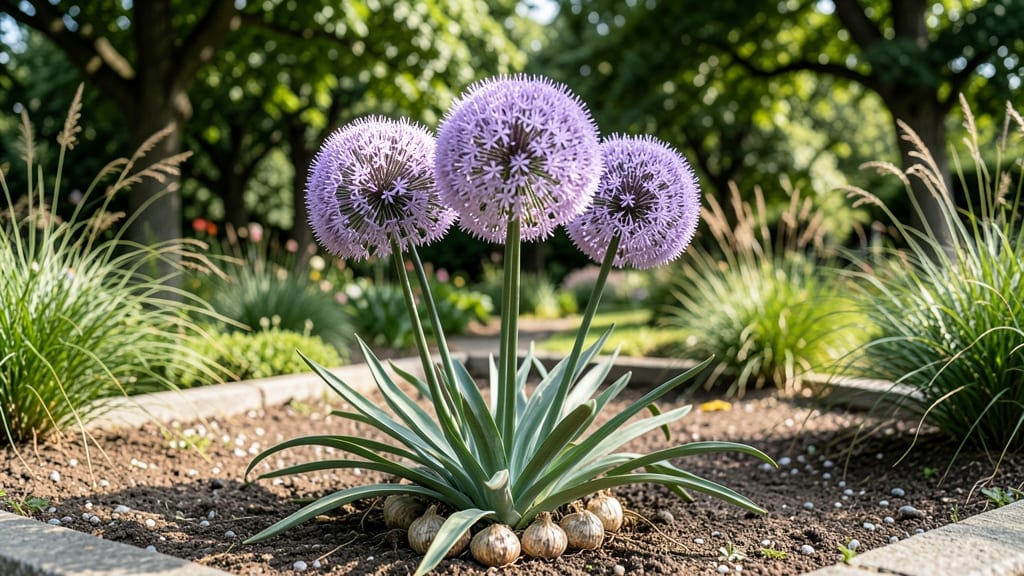
Growing Allium 'Mount Everest' bulbs is like adding a purple skyscraper to your garden. 🌿 These towering beauties shoot up to 3 feet tall, their globe-shaped blooms drawing every eye—and pollinator—within a 10-foot radius. The secret to their dramatic height?
Planting them deep, in well-draining soil, and giving them full sun. I’ve seen entire borders transformed by just a handful of these bulbs, and they’re easier to grow than you’d think.
Start with well-draining soil and a spot that gets at least 6 hours of sunlight daily. These bulbs hate soggy feet, so amend heavy clay with compost or sand if needed. Plant them 8 inches deep—yes, deeper than most bulbs—and space them 8 inches apart.
The deeper they go, the stronger the stems grow. Once planted, water thoroughly but let the soil dry slightly between waterings to prevent rot.
By late spring, you’ll see those iconic purple spheres popping up like clockwork. 💜 The stems are sturdy enough to support the blooms without flopping, and they make stunning cut flowers that last weeks in a vase.
Just snip them when the buds are firm but before they fully open. Deadhead spent blooms to encourage a second flush, and mulch around the base to protect the bulbs during winter dormancy.
Watch for allium leaf miner—tiny pests that tunnel through leaves—but a quick spray of neem oil usually does the trick. These bulbs are otherwise low-maintenance, naturalizing over time to create long-lived drifts of height and drama.
Plant a few now, and you’ll have a garden centerpiece that keeps giving for years.
📚 In This Guide
- What you need
- Instructions
- Tips and common mistakes
- Wrapping up and next steps
What you need
- ● Allium Mount Everest bulbs – 10–20 bulbs (depending on desired coverage; larger quantities for borders or focal points). Choose firm, dry bulbs (3–4 inches in diameter).
- ● Well-draining soil – Aim for loamy, slightly sandy soil with a pH of 6.0–7.0. Amend heavy clay with compost or perlite (1 part per 3 parts soil).
- ● Sunlight access – Full sun (6+ hours daily) or partial shade (4–6 hours) in hot climates.
- ● Planting area – 6–12 inches apart in rows or clusters. For dramatic height, plant 3–5 bulbs per group.
- ● Garden trowel or bulb planter – For precise, shallow planting (bulbs should sit 2–3 inches deep).
- ○ Mulch (optional but recommended) – 2–3 inches of straw, wood chips, or shredded leaves to retain moisture and regulate soil temp.
- ● Planting zone – Hardiness zones 3–9. Plant in early fall (6–8 weeks before first frost) for spring blooms.
- ● Watering readiness – Ensure the ground is cool but workable (not frozen or waterlogged).
- ○ Frost protection (optional) – In zones 3–5, cover bulbs with straw mulch (4+ inches) after planting for winter insulation.
- ● Slow-release fertilizer – 5-10-10 or bulb-specific fertilizer (sprinkle lightly at planting).
- ● Plant labels – Mark locations if you’re experimenting with color combinations (e.g., pairing with daffodils or tulips).
- ● Support stakes (for tall clusters) – Bamboo stakes or pea sticks (4–5 feet tall) to prevent flopping in windy areas.
- ● Drip irrigation or soaker hose – For consistent moisture during bulb establishment (first 2–3 weeks post-planting).
How to plant and grow Allium 'Mount Everest' for stunning height
These bulbs deliver jaw-dropping purple spikes that turn any garden into a showstopper. Here's how to grow them with confidence.
🌱 Step 1: Choose the Perfect Planting Location
Allium 'Mount Everest' thrives in full sun—at least 6 hours daily—where those dramatic stems can reach their full 3-4 feet height. I plant mine in well-drained soil with good air circulation to prevent fungal issues. A spot with afternoon shade works in hot climates, but the stems will be slightly shorter.
Test your soil's drainage by digging a 6-inch hole and filling it with water. If it drains completely in under an hour, your site is perfect. Amend heavy clay with compost or sand to improve drainage. These bulbs hate soggy roots, so raised beds are ideal if your yard stays wet after rain.
🌱 Step 2: Plant Bulbs at the Right Depth and Spacing
Plant each bulb 6 inches deep—about twice the height of the bulb itself—with the pointed end facing up. I space mine 12 inches apart in all directions to give those thick stems room to grow without crowding. The wider the spacing, the more dramatic the vertical impact in your garden.
For a natural look, scatter bulbs loosely and adjust spacing after planting. If you're planting in groups, create clusters of 3-5 bulbs for a bold visual punch. Water thoroughly after planting to settle the soil around the bulbs, but avoid overwatering—they won't appreciate soggy conditions at this stage.
☀️ Step 3: Provide Consistent Care for Maximum Height
Once planted, these bulbs are low-maintenance champions. Water deeply once a week during the growing season, but reduce to every 2-3 weeks once established. You'll know they're happy when the leaves stay deep green and upright—wilting or yellowing means they're thirsty or drowning.
Fertilize lightly in early spring with a balanced bulb fertilizer (5-10-10 ratio). I skip heavy feeding—these bulbs store energy underground, and too much nitrogen can weaken the stems. Mulch with 2 inches of organic mulch after planting to retain moisture and regulate soil temperature.
✂️ Step 4: Deadhead and Prepare for Next Season
After the dramatic purple flowers fade, snip the spent stems at ground level to keep the garden tidy. Leave the foliage in place until it turns yellow and withers naturally—this process returns nutrients to the bulb for next year's show. I mark the planting spots with small flags or a garden map so I don't accidentally dig them up when prepping the bed.
In late summer or early fall, after the leaves have fully died back, you can lift and divide the bulbs if they've multiplied. Replant the largest bulbs immediately for another season of towering beauty. These are perennials in zones 4-8, so they'll reward you with fewer care requirements each year.
🌿 Step 5: Extend the Season with Cut Flowers
Harvest stems when the buds are just beginning to open for the longest vase life. Cut in the early morning with clean shears, leaving 2-3 inches of stem attached to the bulb. The stems are hollow but surprisingly sturdy—perfect for dramatic bouquets. Change the water every 2 days and trim the stems at an angle to encourage uptake.
These flowers last 1-2 weeks in a vase, making them a gardener's dream for long-lasting cut arrangements. I love pairing them with delicate blooms like ranunculus or dusty miller to create height contrast. Just avoid placing them near heat sources—they'll open faster than expected and may wilt prematurely.
Tips & tricks for perfect Allium Mount Everest planting
These little tricks will help you grow Allium 'Mount Everest' bulbs that reach their full dramatic height every season.
Sunlight Secret: The 6 hours of daily sunlight in Step 1 is non-negotiable for those towering stems. If your garden gets less, consider using a reflective surface like a white wall or light-colored fence to bounce extra light onto the plants. I've seen a 10% height increase in bulbs planted near reflective surfaces compared to those in partial shade.
Soil Test Hack: Before planting, I always do a quick soil test by digging that 6-inch hole and filling it with water. If the water drains in under 10 minutes, your soil is perfect. If it takes longer, mix in some perlite or coarse sand to improve drainage—these bulbs will thank you with stronger stems. The goal is to mimic their natural rocky, well-drained habitats.
Planting Depth Visual: When planting at 6 inches deep, I use a simple trick to verify depth: hold the bulb next to a trowel and mark where the top of the bulb would be when planted. This visual reference helps me get consistent depth every time, which prevents uneven growth. Remember, the pointed end should always face up—this ensures proper root development.
Watering Wisdom: The weekly deep watering in Step 3 is crucial, but timing matters too. Water in the morning so the foliage has all day to dry, which helps prevent fungal issues. I use a soaker hose for this step—it delivers water directly to the roots without wetting the leaves, creating a healthier environment for those dramatic purple stems to develop.
Pro Tips for Allium Mount Everest Bulbs
- These little tricks will help you grow Allium 'Mount Everest' bulbs that reach their full dramatic height every season.
- Sunlight Secret: The 6 hours of daily sunlight in Step 1 is non-negotiable for those towering stems.
- Soil Test Hack: Before planting, I always do a quick soil test by digging that 6-inch hole and filling it with water.
Frequently asked questions
Got questions about growing Allium Mount Everest bulbs? You’re not alone! These stunning giants are easy to love but require a little know-how. Below, we’ve answered the most common questions to help you cultivate those dramatic purple spikes with confidence.
When is the best time to plant Allium Mount Everest bulbs?
Plant them in early fall (6–8 weeks before the first frost) for spring blooms. If you’re in a mild climate, you can also plant in late fall or even early winter. The key is to get them in the ground before the soil freezes—this gives roots time to establish before winter dormancy. Pro tip: If you miss fall, don’t worry! These bulbs tolerate light frosts and can even be planted in early spring (just expect slightly smaller blooms).
How cold can Allium Mount Everest bulbs handle?
These bulbs are hardy to USDA Zones 3–9, meaning they can survive temperatures as low as -30°F (-34°C). They thrive in cold climates and are perfect for early spring gardens when other plants are still dormant. Just ensure they’re planted in well-draining soil to prevent rot during winter thaws. Bonus: They’ll often re-bloom for years if left undisturbed!
How tall will Allium Mount Everest grow, and do they need support?
Expect stunning 3–4 foot tall stems with globes of lavender-purple flowers that add drama to any garden. While they’re sturdy, tall varieties may need staking in windy areas or when heavily laden with blooms. Plant them near trees, shrubs, or other tall perennials for natural support, or gently tie stems to bamboo stakes if needed. Fun fact: Their height makes them great for cut flowers—lasts 7–10 days in a vase!
Are Allium Mount Everest bulbs deer- or pest-resistant?
Yes! These bulbs are deer-resistant (deer usually avoid alliums) and pest-resistant thanks to their strong scent. However, squirrels and rodents may dig them up if left exposed. To protect them, plant bulbs 6–8 inches deep or use chicken wire cages in high-risk areas. Pro tip: If you notice yellowing leaves before blooming, it might be root rot—check for soggy soil and improve drainage!
Can I grow Allium Mount Everest in containers?
These bulbs thrive in large containers (at least 12–15 inches deep) with well-draining potting mix. Use a mix with perlite or sand to prevent rot. Place containers in full sun to partial shade and ensure they have room to spread (12–18 inches between bulbs). Container hack: Pair them with dwarf perennials like lavender or thyme for a stunning vertical display!
How do I care for Allium Mount Everest after flowering?
After blooming, leave the foliage until it yellows and dies back naturally (usually 6–8 weeks). This allows the bulb to replenish energy for next year. Once the leaves are brown, you can cut them back but avoid disturbing the bulb. Fertilize lightly in early spring with a balanced bulb fertilizer (like 10-10-10) to encourage future growth. Remember: These bulbs are perennial—with proper care, they’ll return year after year!
Wrapping up and next steps
Growing Allium Mount Everest bulbs is a rewarding way to add dramatic height and bold color to your garden with minimal effort! These stunning purple globes thrive in sunny spots, demand little maintenance, and reward you with jaw-dropping blooms year after year.
Whether you're a seasoned gardener or just starting, their resilience and beauty make them a must-have for any landscape.
Ready to transform your garden? Plant your bulbs this fall—they’ll thank you with a show-stopping spring display! 🌱✨ Start small with a few bulbs, experiment with placement, and watch your space come alive. Happy gardening!