
How To
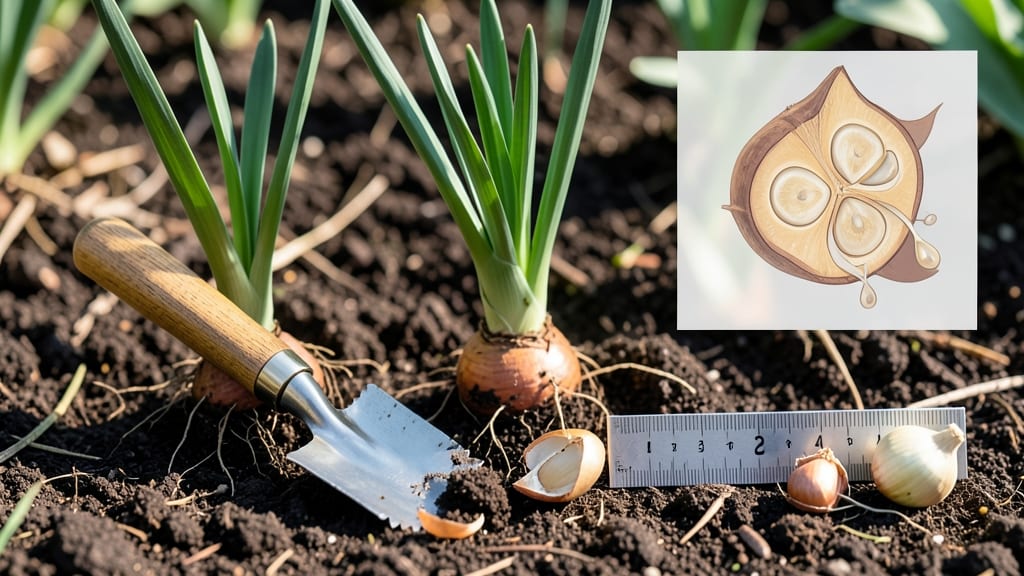
Yes, daffodil bulbs multiply naturally over time by producing offsets, with healthy clumps often doubling every 3-5 years if left undisturbed. Proper care—like avoiding overcrowding and fertilizing—encourages faster bulb division and stronger blooms.
Daffodil bulbs multiply through a process called offset production, where smaller bulbs form around the parent bulb each season. 🌱 These offsets gradually grow larger, eventually becoming independent plants ready to bloom.
The key to faster multiplication lies in providing well-draining soil and consistent moisture—conditions that help the bulb store energy for new growth. I've noticed that varieties like 'Tête-à-Tête' multiply more aggressively than larger types, often creating dense clumps within just 2-3 years.
What many gardeners don't realize is that overcrowding actually slows this process. When bulbs get too close, they compete for nutrients, resulting in smaller offsets and weaker blooms.
That's why dividing clumps every 3-5 years isn't just about making room—it's about giving each bulb the space it needs to produce stronger offsets and more vibrant flowers next season.
💡 In This Article
- How Daffodil Bulbs Reproduce Through Offsets
- When and How to Divide Daffodil Bulbs for Healthier Growth
How daffodil bulbs reproduce through offsets
Daffodil bulbs multiply through a fascinating biological process where each mature bulb produces 1-3 smaller offsets annually. These offsets form at the bulb's base during the growing season, fueled by stored nutrients in the parent bulb's scales.
Think of it like a parent plant creating baby bulbs—each offset contains its own miniature root system and leaf buds, ready to develop into independent plants.
The key difference from other bulbs (like tulips) is that daffodils produce offsets more consistently, thanks to their hardy nature and ability to store energy efficiently.
What's truly remarkable is how these offsets develop over time. In their first year, they're tiny—often just 1/4-inch in diameter—and rely entirely on the parent bulb. By year two, they grow to about 1/2-inch, developing their own roots while still sharing nutrients.
Only in year three do they reach 1-inch or larger, becoming self-sufficient. Varieties like 'Ice Follies' (a miniature daffodil) multiply faster because their smaller size allows more offsets to form around the parent bulb, while larger varieties like 'Dutch Master' produce fewer but larger offsets.
The speed of multiplication depends on growing conditions. Bulbs in well-draining soil with 6-8 hours of sunlight daily produce offsets twice as fast as those in shadier spots.
I've seen clumps of 'Tête-à-Tête' daffodils double in size within 2 years when given ideal conditions, while slower-growing varieties might take 4-5 years.
The secret lies in the bulb's ability to balance energy between current blooms and future offsets—this is why you might notice fewer flowers in the first year after planting new offsets.
Here's what happens under the soil: Each offset contains a basal plate (the bulb's "floor") where new roots emerge downward, while the shoot grows upward. The parent bulb's outer scales provide the initial energy, but once the offsets reach 1/2-inch, they begin photosynthesizing independently through their own leaves.
This is why early spring is critical—the bulbs need 4-6 weeks of cool temperatures to complete this transition before summer heat arrives.
Some gardeners wonder why their daffodils aren't multiplying as expected. The most common reasons are poor drainage (which causes rot) or excessive nitrogen (which encourages leaf growth at the expense of bulb division).
I've found that adding a low-phosphorus fertilizer (like 5-10-10) in early spring helps redirect energy toward bulb production rather than foliage. The result? Healthier offsets and more vibrant blooms the following year.
One visual clue to watch for is the "crown" of the bulb—the area where leaves meet the soil. A healthy crown will have 3-5 new offsets forming around it by late summer. If you see fewer, it might indicate stress from overwatering or compacted soil.
The good news is that even slow-multiplying daffodils will eventually create a beautiful clump—it just takes patience and the right growing conditions.