
How To
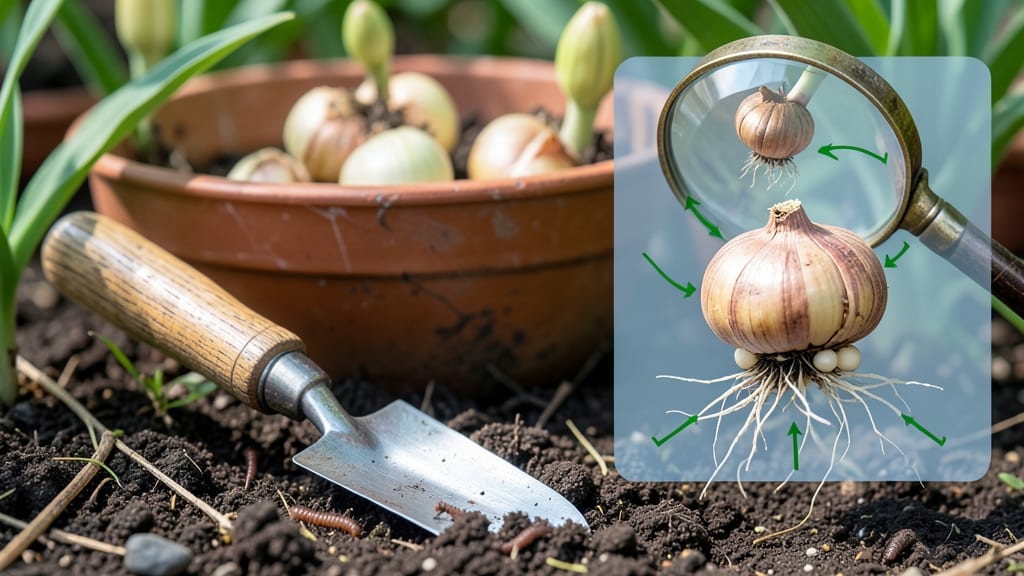
Yes, lily bulbs multiply over time by producing offsets—smaller bulbs that form around the parent bulb—but this process depends on proper planting depth (6 inches for most varieties), well-draining soil, and consistent care. Patience is key, as offsets typically take 2–3 years to mature enough for transplanting.
Lily bulbs naturally create new growth through a process called bulb division, where smaller bulbs (offsets) develop from the base of the parent bulb. 🌱 This happens most effectively when planted at the right depth—too shallow and they won't establish roots, while planting too deep can prevent offsets from forming.
The best time to check for new offsets is during late summer when the foliage begins to yellow, signaling the end of the growing season.
Different lily varieties multiply at different rates, with some like the Stargazer lily producing multiple offsets annually, while others may take several years to show significant growth.
What many gardeners don't realize is that proper soil conditions play a huge role. Lilies thrive in well-draining soil with a slightly acidic pH (around 6.0-7.0), which encourages healthy root development and offset production.
I've found that adding a layer of compost during planting gives the bulbs the nutrients they need to focus energy on creating new offsets rather than struggling to survive.
The key is balance—too much nitrogen promotes leafy growth at the expense of bulb multiplication, while a slow-release bulb fertilizer with phosphorus helps stimulate root and offset development.
💡 In This Article
- How Lily Bulb Offsets Develop and Grow
- Planting Depth and Care Tips for Faster Lily Bulb Multiplication
How lily bulb offsets develop and grow
The biological process of lily bulb multiplication begins with the parent bulb's basal plate, where tiny buds form during the growing season.
These buds develop into offsets—smaller bulbs that gradually grow larger as the parent bulb stores energy through photosynthesis in its leaves. 🌿 The key factor is the bulb's ability to allocate resources: younger bulbs (under 2 years old) prioritize leaf and stem growth, while mature bulbs (3+ years) divert more energy to offset production.
This explains why you might see minimal offsets from newly planted bulbs.
Different lily varieties exhibit distinct multiplication rates due to genetic differences. For example, Asiatic lilies often produce 2-4 offsets annually, while Martagon lilies may take 4-5 years to generate just 1-2.
Climate also plays a role—cooler northern regions see slower offset development compared to warmer southern climates, where bulbs can produce offsets year-round in mild winters. The ideal temperature range for offset formation is 60-75°F during the growing season, with cooler nights (50-60°F) promoting stronger bulb development.
What most gardeners overlook is how the bulb's age affects multiplication potential. A 3-year-old lily bulb can produce up to 6 offsets, while a 5-year-old bulb might generate 10+ if conditions are optimal. The offsets grow from the bulb's base in concentric circles, with the oldest typically being the largest.
This is why experienced growers recommend leaving the largest offsets attached for another year—they'll produce even more offsets in their second season. 💡 The trade-off is that removing too many offsets too soon can weaken the parent bulb's ability to flower.
Seasonal timing is critical for offset development. The process begins in early spring when the parent bulb sends up shoots, with active growth continuing through summer. By late summer (when foliage yellows), the offsets have typically reached 1-2 inches in diameter—about 1/3 the size of the parent bulb.
This is when they've stored enough energy to survive on their own if separated properly. The challenge is balancing offset removal with the parent bulb's need to maintain its own health for next year's blooms.
One surprising factor is how water stress influences multiplication. While consistent moisture is important, brief periods of drought during late summer can actually trigger the bulb to produce more offsets as a survival mechanism. This is why some gardeners intentionally reduce watering slightly during this period.
However, prolonged drought can stunt both parent and offset growth, so it's a delicate balance. The ideal soil moisture level is like a wrung-out sponge—damp but not soggy, allowing roots to breathe while providing hydration.
Consider this practical example: A Stargazer lily bulb planted in well-draining soil at 6 inches deep in a sunny backyard might produce 3-5 offsets by its third year. If you leave these attached for another season, each could grow to 1.5-2 inches in diameter by fall—ready for separation.
The parent bulb may then produce 2-3 new offsets the following year, demonstrating how proper care creates a self-sustaining multiplication cycle. 🌸