
Fertilization
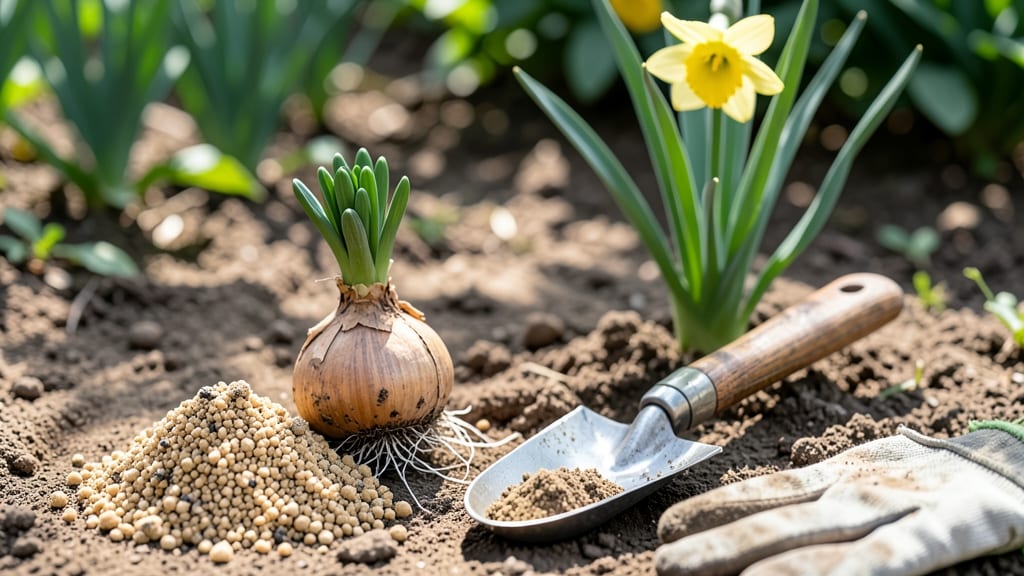
Fertilizing daffodil bulbs the right way turns dull blooms into bold, eye-catching 🌼 stars in your garden—it’s all about the timing and nutrients.
Struggling to get your daffodils to burst into vibrant blooms year after year? The secret might be hiding in your soil—not just your watering can. Proper fertilization transforms lackluster daffodils into showstopping garden stars, but timing and nutrient balance are everything.
Most gardeners overlook the fact that daffodils need a light feed in early spring when shoots emerge, not a heavy dose of fertilizer after blooming. Too much nitrogen at the wrong time can weaken bulbs and stunt next year’s flowers.
In this guide, I’ll walk you through the best fertilizer types, the exact months to apply them, and how to avoid common mistakes that leave your daffodils looking tired. Ready to give your bulbs the boost they deserve?
Best fertilizer types and ratios for daffodil bulbs (with soil test tips)
Daffodils thrive when their nutrient needs are met with precision—not too much, not too little. The ideal fertilizer for daffodils balances phosphorus for blooms, potassium for root strength, and micronutrients like magnesium and iron.
But choosing the wrong type or ratio can stunt growth or even kill your bulbs. Let's break down the best options and how to tailor them to your soil.
First, understand that daffodils are perennial bulbs, meaning they store energy underground. They need a low-nitrogen approach after blooming to avoid encouraging leafy growth at the expense of next year's flowers. A 5-10-10 NPK ratio is ideal for most daffodils, but soil tests can refine this further.
Organic options like bone meal or fish emulsion work well, while synthetic granular fertilizers offer precise control.
Soil pH plays a critical role too. Daffodils prefer slightly acidic to neutral soil (pH 6.0–7.0). If your soil test shows alkaline conditions (pH 7.5+), you'll need to add elemental sulfur or peat moss to lower pH before fertilizing.
Conversely, acidic soil (pH 5.5-) may require lime to balance nutrients. Always test first—your local extension office can help with affordable kits.
| Fertilizer Type | NPK Ratio | Best For | Application Time | Micronutrients |
|---|---|---|---|---|
| Bone Meal (Organic) | 3-15-0 | Bloom development | Early spring | Calcium, phosphorus |
| 5-10-10 (Synthetic) | 5-10-10 | General growth | Fall & early spring | Balanced micronutrients |
| Fish Emulsion | 5-1-1 | Leafy growth | Early spring only | Iron, zinc |
| Compost Tea | Varies | Soil health | Spring & fall | All micronutrients |
| Epsom Salt (Magnesium) | 0-0-0 | Yellowing leaves | Late spring | Magnesium sulfate |
For newly planted bulbs, focus on phosphorus-rich fertilizers like bone meal to encourage strong root systems. Mix 1–2 tablespoons of bone meal into the planting hole before placing the bulb.
This gives them a head start without overwhelming their delicate roots. Avoid synthetic fertilizers during planting—they can burn tender bulb tissue.
Established daffodils benefit from a two-step feeding approach. In early spring (when shoots are 2–3 inches tall), apply a balanced fertilizer like 5-10-10. Then, after blooming but before foliage yellows, switch to a low-nitrogen option (e.g., 0-10-10) to redirect energy to next year's flowers.
Never fertilize after leaves die back—this signals the bulb to go dormant.
Micronutrient deficiencies often show up as yellowing leaves or weak stems. If your daffodils exhibit these signs, a chelated iron supplement or Epsom salt (for magnesium) can work wonders.
Apply these sparingly—too much can be just as harmful as too little. Always water thoroughly after applying any fertilizer to prevent salt buildup around the roots.
One common mistake is assuming more fertilizer equals better blooms. Over-fertilizing, especially with nitrogen, leads to lush foliage but fewer flowers. Daffodils store energy in their bulbs, not their leaves. If you notice excess
Step-by-step fertilizing schedule: when and how to feed daffodils
Fertilizing daffodils at the right time can mean the difference between weak stems and vibrant blooms. Unlike many plants, daffodils thrive on a balanced approach—too much fertilizer can harm them, while too little stunts growth.
My secret? A month-by-month schedule tailored to their natural growth cycle, from dormancy to bloom.
Start with a soil test to check pH (ideal: 6.0–7.0) and nutrient levels. Daffodils prefer well-draining soil rich in organic matter. If your soil is heavy clay, amend it with compost before planting.
For established clumps, focus on timing and type—never fertilize after blooms fade, as this encourages weak foliage that won’t store nutrients for next year.
🌱 Daffodil Fertilizing Timeline
- 📅 Late Summer (August-September): Apply a balanced fertilizer (5-10-10) or bone meal when foliage turns yellow (post-bloom). This replenishes nutrients for next year’s bulbs.
- 🌱 Early Spring (March-April): Use a low-nitrogen fertilizer (e.g., 10-20-20) when shoots are 2–3 inches tall. This supports root and bloom development without burning tender growth.
- 🌼 Bloom Time (April-May): Skip fertilization. Let the plant focus energy on producing flowers and storing nutrients in the bulb for next season.
- 🔄 Newly Planted Bulbs (Fall): Mix compost or bulb food into planting holes. Avoid granular fertilizers—they can irritate fresh roots. Water deeply after planting.
⚠️ Pro Tip: Always water before and after applying fertilizer to prevent root burn.
For granular fertilizers, scatter 1 tablespoon per plant around the base (not touching the bulb) and water thoroughly. I prefer organic options like fish emulsion or worm castings for established clumps—they release nutrients slowly and improve soil structure.
Liquid fertilizers (diluted to half-strength) work well for container-grown daffodils, but avoid overdoing it.
Watch for signs of over-fertilizing, like brown leaf tips or weak stems. If this happens, flush the soil with water and reduce future applications. Daffodils are low-maintenance perennials, so less is often more.
My rule: Feed lightly in spring, skip during bloom, and replenish in fall—this mimics their natural cycle.
Container daffodils need extra attention. Since pots dry out faster, I fertilize every 4–6 weeks from spring to early summer using a water-soluble fertilizer. Always check moisture levels first—dry soil can burn roots when fertilizers are applied.
Mulch with straw or pine needles to retain moisture and regulate soil temperature.
Remember, daffodils reward patience. A consistent, gentle approach to fertilizing ensures they’ll return year after year with bigger blooms and healthier foliage. Start with your soil’s needs, follow the season’s cues, and soon your garden will be bursting with those cheerful yellow trumpets every spring. 🌼