
Planting
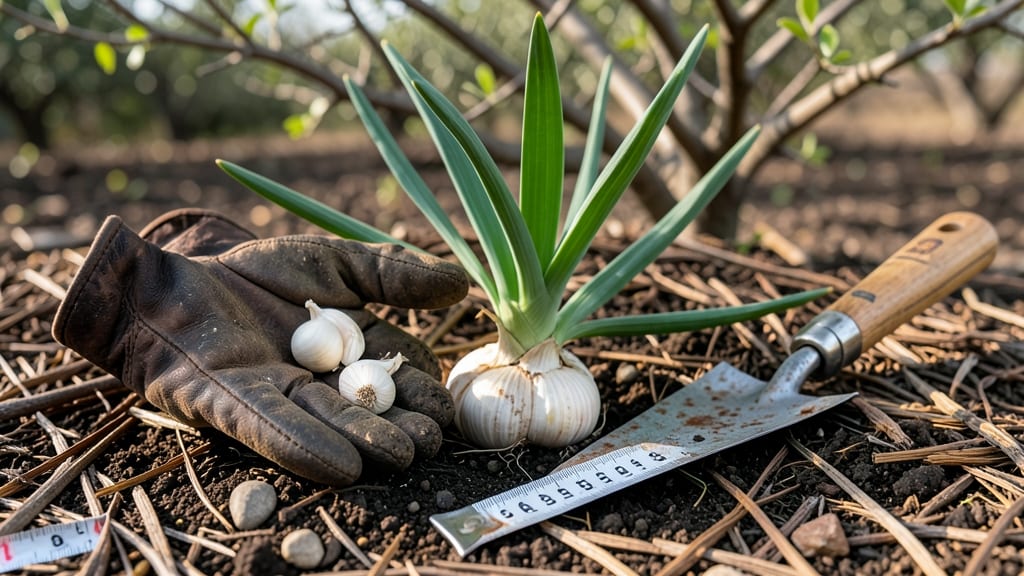
Planting garlic bulbs 4 to 6 inches apart is the secret to avoiding stunted growth and maximizing your harvest—no more tiny, weak cloves!
Garlic lovers know that proper spacing isn’t just about aesthetics—it’s the difference between a meager harvest and a bountiful crop of plump, flavorful bulbs 🧄. Too close, and your cloves fight for nutrients; too far, and you waste garden space.
The right distance ensures airflow, reduces disease, and lets each bulb reach its full potential.
Whether you’re working with hardneck or softneck varieties, soil type, and climate play a role in fine-tuning your spacing. In this guide, I’ll break down the exact measurements for different garlic types, plus how to adjust for small gardens or containers without sacrificing yield.
You’ll also discover how crowding affects bulb size, scape production, and even disease resistance—plus my top tips for avoiding common mistakes that lead to wasted effort. Ready to grow garlic like a pro?


Optimal garlic bulb spacing by variety type (hardneck vs softneck)
Not all garlic is created equal—and neither are their spacing needs. When planning your garlic patch, understanding the differences between hardneck and softneck varieties is key to maximizing bulb size and yield.
Hardneck garlic, known for its rocker-style stems and hard central stem (the scape), thrives with slightly wider spacing to accommodate its larger bulbs and aerial growth. Meanwhile, softneck garlic, with its artichoke-style cloves and milder flavor, benefits from closer spacing to encourage dense bulb production.
Proper spacing isn’t just about fitting more plants in—it’s about giving each bulb room to develop fully, circulate air, and prevent disease. Crowded garlic leads to smaller bulbs, increased fungal risks, and even poor scape formation in hardnecks.
Let’s break down the precise spacing guidelines for each type to ensure your garlic harvest is nothing short of spectacular.
Why spacing matters: Garlic bulbs need space to expand underground. A 4-inch clove can grow into a 2-inch bulb—that’s a 50% increase in diameter! Without proper spacing, bulbs compete for nutrients, leading to stunted growth. Additionally, airflow between plants reduces humidity, lowering the risk of white rot and other fungal diseases that thrive in damp conditions.
| Variety Type | Plant-to-Plant Spacing | Row Spacing | Bulb Size at Maturity | Key Notes |
|---|---|---|---|---|
| Hardneck Garlic | 6–8 inches apart | 12–18 inches between rows | 1.5–2.5 inches diameter | Needs extra space for scapes and larger bulbs |
| Softneck Garlic | 4–6 inches apart | 10–12 inches between rows | 1–1.5 inches diameter | Denser spacing encourages compact bulbs |
| Both Varieties | Adjust for soil fertility | Add 2–4 inches for clay soil | N/A | Poor soil = wider spacing for nutrient access |
For hardneck garlic, aim for 6–8 inches between cloves and 12–18 inches between rows. This extra space allows the scape (the curly stem) to develop without crowding, which is crucial for hardnecks like ‘Music’ or ‘German White’.
The scape is edible and prized in many cuisines, so giving it room to thrive is a must. If you’re growing hardnecks in heavy clay soil, increase row spacing to 20–24 inches to prevent waterlogging and bulb rot.
On the other hand, softneck garlic, such as ‘Silverskin’ or ‘Artichoke’, can handle slightly closer spacing of 4–6 inches between cloves and 10–12 inches between rows. Softnecks don’t produce scapes, so their energy goes entirely into bulb development.
This tighter spacing works well for small gardens or container growing, where space is limited. Just be mindful of air circulation—softnecks are still susceptible to fungal diseases if overcrowded.
If you’re planting a mix of both varieties, consider dedicating separate rows to each type. Hardnecks benefit from their own space to maximize scape production, while softnecks can be planted more densely for higher bulb yields per square foot.
For example, a 4-foot-wide bed could accommodate two rows of hardnecks (18 inches apart) and one row of softnecks (12 inches apart), optimizing both growth habits.
Don’t overlook the depth of planting, either. While spacing is critical, planting cloves 2 inches deep with the pointed end up ensures consistent germination. Use a soil marker or small stick to measure depth if your soil is loose or rocky.
In sandy soil, you might plant 1 inch deeper to retain moisture, while clay soil can be planted slightly shallower to avoid waterlogging.
One common mistake is assuming that smaller cloves can be planted closer together. In reality, smaller cloves often produce smaller bulbs, so spacing should still follow the guidelines above.
If you’re using garlic from the grocery store, break apart the bulb and plant the largest cloves first—they’ll yield the biggest harvest. Save the smaller cloves for next year’s planting or for green garlic harvests.
Finally, remember that spacing adjustments can be made based on your climate and soil type. In dry, hot regions, wider spacing helps reduce competition for water. In cool, wet climates, prioritize airflow to prevent fungal issues. Always <
How planting density affects garlic yield and disease prevention
When it comes to garlic, crowding isn’t just about fitting more plants into your garden—it directly impacts your harvest’s quality and health. Too close, and you’ll end up with small, weak bulbs and a higher risk of fungal diseases like white rot.
Too far apart, and you waste precious garden space. The science behind optimal spacing balances airflow, nutrient access, and bulb development.
Garlic bulbs need room to expand underground and develop properly. Each clove grows into a bulb that can reach 2-3 inches in diameter, and roots spread outward. Without proper spacing, bulbs compete for nutrients, leading to stunted growth and increased susceptibility to moisture-related diseases.
Even scape production (those curly garlic stalks) suffers when plants are overcrowded.
- 4-6 inches apart: Standard spacing for most garlic varieties in well-draining soil. Ideal for bulb development and airflow.
- 6-8 inches apart: Use for heavy clay soils or drought-prone areas to reduce competition.
- 2-3 inches apart: Only for container gardening or small spaces—expect smaller bulbs.
- 12+ inches apart: Best for organic-rich soils or when growing extra-large varieties.
- 18-24 inches between rows: Essential for disease prevention and easy harvesting.
Soil type plays a critical role in adjusting spacing. In sandy soils, where nutrients drain quickly, you can plant slightly closer (4 inches apart) since roots spread wider.
Conversely, clay soils benefit from wider spacing (6-8 inches apart) to prevent waterlogging and root rot. Always loosen soil before planting to encourage root growth.
Disease prevention is another key reason to space garlic properly. Fungal pathogens like white rot thrive in crowded, damp conditions. By spacing plants correctly, you improve airflow, reducing humidity around the foliage.
A general rule: if you can’t easily fit your hand between plants, they’re too close. For organic gardens, consider mulching with straw to further protect bulbs from soil-borne diseases.
Don’t forget about scape production—those edible garlic stems! Hardneck varieties produce scapes, and proper spacing ensures they grow long and straight. When plants are too close, scapes bend or break, reducing your harvest.
Aim for 6 inches between plants if you’re prioritizing scapes, as they need room to develop without competing for sunlight.
For maximum yield, combine proper spacing with well-timed planting. Fall-planted garlic benefits from winter chilling, which boosts bulb size. If you’re in a warmer climate, adjust spacing slightly wider (6-8 inches) to compensate for faster growth.
Always plant cloves 2 inches deep with the pointed end up for consistent results.