
Watering
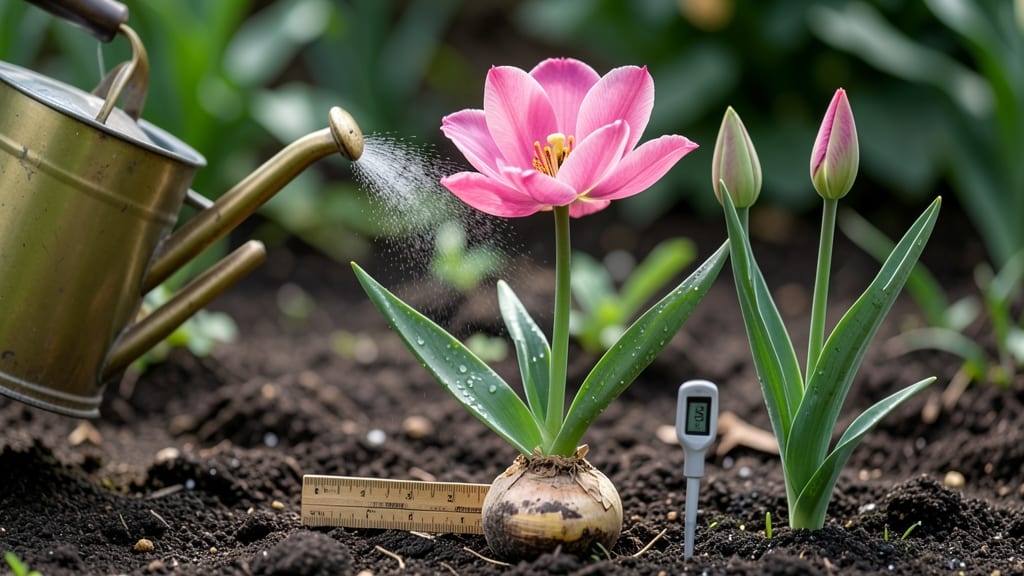
Watering tulip bulbs 🌷 the right way means giving them deep, infrequent drinks—not a daily sip—so they store energy for next year’s blooms.
Struggling to keep your tulips thriving? The secret to stunning blooms lies in mastering their watering schedule—too much or too little can ruin months of effort.
Think of tulips like a sponge: they need moisture to wake up in spring, but soggy soil in winter will rot their bulbs before they even sprout. The key is adjusting your watering to the season, from weekly soaks in spring to barely anything in dormancy.
Below, I’ll break down the exact schedule for each phase—plus how to spot when you’re over- or underdoing it—so your tulips come back bigger and brighter every year.
Tulip watering schedule by season: what you must know
Mastering the tulip watering schedule by season is the key to vibrant blooms and healthy bulbs. Unlike many plants, tulips have distinct phases—dormancy, growth, and flowering—each requiring precise moisture levels.
Overwatering can rot bulbs, while underwatering stunts growth. Let's break down the perfect monthly watering routine to keep your tulips thriving from fall to summer.
Tulips store energy in their bulbs during dormancy, so watering needs drop dramatically in winter. However, spring and early summer are critical for establishing strong roots and blooms. The goal is consistent moisture without soggy soil.
Use your finger to check soil depth—1-2 inches dry signals it's time to water. Adjust based on rainfall and your local climate for best results.
| Season | Growth Phase | Water Frequency | Soil Moisture Target | Key Notes |
|---|---|---|---|---|
| Fall (Oct-Nov) | Dormancy Begins | Every 3-4 weeks | 1-2" deep dry | Reduce as temps drop |
| Winter (Dec-Feb) | Full Dormancy | Monthly (if no snow) | 2-3" deep dry | Natural snow cover suffices |
| Early Spring (Mar-Apr) | Shoot Emergence | Weekly | Top 1" moist | Increase as shoots appear |
| Spring (Apr-May) | Flowering | Every 5-7 days | 2-3" moist | Deep water at base |
| Summer (Jun-Jul) | Post-Bloom | Bi-weekly | 1-2" dry | Let foliage yellow naturally |
In fall, tulips enter dormancy after planting. Water every 3-4 weeks only if soil remains bone-dry. Focus on establishing roots before winter. A 2-3 inch dry layer at soil depth is ideal—this prevents rot while maintaining bulb health.
Mulch lightly with straw to insulate bulbs from freezing temperatures without trapping excess moisture.
Winter is the easiest season for tulip care. Natural snow acts as insulation and moisture source, so water only if your region experiences dry winters. Check soil moisture monthly—if the top 2-3 inches stay dry, a light watering suffices.
Overwatering now can cause bulb rot before spring growth begins. Use a moisture meter if unsure about soil conditions.
When spring arrives and shoots emerge, increase watering immediately. Aim for weekly waterings to keep the top 1 inch of soil moist. This encourages robust root development before flowering.
Avoid overhead watering—direct the stream at the base of plants to prevent fungal diseases. Early spring is also when you should apply a light fertilizer to support growth.
The flowering phase (April-May) demands the most attention. Water every 5-7 days to maintain 2-3 inches of moisture in the soil. Focus on deep watering at the bulb's base to encourage strong stems.
Cut back on watering as flowers fade—don't remove foliage until it yellows naturally. This allows bulbs to store energy for next year's blooms.
After blooms fade, enter the post-bloom phase. Reduce watering to bi-weekly and let the top 1-2 inches of soil dry out between waterings. This phase is crucial for bulb replenishment.
Never cut foliage until it turns completely yellow—this ensures bulbs store enough nutrients for future growth. Yellow leaves indicate the bulb is ready for dormancy.
For container-grown tulips, adjust this schedule slightly. Potted bulbs dry out faster, so water every 5-7 days in spring and check soil moisture daily in hot weather.
Use well-draining potting mix and ensure containers have drainage holes. Containers also warm up faster, so reduce watering in summer to prevent overheating.
Regional climate plays a huge role. In arid climates, increase watering frequency by 20-30% to compensate for evaporation. In humid
Signs of overwatering vs underwatering tulip bulbs: how to fix common mistakes
Tulip bulbs are surprisingly sensitive to water—too much or too little can stunt blooms or rot the roots. Yellowing leaves or mushy stems often signal trouble, but knowing the difference between overwatering and underwatering is key to saving your plants.
I’ll break down the visual clues and quick fixes to keep your tulips thriving.
Start by checking the soil: Soggy, compacted soil with a foul odor means you’re overwatering, while dry, cracked earth or wilting foliage signals drought stress. Tulips need moderate moisture—never soggy—especially during their growth and flowering phases (spring through early summer).
⚠️ PROS-CONS-BOX: Watering Tulip Bulbs
- Water deeply (1 inch)
- Use morning watering (reduces fungal risk)
- Check soil 1 inch down before watering
- Use well-draining soil (sandy loam ideal)
- Watering at night (promotes rot)
- Letting soil stay waterlogged for days
- Skipping water during bloom phase
- Using heavy clay soil without amendments
For overwatered tulips, stop watering immediately and let the soil dry out. Gently loosen compacted soil around the bulb to improve airflow. If the bulb feels soft or mushy, it may already be rotting—remove it and replant in fresh, dry soil next season.
Underwatered tulips show crispy leaf edges and stunted stems. Revive them by giving a deep watering (1 inch) and mulching with 2 inches of organic matter to retain moisture. Avoid watering again until the top inch of soil is dry—tulips hate soggy roots but need consistent moisture.
Pro tip: Mulch with straw in late fall to regulate soil moisture during winter dormancy. This prevents both freeze-thaw cycles (which disrupt roots) and spring drought stress when shoots first emerge.
Watch for pests like slugs after watering—they thrive in damp conditions and can chew tulip leaves to nubs. Handpick them at dusk or use organic slug bait around the base of plants.
With these fixes, your tulips will bounce back from watering mistakes. Remember: consistency is key—tulips prefer steady moisture over sporadic soaking. Happy gardening! 🌷