
How To
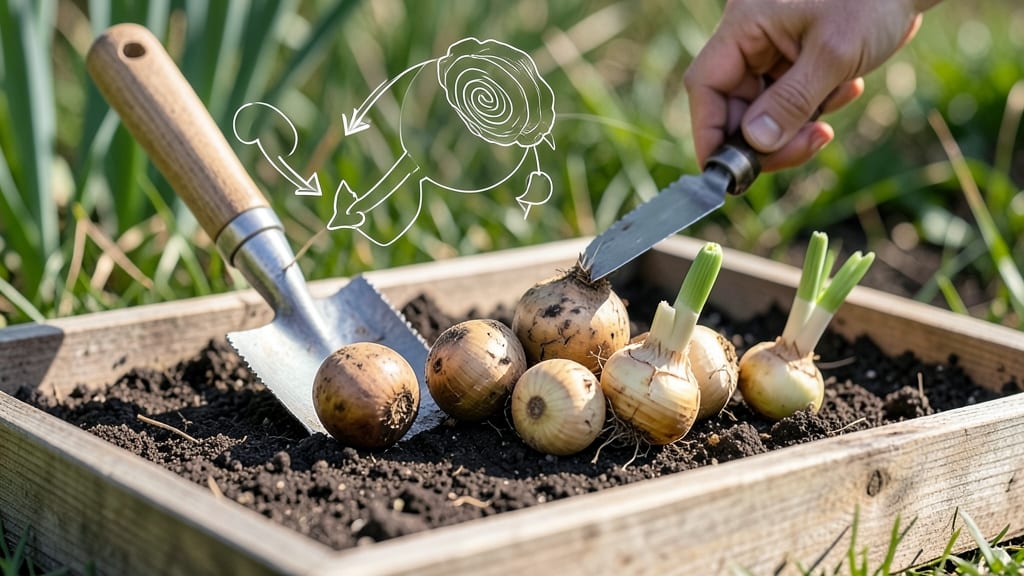
Gladiolus bulbs multiply naturally through offsets—tiny bulblets that grow from the base of mature corms. These new growths develop gradually, letting you expand your garden by dividing and replanting them every few years for bigger, more abundant blooms.
These offsets form as the mother corm matures, typically after 2-3 years of growth. 🌱 Unlike some bulbs that multiply quickly, gladiolus offsets take time—often 1-2 seasons to reach flowering size.
The key is patience: dig up clumps in late fall or early spring when foliage dies back, carefully separate the offsets (keeping at least 2 inches of stem attached), and replant them in well-draining soil with full sun.
Many gardeners find this process rewarding because each offset can produce its own stunning flower spikes!
What's fascinating is how this natural propagation mirrors other bulb plants like daffodils or tulips, but with one key difference: gladiolus offsets are more sensitive to moisture and temperature fluctuations.
That's why I always recommend storing divided offsets in a cool, dry place until replanting—it gives them the best chance to establish strong roots before the growing season.
💡 In This Article
- How Gladiolus Offsets Develop and Grow
- Best Practices for Dividing Gladiolus Bulbs
How gladiolus offsets develop and grow
The multiplication process begins when a mature gladiolus corm—typically 2-3 years old—produces offsets along its base. These tiny bulblets form from dormant buds that activate in response to the mother corm's energy reserves, a process called vegetative propagation.
Unlike seeds, offsets are genetically identical to the parent plant, ensuring consistent flower colors and growth patterns. 🌱 What's unique is how these offsets develop in stages: first as small, firm nodules (about ½ inch wide), then gradually enlarging as the mother corm depletes its stored nutrients.
Growth speed depends heavily on environmental conditions. In ideal settings—full sun exposure, well-draining soil with 6.0-7.0 pH, and consistent moisture—offsets can double in size over 6-8 weeks during active growth. However, they rarely flower in their first year, instead focusing on building root systems.
This contrasts with bulbs like daffodils, which often flower within a single season after division. The trade-off? Gladiolus offsets deliver larger, more robust blooms in subsequent years, making the wait worthwhile.
Here's what's happening underground: The mother corm acts like a biological battery, funneling starches and sugars to both sustain itself and fuel offset development.
Once the foliage yellows in late summer, the corm's energy shifts entirely to the offsets, which is why gardeners must resist the urge to dig too early. 💫 The offsets' outer skin is papery and protective, shielding delicate internal structures as they mature.
This natural shielding explains why they tolerate brief dry periods better than many other bulb types.
Temperature plays a critical role in offset maturation. Nighttime temperatures below 50°F can slow growth, while consistent warmth above 70°F accelerates development. That's why gardeners in cooler climates often see slower offset production compared to those in zones 7-10.
The good news? Even "slow" offsets in cooler regions can still reach flowering size in 2 years with proper care, proving that patience pays off in spectacular spiked blooms.
What most gardeners overlook is the offset's root system. Unlike the mother corm's fibrous roots, offsets develop their own miniature rootlets during the first growing season. These roots are delicate—often just ½ inch long—which is why replanting too soon can shock the young bulbs.
The key is waiting until these roots are at least 1 inch long before transplanting, giving them the resilience to establish independently.
Consider this comparison: A single mature gladiolus corm can produce 3-5 offsets annually, while some hybrid varieties may yield up to 8 offsets under perfect conditions. This natural multiplication explains why gladiolus gardens can expand dramatically with minimal effort—just divide and replant!
The process mirrors how wild gladiolus populations thrive in their native South African grasslands, where each generation builds upon the last.