
How To
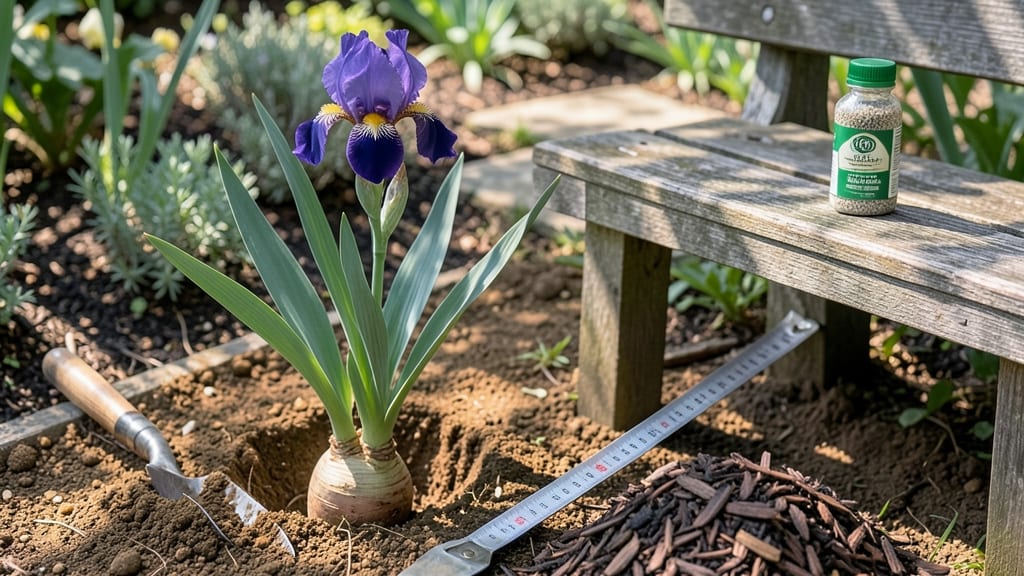
Optimal iris bulb planting depth by type and soil conditions
Getting the iris bulb planting depth right is the difference between a garden full of vibrant blooms and one that struggles to thrive. Most gardeners focus on soil type or sunlight but overlook how deep to plant these beauties.
The truth? Depth matters just as much as soil drainage—especially since irises hate soggy roots. Let’s break down the perfect planting depth for bearded, Siberian, and Japanese irises, adjusted for your soil’s texture.
First, a quick rule of thumb: plant iris rhizomes (not true bulbs) 2-3 times their height deep. But this varies slightly by type and soil.
For example, a bearded iris rhizome (the thick, fleshy root) should sit with its top third exposed, while Siberian irises (true bulbs) need a cozier, shallower spot. We’ll cover all three types, plus how to tweak depth for clay, sandy, or loamy soil to keep roots happy and blooms bountiful.
Here’s the golden rule: Measure depth from the rhizome’s bottom edge, not the top. Most gardeners mistakenly use the top as their reference point, which can lead to over-planting. For precision, use a trowel or depth gauge—or even a ruler—to ensure consistency.
And remember, soil type changes everything. Sandy soil drains fast, so you might plant slightly deeper, while clay holds moisture longer, requiring shallower placement to prevent rot.
For bearded irises, the most popular type, aim to have the top third of the rhizome exposed. This means if your rhizome is 2 inches wide, plant it so only about ⅔ of an inch sits above the soil.
Use a sharp trowel to create a trench, then place the rhizome with its pointy end facing up (this is where new growth emerges). The key here is drainage—bearded irises despise wet feet, so adjust depth if your soil stays soggy.
If you’re planting in clay soil, which compacts easily and holds moisture, reduce depth by 1 inch for bearded irises or 0.5 inches for Siberian types. Clay’s density can suffocate roots if buried too deeply.
Conversely, sandy soil drains so quickly that you’ll need to plant 1 inch deeper to retain moisture near the roots. Think of it as a trade-off: shallower in clay, deeper in sand.
Siberian irises, often mistaken for true bulbs, are actually rhizomatous like bearded types but with a more compact form. Their bulbs should sit 2-3 inches deep, or about twice their diameter.
The trick here is to plant them slightly deeper than bearded irises because their roots are more sensitive to drying out. In loamy soil (the ideal middle ground), stick to the standard depth—no adjustments needed.
Japanese irises, with their delicate, fan-shaped blooms, require a gentler touch. These rhizomes are wider and flatter, so plant them with only the top quarter exposed. This means a 3-4 inch depth for a 4-inch-wide rhizome.
Unlike bearded irises, Japanese types prefer moist but not waterlogged soil, so avoid sandy spots unless you’re willing to amend the soil with organic matter to retain moisture.
Pro tip: Use a level tool to ensure your planting trench is even—uneven depths can cause water to pool in low spots, leading to rot. After planting, water thoroughly to settle the soil around the rhizomes, then mulch lightly with gravel or coarse sand
5 Common mistakes that kill iris blooms (and how to Fix them)
Even if you’ve mastered the correct planting depth for your iris rhizomes, other factors can still sabotage those stunning blooms. I’ve seen gardeners struggle for years with irises that refuse to flower, only to discover they were making these common but fixable mistakes.
Let’s tackle the top issues and get your irises thriving again.
The first red flag? Overwatering during dormancy. Irises need a dry period in late summer to prepare for next year’s blooms. Too much moisture can rot rhizomes before they even get a chance to flower.
I once had a client’s entire iris bed fail to bloom because their automatic sprinkler ran through summer—no flowers that year!
Poor drainage is another silent bloom killer. If your soil stays soggy, rhizomes suffocate and won’t produce energy for flowers. Test your soil by digging a hole—if water pools after 30 minutes, you’ve got a drainage problem. Amending with sand or grit can save your irises from this fate.
⚠️ callout warning ⚠️
⚠️ Critical Depth Mistake
Planting iris rhizomes too deep (below 4-6 inches) smothers them, while planting too shallow (less than 2 inches) exposes them to rot. The top 1/3 should always remain visible—this is your fail-safe for perfect depth!
✅ Fix: Dig a trench, place rhizomes with pointy end up, then cover with 2-3 inches of soil (adjust for clay/sandy soil).
Incorrect sunlight exposure is another bloom blocker. Irises demand full sun (6+ hours daily). I’ve had gardeners swear their irises needed shade—until we moved them to sunnier spots and saw blooms within weeks! If your irises are in partial shade, try relocating them before blaming other factors.
Seasonal timing errors often go unnoticed. Planting too early or too late disrupts the iris’s natural cycle. The ideal window is late summer to early fall (after your first frost date). If you’re in a warm climate, spring planting works too—but never plant when soil temps exceed 80°F.
Finally, over-fertilizing with nitrogen can backfire. Too much nitrogen produces lush foliage but starves blooms. Switch to a low-nitrogen, high-phosphorus fertilizer (like 5-10-10) in early spring to encourage flowers instead of leaves. My irises went from 2 blooms per stalk to 8 after this simple switch!
Each of these fixes is simple but powerful. Start with one—like adjusting your watering schedule or moving irises to sunnier spots—and watch your blooms return next season. Your irises will thank you with bold, vibrant flowers that steal the show! 🌷