
Planting
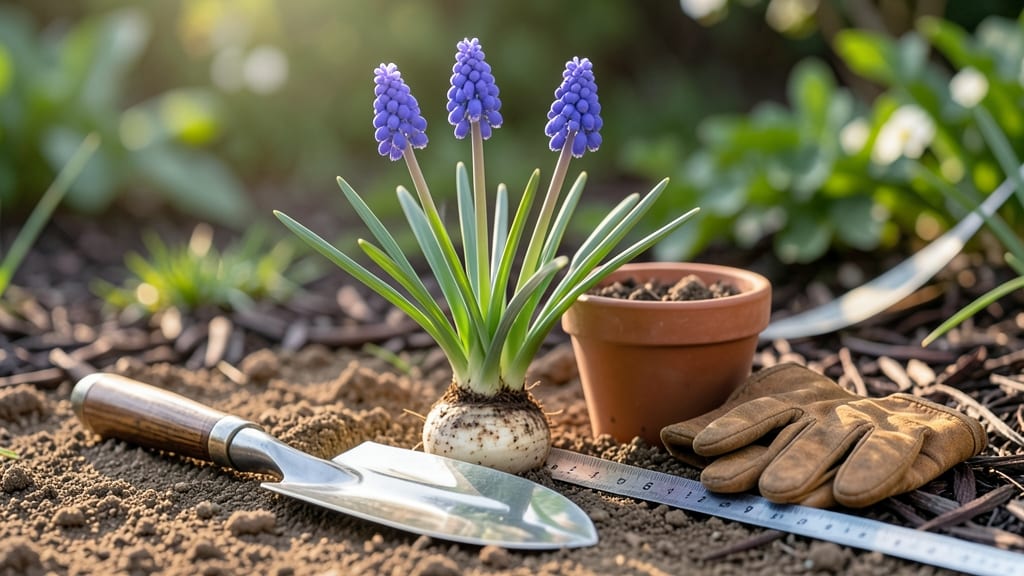
Planting muscari bulbs at the right depth—how deep to plant muscari bulbs is the secret to those cheerful 💜 grape hyacinth blooms that greet you every spring—is critical for success.
Get it wrong, and you might end up with weak stems, sparse flowers, or even no blooms at all. Too shallow, and the bulbs dry out; too deep, and they rot before they can sprout. I’ve seen both mistakes firsthand, and trust me—you want to avoid them.
In this guide, I’ll walk you through the exact depth rules, how to adjust for your soil type, and the best timing for fall planting in Zone 6a to ensure your muscari thrives.
You’ll also learn how to space them properly, what to do if you’ve already planted them wrong, and how to keep them coming back year after year with minimal effort.


Muscari bulb planting depth: the ideal rule of thumb for perfect blooms
If you've ever wondered why some muscari bulbs bloom beautifully while others struggle, the answer often lies in planting depth. These grape hyacinths thrive when planted at the right depth—typically 2-3 times the bulb's height.
This rule isn't just a gardening myth; it's rooted in how bulbs store energy and develop roots. Too shallow, and your bulbs may rot or fail to establish properly. Too deep, and they'll struggle to reach the surface for sunlight, resulting in weak or no blooms.
The ideal planting depth for muscari bulbs is usually between 4-6 inches, depending on their size. For most standard muscari bulbs, which are about 1-2 inches tall, this translates to planting them 3-4 inches deep.
Smaller bulbs can go slightly shallower, while larger ones may need a bit more depth. Understanding this balance is key to ensuring your bulbs have the best chance to flourish and reward you with those vibrant spring blooms.
Here’s why depth matters: Muscari bulbs store nutrients in their basal plate, the flat bottom where roots emerge. When planted too shallow, this plate can dry out or rot due to exposure.
Conversely, planting too deep forces the bulb to stretch its roots upward, weakening its structure and delaying—or even preventing—flowering. The right depth ensures the bulb has enough moisture and stability to grow strong roots while still having access to sunlight for photosynthesis.
Now, let’s break this down with a quick reference to help you visualize the perfect planting depth. The table below compares bulb size to ideal planting depth, along with other critical factors for success.
| Bulb Size | Ideal Planting Depth | Spacing Between Bulbs | Soil Type Adjustment |
|---|---|---|---|
| 1-1.5 inches | 3 inches | 3-4 inches | Add compost to sandy soil |
| 1.5-2 inches | 4 inches | 4 inches | Loosen clay soil for drainage |
| 2+ inches | 5-6 inches | 5 inches | Mix in perlite for aeration |
When planting, always position the pointed end of the bulb upward. This ensures the bulb grows in the correct orientation, with roots developing downward and shoots emerging upward. If you're unsure which end is up, look for the basal plate—the flatter side with a slight indentation.
This is the bottom of the bulb and should face downward.
Another critical factor is the soil type where you’re planting. In sandy soil, which drains too quickly, you might need to plant muscari bulbs slightly deeper to retain moisture. Conversely, in heavy clay soil, which can become waterlogged, planting them a bit shallower helps prevent rot.
Amending your soil with organic matter, like compost or well-rotted manure, can also improve drainage and moisture retention, making it easier to achieve the ideal planting depth.
Proper planting depth isn’t just about the initial placement—it’s also about creating the right conditions for root development. Muscari bulbs need a stable environment where they can establish roots before sending up shoots.
If planted too shallow, the bulb may dry out or be exposed to temperature fluctuations, which can stress the plant. If too deep, the bulb may struggle to access the nutrients and moisture it needs near the surface. Aim for that 4-6 inch range to strike the perfect balance.
Once planted, mulch around the area with a 2-3 inch layer of organic mulch, such as straw or shredded leaves. This helps regulate soil temperature and retains moisture, which is especially important during the early stages of root growth.
Mulching also suppresses weeds, reducing competition for nutrients and water. Just be sure not to pile mulch directly against the bulb, as this can cause rot.
Finally, remember that muscari bulbs are perennial, meaning they’ll return year after year if cared for properly. The depth you plant them at now will influence their performance for seasons to come.
By following the 2-3x bulb height rule and adjusting for your soil type, you’ll set your muscari bulbs up for success, ensuring they bloom beautifully each spring with minimal effort on your part.
With the right depth, your grape hyacinths will thrive, adding bursts of color to your garden and bringing joy with their delicate, grape-like flowers. Happy planting! 🌱💜
Adjusting planting depth for different soil types and climates
Your muscari bulbs won’t thrive if planted at the same depth in clay soil as they would in sandy loam. Each environment demands slight adjustments to ensure proper root development and spring blooms.
For example, heavy clay holds moisture longer, while sandy soil drains too quickly—both extremes can stress your grape hyacinths if depth isn’t modified.
Climate also plays a role. In cold climates, deeper planting protects bulbs from freeze-thaw cycles, while container gardens require shallower depths due to limited space.
Even a 1-inch difference can mean the difference between vibrant foliage and floppy, struggling plants. Let’s break down the exact adjustments for your specific growing conditions.
⚠️ Warning: Signs Your Muscari Bulbs Are Planted Wrong
- Yellowing leaves by early spring = too shallow (roots exposed to cold)
- No blooms despite green foliage = too deep (bulb can’t access sunlight)
- Mushy stems after rain = poor drainage (adjust depth + amend soil)
Fix it: Dig up bulbs, adjust depth per soil type, and add compost to improve drainage.
For heavy clay soil, plant 1 inch deeper than the standard 4–6 inches. Clay’s density can suffocate roots if bulbs are too close to the surface, but deeper planting prevents waterlogging.
Aim for 5–7 inches deep and mix in organic matter (like compost) to improve aeration. This combo mimics the looser texture muscari prefer.
In sandy soil, the opposite is true. Sandy mixes drain too quickly, so plant 1 inch shallower (3–5 inches deep) to keep bulbs within reach of moisture.
Mulch heavily with straw or pine needles to retain humidity near the roots. Without this adjustment, your bulbs may dry out before establishing roots.
Cold climates (USDA Zones 3–5) demand deeper planting—aim for 6–8 inches deep to shield bulbs from winter temperature swings. The extra soil acts as insulation, protecting the muscari’s dormant period.
In containers, reduce depth to 3–4 inches and use a well-draining mix with perlite or vermiculite to prevent rot.
Always plant with the pointed end up, even when adjusting depth. This ensures proper root and shoot growth. After planting, water deeply to settle the soil and eliminate air pockets.
If your region experiences freeze-thaw cycles, add a 2-inch mulch layer of straw or leaves in late fall to further protect bulbs.
Monitor your muscari in early spring for green shoots emerging 2–3 inches above soil level—a sign of correct depth. If you see yellowing leaves or stunted growth, dig up a bulb to check its position.
With these adjustments, your grape hyacinths will reward you with dense, colorful blooms year after year. 💜