
Planting
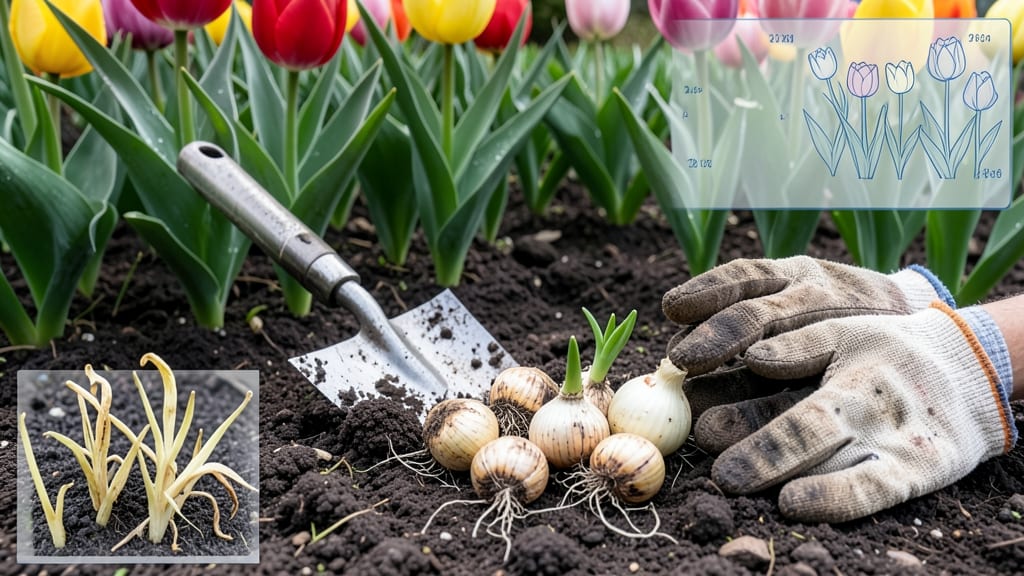
When what happens if you plant bulbs too late, flowering is delayed, root growth weakens, and survival rates drop—especially in colder climates—though hardy types like tulips or daffodils might still emerge if the ground remains unfrozen. Relying on stored energy often leads to smaller blooms or no flowers until the following year.
Late planting disrupts the natural cycle bulbs need to establish roots before winter dormancy. 🌱 In colder zones, bulbs planted after the recommended window (typically 4-6 weeks before frost) struggle to develop strong root systems, making them vulnerable to freeze damage.
Even hardy varieties like tulips or daffodils may fail to bloom on time or at all, as their energy reserves get depleted faster when forced to grow in less-than-ideal conditions.
For example, garlic planted late in Zone 5 often produces smaller cloves because the bulbs can't complete their growth cycle before winter sets in.
If you're in a milder zone like Zone 8 or 9, you might still get lucky with late plantings, but the blooms will likely be sparse or delayed. The key is to adjust your strategy—choose cold-hardy bulbs, improve soil drainage, and consider indoor forcing for late-season plantings.
Mulching can also help insulate bulbs and protect them from early frost.
💡 In This Article
- How Late Planting Affects Bulb Root Growth and Flowering
- Zone-Specific Late Planting Strategies for Bulbs
How late planting affects bulb root growth and flowering
When you plant bulbs too late, their biological clock gets thrown off because they need time to establish roots before winter dormancy kicks in. Most bulbs require 4-6 weeks of root growth before the first frost to store enough carbohydrates for flowering.
Late planting forces them to rely on limited stored energy, often leading to weak or stunted root systems. For example, tulips planted after October 15th in Zone 5 may only develop roots that are 20-30% as strong as those planted on time.
The temperature threshold for root development is critical—most bulbs need soil temps between 45-60°F for optimal growth. When planted late, bulbs face cooler soil conditions, slowing metabolic processes and reducing nutrient uptake.
This energy deficit manifests in smaller blooms or no flowers at all, as the plant prioritizes survival over reproduction. In extreme cases, like Zone 3, late-planted daffodils might not emerge until spring, using up precious reserves just to survive.
Frost lines play a crucial role—bulbs planted too late often sit just below the frost line, where temperatures fluctuate unpredictably. This creates a "thermal stress" that weakens cell walls and disrupts water uptake.
For instance, crocus bulbs in Zone 8 planted after November 1st may experience 30% higher moisture loss due to freeze-thaw cycles, further stressing their systems. The result? Bulbs that struggle to break dormancy or produce only a single, weak stem.
Hardiness matters—some varieties like snowdrops or winter aconites can tolerate late planting because they're adapted to cold, moist conditions. Their roots grow slowly but steadily, even in 35-40°F soil.
Meanwhile, delicate types like hyacinths or paperwhites may rot entirely if planted late, as their roots can't adapt to the sudden chill. The key difference lies in their natural dormancy triggers and energy storage capacity.
Consider this: a late-planted tulip bulb might produce flowers, but they'll be 50% smaller and appear 2-3 weeks later than scheduled. This delay happens because the bulb diverts energy to root growth instead of flower development.
In some cases, like with garlic in Zone 6, late planting can result in no bulb formation at all, as the plant focuses solely on leaf growth to survive the winter.
What most gardeners don't realize is that late planting also affects the bulb's internal chemistry. The stored starches meant for flowering get converted to sugars for root protection, creating a vicious cycle where the bulb becomes more vulnerable to disease.
For example, late-planted alliums often develop fungal infections because their weakened state can't fend off soil pathogens.
To salvage late plantings, focus on bulbs with high cold tolerance and prioritize those that can handle 6-8 weeks of root growth before frost. Mulching with 4-6 inches of straw or leaves can add 5-10°F of insulation, giving bulbs a fighting chance in marginal conditions. 🌱