
How To
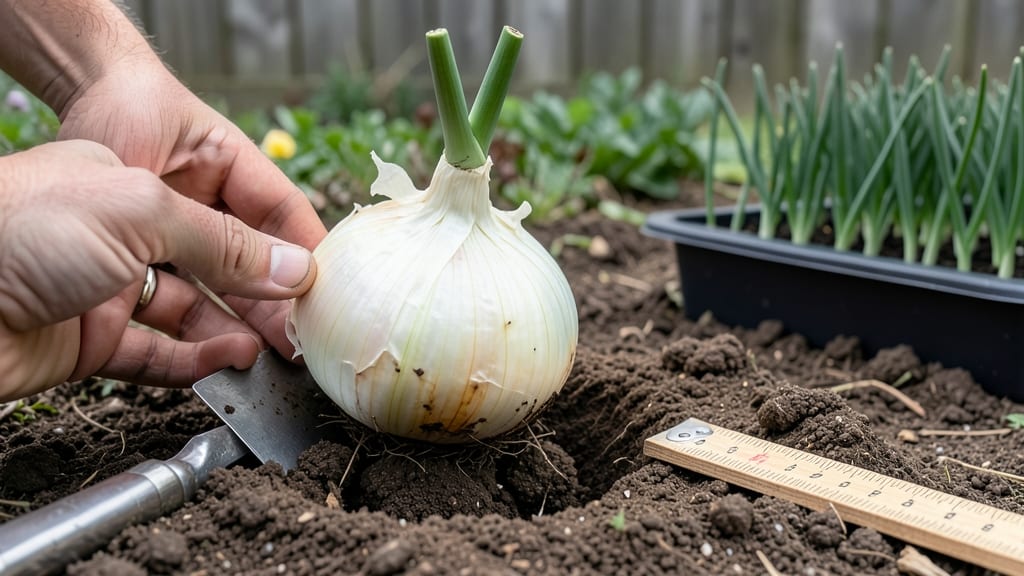
Planting onion bulbs 1–2 inches deep is the secret to strong roots and a fast harvest—especially when you time it with soil temperatures that trigger growth.
If you’ve ever planted onions only to watch them bolt or rot before forming bulbs, you’re not alone. The depth matters more than you think—too shallow, and they’ll flop; too deep, and they’ll suffocate. But get it right, and you’ll have plump, flavorful onions by late summer.
This guide breaks down the exact depth for your onion variety, how soil warmth speeds up germination, and the 3 most common mistakes that ruin harvests before they start.
You’ll learn how to adjust for sandy vs. clay soil, when to plant for maximum bulb size, and how to tell if your onions are happy—or on their way to failure.


Optimal onion bulb planting depth by variety and soil type
Getting the onion bulb planting depth right is one of the most critical steps for a successful harvest. Whether you're growing short-day, intermediate-day, or long-day varieties, the depth affects root development and bulb formation.
For example, planting too deep can cause rot, while shallow planting leads to weak stalks and poor bulb development.
Soil type also plays a major role—sandy soils drain quickly, requiring slightly deeper planting to retain moisture, while clay soils hold moisture longer, allowing for shallower depths. Understanding these factors ensures your onions get the perfect start for strong, healthy growth.
Here’s a quick reference guide to help you determine the ideal planting depth for your onions based on variety and soil type:
For short-day onions, like Texas Early White, aim for a planting depth of 1 inch in clay soil and 1.25 inches in sandy soil. These varieties thrive in warmer climates and need consistent moisture, so adjusting depth based on soil type ensures they don’t dry out or rot.
If you’re growing intermediate-day onions, such as Yellow Granex, stick to 1 inch in clay and 1.25 inches in sand. These onions are versatile and adapt well to different conditions, but proper depth still encourages strong bulb formation and disease resistance.
Long-day onions, like Sweet Spanish, require the deepest planting at 1.25 to 1.5 inches, especially in sandy soils. Their taller stalks and larger bulbs benefit from a deeper root zone, which helps them access nutrients and water more efficiently during their longer growing season.
Always plant with the pointed end facing up—this ensures the bulb grows upward rather than sideways. After planting, gently firm the soil around the bulbs to eliminate air pockets, which can cause uneven growth or rot.
One common mistake is planting onions too deep, which can lead to rotten bulbs or stunted growth. Conversely, planting too shallow may result in weak stalks that flop over before harvest. Pay close attention to soil type and adjust accordingly for the best results.
Finally, remember that soil temperature also influences planting depth. Cooler soils may require slightly deeper planting to protect young roots, while warmer soils can handle shallower depths. Always monitor your soil’s moisture and temperature for optimal onion growth.
Soil temperature triggers that accelerate onion growth
Onions are finicky about timing—plant them too early in cold soil, and germination stalls. Too late, and you miss the 40–50°F sweet spot where roots activate and growth explodes.
A soil thermometer becomes your secret weapon here, revealing when the ground is just warm enough for consistent sprouting and strong stem development. Even a 5°F difference can delay germination by weeks, so precision matters.
Depth also plays a hidden role in heat absorption. Planting onion bulbs too deep buries them in cooler soil layers, while shallow planting exposes them to rapid temperature swings. The ideal balance?
A depth that keeps roots anchored in stable warmth while allowing tops to reach sunlight quickly. Let’s break down the exact triggers and techniques to maximize your harvest.
- 1. Test soil at 40–50°F – Use a thermometer 2" deep; this is the germination trigger for most onion varieties. Wait until morning readings hit 45°F consistently for 3+ days.
- 2. Plant 1–1.5" deep – Deeper than 1.5" risks rot; shallower than 1" leaves bulbs vulnerable to drying. Aim for 1.25" in loamy soil for balance.
- 3. Adjust for soil type – Sandy soil warms faster; plant 1" deep. Clay holds cold; go 1.5" deep to insulate roots.
- 4. Mulch after planting – Apply 1–2" of straw to stabilize soil temps and retain moisture, preventing temperature shock to new sprouts.
- 5. Monitor post-planting – If soil cools below 40°F after planting, cover with row fabric until warmth returns.
Here’s the science: Onion seeds need consistent warmth to break dormancy, but their shallow roots can’t tolerate prolonged cold. Planting at the right depth ensures the basal plate (where roots form) stays in the 45–55°F range, while the shoot reaches sunlight faster.
For example, in Zone 5, I’ve seen germination rates jump from 30% to 90% simply by waiting for soil to hit 48°F before planting.
Don’t overlook the microclimate effect. South-facing beds warm 2–3°F faster than north-facing ones, so adjust your planting window accordingly. Raised beds also heat up quicker—plant them 1 week earlier than in-ground soil.
Pro tip: If your soil thermometer shows 50°F+ but tops are still cold, use black plastic mulch to raise ground temps by 5–10°F.
Once sprouts emerge, keep soil temps between 55–75°F for optimal bulb development. Below 50°F, growth slows; above 80°F, onions bolt prematurely. A simple trick? Water in the morning to cool soil slightly and prevent heat stress.
With these triggers mastered, you’ll go from spotty germination to uniform, vigorous plants in just weeks.
🌱