
Companion Plants
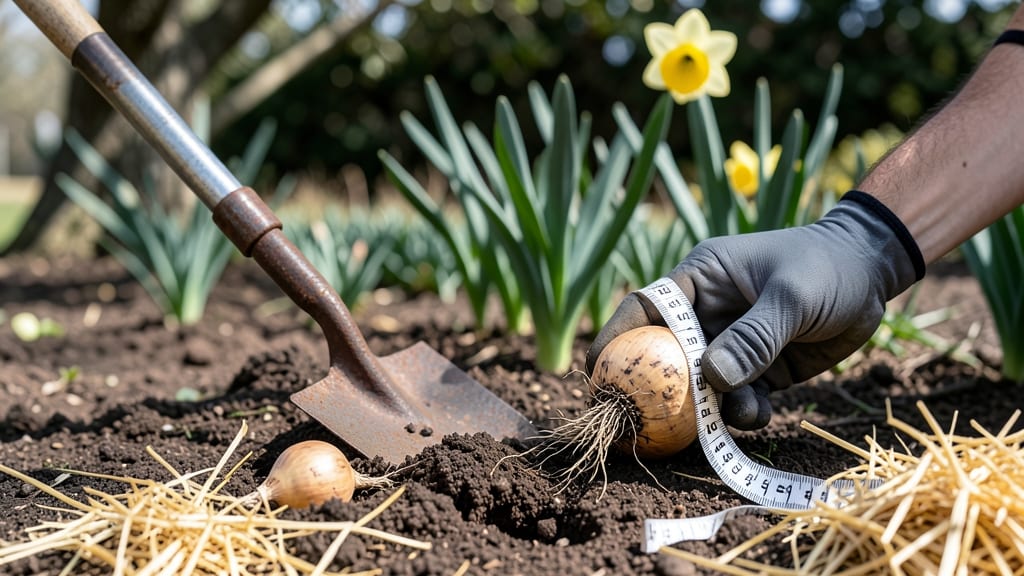
To create vibrant daffodil clusters, plant 5 to 9 bulbs together for a natural look, spacing them 4 to 6 inches apart to prevent overcrowding. For bold displays, larger groupings of 12+ bulbs will deliver dramatic spring color but need deeper planting and nutrient-rich soil.
Daffodils thrive when planted in clusters because their natural growth habits create a full, lush appearance. 🌼 The key is balancing bulb count with spacing—too few bulbs result in sparse blooms, while too many can lead to competition for nutrients and weaker stems.
I’ve found that smaller groupings (5-9 bulbs) work beautifully in garden borders, while larger clusters (12+) create stunning focal points in lawns or containers. The spacing also affects bloom timing: tighter clusters may flower slightly later as the bulbs support each other’s growth.
For best results, plant bulbs in well-draining soil and water thoroughly after planting. Adding a layer of mulch helps retain moisture during the growing season. If you’re planting in containers, aim for 3-4 bulbs per 6-inch pot—they’ll multiply over time, giving you even more blooms each spring!
💡 In This Article
- Daffodil Bulb Spacing Science: Why Group Size Matters
- Designing Stunning Daffodil Clusters: Bulb Count by Garden Style
Daffodil bulb spacing science: why group size matters
Daffodil bulbs follow a fascinating growth pattern where their root systems spread outward in a circular pattern.
When you plant bulbs too close together, their roots compete aggressively for water and nutrients, leading to weaker stems and smaller blooms. 🌱 Studies show that bulbs planted 4-6 inches apart allow roots to expand without overlapping, ensuring each plant receives adequate moisture and minerals.
This spacing also mimics their natural habitat, where daffodils grow in loose clusters in meadows rather than dense patches.
The magic happens in the bulb's basal plate—the bottom where roots emerge. A single daffodil bulb can produce 5-7 roots in ideal conditions, but when bulbs are crowded, these roots must share a limited soil volume.
This competition triggers a survival response: the plant diverts energy from flower production to root expansion, resulting in fewer but larger blooms. Conversely, properly spaced bulbs allocate energy evenly, producing 3-5 flowers per stem with vibrant color and sturdy stems that hold up to spring rains.
Timing plays a crucial role too. Bulbs planted in smaller groups (5-9 bulbs) tend to bloom slightly earlier because they experience less root competition. Larger clusters (12+ bulbs) may delay flowering by 3-5 days as the central bulbs support each other's growth.
This is why gardeners often see a "wave" of blooming—outer bulbs open first, followed by the inner cluster. The delay also extends the overall bloom period, giving you 2-3 weeks of continuous color instead of a single burst.
Soil depth matters just as much as spacing. Daffodil bulbs need to be planted 6-8 inches deep (twice the bulb's height) to establish strong root systems. In larger clusters, the center bulbs often receive less direct sunlight, which can weaken their stems.
To compensate, mix compost or bone meal into the planting hole—this provides phosphorus for root development and helps bulbs in shaded areas thrive. The result? A cluster where every bulb contributes equally to the display.
Here's what happens when you get it wrong: Overcrowded bulbs produce pale, undersized flowers on floppy stems that flop over after just 3-5 days. Properly spaced clusters, however, maintain their shape for 2 weeks or more, with flowers that stay upright even in windy conditions.
The difference comes down to root health—when bulbs have space to breathe, they grow stronger and more resilient.
For maximum impact, consider the 3:1 ratio rule: For every 3 inches of spacing between bulbs, you get 1 inch of additional bloom height.
This means a cluster of 9 bulbs spaced 5 inches apart will produce a fuller display than 9 bulbs crammed into a 3-inch diameter. The science is clear: spacing isn't just about aesthetics—it's about giving each bulb the room it needs to perform at its best.