
Flowers
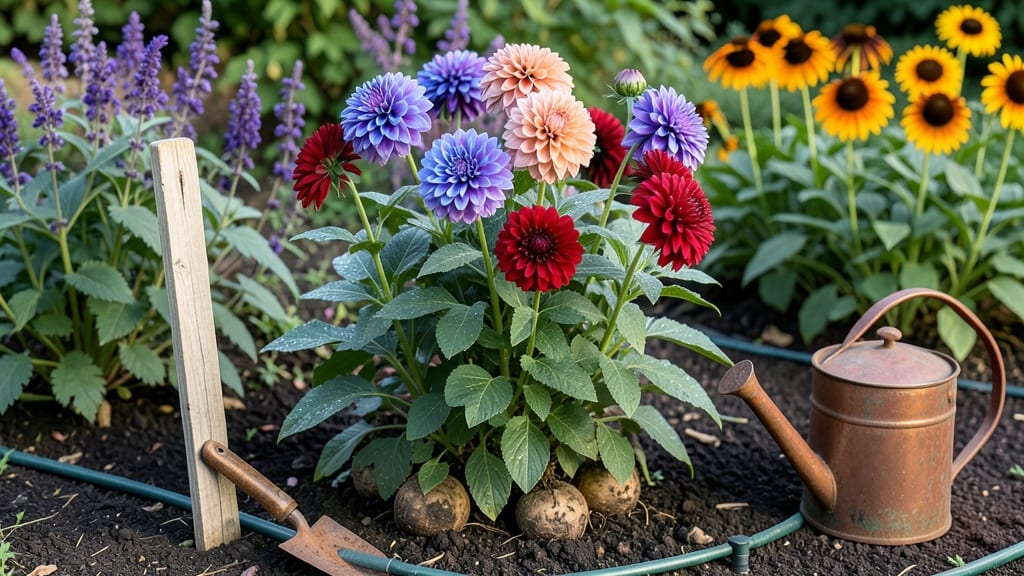
Summer perennial bulbs like dahlias and cannas bring unexpected drama to your garden—think velvety blooms that multiply every year without replanting. 🌸 I’ve watched my own patch go from a handful of tubers to a riot of color that lasts from June through frost, with zero extra work after the first season.
The secret lies in treating them like perennials, not annuals: plant them deep, feed them well, and let them naturalize.
Most gardeners treat these as seasonal divas—plant in spring, dig up in fall—but that’s where the magic gets lost. My boldest blooms come from bulbs left undisturbed for three years or more. They develop stronger roots, bigger flowers, and better pest resistance.
You’ll need well-draining soil (mix in compost or sand if yours is heavy) and 6+ hours of sun daily—but once established, they’re nearly foolproof.
By midsummer, you’ll have stems thick as your thumb and blooms so abundant they’ll make neighbors ask for cuttings. The key maintenance? Deadheading spent blooms to encourage more flowers and mulching heavily in late spring to retain moisture.
Dahlias especially reward this care with dinner-plate-sized blooms that last weeks in a vase.
Works for containers too—just use large pots with drainage. Perfect for cutting gardens, borders, or even small-space gardens where you want maximum impact with minimal upkeep. Let’s get those tubers in the ground!
Why Summer Blooms Fade Fast
Summer perennial bulbs are prized for their vibrant, long-lasting blooms—but sometimes, they disappoint by wilting or fading sooner than expected. Understanding the root causes helps you extend their beauty and ensure they return stronger each season. Here’s why it happens:
Summer’s intense heat can stress bulbs, causing flowers to droop or wither prematurely. Many perennial bulbs, like dahlias or canna lilies, thrive in warm climates but struggle when temperatures exceed 90°F (32°C) for prolonged periods.
Why it happens:
- Photosynthesis slowdown: High heat reduces the plant’s ability to convert sunlight into energy, weakening stems and petals.
- Transpiration spike: Bulbs lose moisture rapidly through leaves, leading to dehydration even if soil stays moist.
- Root zone overheating: Soil temperatures above 85°F (29°C) can damage roots, cutting off nutrient and water supply.
Actionable fix:
- Mulch heavily with organic matter (straw, wood chips) to regulate soil temperature.
- Provide afternoon shade (especially for tropical bulbs) using shade cloth or nearby structures.
- Water deeply at dawn to reduce evaporation and cool roots.
Many summer perennials, such as gladiolus or tiger lilies, hate soggy roots. If bulbs sit in waterlogged soil, they suffocate, leading to weak stems and early bloom decline.
Why it happens:
- Oxygen deprivation: Roots need airflow to absorb nutrients; waterlogged soil blocks this, causing root rot (a fungal infection).
- Nutrient leaching: Excess moisture washes away essential minerals like phosphorus and potassium, critical for flower production.
- Bacterial buildup: Stagnant water breeds pathogens like Pythium, which attack bulb bases.
Actionable fix:
- Test soil drainage by digging a 12-inch hole, filling it with water, and timing how long it takes to drain. Ideal: 4–6 hours.
- Amend clay soil with perlite, sand, or compost to improve aeration.
- Raise beds slightly (6–12 inches) in heavy clay areas to prevent pooling.
Summer perennials need steady moisture, but irregular watering leads to stress cycles—alternating between drought and overwatering—that stunt blooms.
Why it happens:
- Flower bud abortion: Bulbs like bearded irises drop buds when soil dries out, then struggle to recover when suddenly overwatered.
- Weak stem development: Inconsistent moisture causes uneven cell growth, leading to floppy or brittle stems.
- Pest attraction: Dry spells invite aphids and spider mites, which sap plant energy, while overwatering attracts slugs and fungal diseases.
Actionable fix:
- Stick to a schedule: Water 2–3 times per week (deeply, 1–2 inches per session) during peak heat.
- Use drip irrigation or soaker hoses to deliver water at the base, avoiding leaf wetness.
- Monitor soil moisture by inserting a finger 2 inches deep—water when dry.
Some summer bulbs (like caladiums or elephant ears) are tropical and cannot tolerate frost at any stage. A late spring freeze can shock them, leading to stunted or no blooms.
Why it happens:
- Cell membrane rupture: Freezing temperatures cause ice crystals to form in plant cells, destroying their structure.
- Delayed emergence: Bulbs may sprout late, missing the optimal bloom window.
- Fungal entry points: Damaged tissue invites root rot or crown rot (Phytophthora species).
Actionable fix:
- Plant after last frost (check your USDA zone; Zone 8+ is safest for tropical bulbs).
- Use row covers or cloches for early-season protection if nights dip below 50°F (10°C).
- Choose cold-hardy alternatives like daylilies or black-eyed Susans for cooler regions.
Summer bulbs are heavy feeders, and poor soil nutrition directly impacts flower quality. A lack of phosphorus (P) or magnesium (Mg), for example, leads to weak stems and faded blooms.
Why it happens:
- Nitrogen overload: Too much nitrogen (from fresh manure or synthetic fertilizer) promotes leafy growth at the expense of flowers.
- Micronutrient deficiencies: Boron (for cell wall strength) or molybdenum (for enzyme function) deficiencies cause blind stems (no blooms).
- Soil pH issues: Most bulbs prefer slightly acidic to neutral soil (6.0–7.0). Alkaline soil (pH >7.5) locks out iron and manganese, causing yellowing leaves and poor blooming.
Actionable fix:
- Test soil pH and amend with sulfur (to lower pH) or lime (to raise pH) as needed.
- Fertilize in stages:
- Spring (before blooms): Balanced 10-10-10 fertilizer.
- Early summer (during bloom): High-phosphorus (5-10-10) for bud development.
- Add compost tea or fish emulsion for micronutrient boosts.
Summer’s warm, humid conditions create the perfect storm for pests and pathogens that drain bulbs’ energy, leading to weak or nonexistent blooms.
Why it happens:
- Sap-sucking insects (aphids, spider mites) inject toxins that distort flowers and stunt growth.
- Fungal infections like botrytis blight cause brown, mushy petals and rot at the bulb base.
- Rodent damage: Squirrels and voles dig up bulbs for winter food, leaving them too weak to rebloom.
Actionable fix:
- Inspect leaves daily for honeydew, webbing, or chewed edges—early signs of pests.
- Spray neem oil (weekly) or introduce ladybugs for natural aphid control.
- Apply fungicide (copper-based) at the first sign of gray mold or powdery mildew.
- Use bulb cages or chicken wire to deter digging animals.
Perennial bulbs multiply underground over time. When they get too crowded, they compete for resources, leading to smaller, weaker blooms.
Why it happens:
- Resource starvation: Overcrowded bulbs steal nutrients and water from each other, resulting in smaller flowers or no blooms.
- Airflow blockage: Dense foliage traps moisture, increasing fungal risk (e.g., bulb rot).
- Root-bound stress: Bulbs forced to grow in tight spaces develop shallow, tangled roots, reducing stability.
Actionable fix:
- Divide bulbs every 3–4 years in early spring or fall.
- Space bulbs properly at planting:
- Small bulbs (tulips, daffodils): 4–6 inches apart.
- Large bulbs (dahlias, cannas): 12–18 inches apart.
- Thin foliage if needed to improve airflow (but avoid cutting back more than 1/3 of the plant).
Bulbs planted too shallow dry out or bake in the sun, while those planted too deep struggle to push through the soil, leading to weak stems and poor blooms.
Why it happens:
- Shallow planting: Bulbs lose moisture and overheat, causing desiccation.
- Deep planting: Stems bend or break trying to reach the surface, resulting in floppy, misshapen blooms.
- Root restriction: Deep-planted bulbs may not develop strong anchor roots, making them prone to toppling in wind or rain.
Actionable fix:
- Follow the "3x rule": Plant bulbs at a depth 3 times their diameter (e.g., a 2-inch bulb goes 6 inches deep).
- Loosen soil around bulbs after planting to encourage root spread.
Revive & Protect Your Summer Blooms
When your summer perennial bulbs aren’t performing as expected, quick action can turn things around—whether it’s wilting leaves, sparse blooms, or pests wreaking havoc. Below, we’ve mapped out practical fixes for common issues, along with prevention tips to keep your garden thriving for seasons to come.
Cause: Poor soil, overcrowding, or improper planting depth. Solution:
- Test your soil 🔬 and amend with compost or organic matter to improve drainage and nutrients.
- Divide overcrowded clumps every 3–4 years to prevent competition for resources.
- Plant bulbs at the correct depth—typically twice the bulb’s height—to encourage strong roots.
Prevention Tip: 💡 Mulch around bulbs with 2–3 inches of organic mulch (like shredded bark) to retain moisture and regulate soil temperature.
Cause: Insufficient sunlight, over-fertilizing, or bulbs not getting enough rest. Solution:
- Move bulbs to sunnier spots if they’re in shade (most summer perennials need 6+ hours of sunlight).
- Use a balanced, low-nitrogen fertilizer (like 10-10-10) after blooming to support next year’s flowers.
- Let foliage die back naturally—don’t cut it too soon, as the leaves feed the bulb for next season!
Prevention Tip: ✨ Deadhead spent blooms to encourage reblooming, but leave seed heads for winter interest.
Cause: Aphids, slugs, fungal infections, or bacterial rot. Solution:
- Handpick pests (like aphids) or spray with neem oil for a natural defense.
- Set up beer traps 🍺 (bury a shallow dish filled with beer) to deter slugs and snails.
- Improve airflow by spacing plants properly to prevent fungal diseases like botrytis blight.
- Remove infected leaves immediately and disinfect tools with rubbing alcohol to stop spread.
Prevention Tip: 🌡️ Water at the base (not overhead) to keep foliage dry and reduce disease risk.
Cause: Inconsistent watering or heatwaves. Solution:
- Water deeply 1–2 times per week (early morning is best) to encourage deep roots.
- Mulch heavily (3–4 inches) to lock in moisture and protect roots from heat.
- Group bulbs with similar water needs to simplify care—drought-tolerant varieties like alliums or daylilies thrive with less water.
Prevention Tip: 🎯 Choose native or drought-resistant varieties if your climate is dry.
Cause: Freeze damage or improper winter care. Solution:
- Cut back foliage after it yellows but leave it until spring for self-seeding varieties.
- Add extra mulch (4–6 inches) in colder zones to insulate bulbs.
- Avoid fertilizing late in the season—let bulbs rest before winter.
Prevention Tip: 🔥 Plant hardy varieties (like crocuses or daffodils) if your winters are harsh—they bounce back better!
Final Thought: Most bulb issues are easily reversible with the right care. Start with soil health, proper spacing, and smart watering, and your summer perennials will reward you with bold, reliable blooms year after year! 🌿✨
Frequently asked questions about summer perennial bulbs
Which summer perennial bulbs are best for containers?
Look for compact varieties like dwarf dahlias, miniature cannas, or daylilies—they thrive in pots with 12+ inches of depth and well-draining soil. Just ensure containers have drainage holes and use a high-quality potting mix with added perlite. For maximum impact, plant 3-5 bulbs per 12-inch pot to create a full, lush display.
How do I know when to divide my summer bulbs?
Divide dahlias, cannas, or daylilies every 3-4 years in early spring or fall when foliage is dormant. Look for signs like smaller blooms, crowded growth, or yellowing leaves—these indicate it's time. Gently dig up clumps, separate the bulbs with a clean knife, and replant the largest, healthiest sections at the correct depth.
Can I grow summer perennial bulbs from seed instead of tubers?
Yes, but expect slower results—most summer bulbs (like dahlias) take 2-3 years from seed to mature blooms. For faster color, start with tubers or established plants. If you try seeds, use a warm seed-starting mat (70-75°F) and keep seedlings in bright, indirect light until they're 4 inches tall before transplanting.
What's the secret to getting bigger blooms from my summer bulbs?
Feed them phosphorus-rich fertilizer (like 5-10-10) when buds form, and deadhead spent blooms regularly to encourage more flowers. Provide 6+ hours of sunlight daily and ensure bulbs are planted at the right depth—twice their height—for strong root development. Water consistently during bloom time to prevent stress.
How do I overwinter tropical summer bulbs like cannas?
Dig up cannas, caladiums, or elephant ears before the first frost, shake off soil, and let them dry for 24 hours. Store the tubers in a cool, dark place (50-60°F) with minimal moisture—wrap them in newspaper or place in a mesh bag. Check monthly for rot, and replant in spring after all frost danger has passed.