
Plants
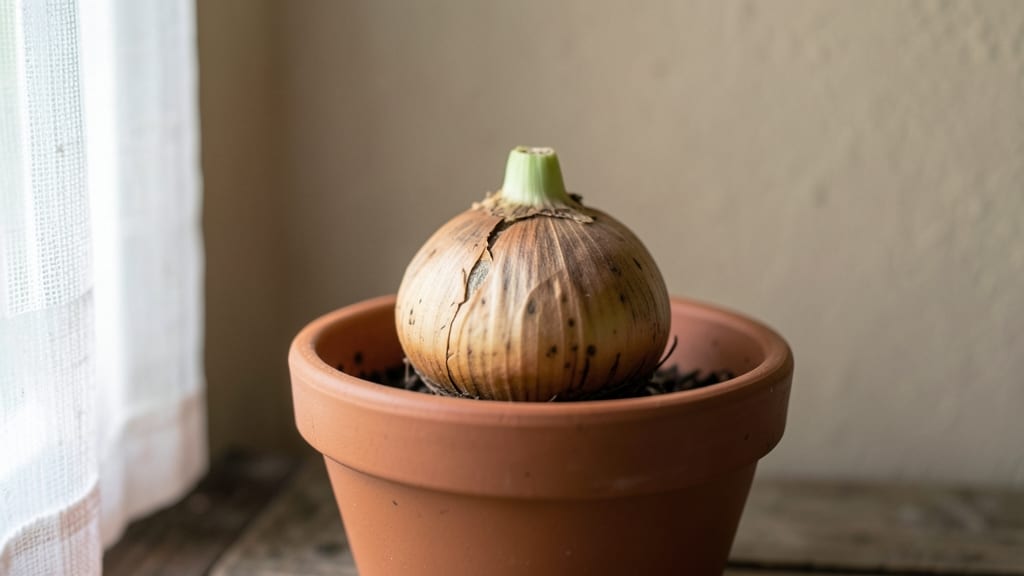
Calla lily bulbs look like thick, fleshy, elongated tubers with a rough, papery brown skin and tapered ends, resembling oversized ginger roots. They typically measure 2–4 inches long and 1–2 inches wide, with a firm, slightly waxy texture when mature.
When you first spot these underground stems, their most striking feature is their ginger-like shape—longer than they are wide, with a smooth but slightly rough, papery skin that peels away easily. 🌱 Unlike potatoes or onions, calla lily bulbs don't have layers or rings; instead, they're solid with a subtle, waxy sheen that indicates freshness.
The tapered ends help distinguish them from rounder tubers, while their size (about the length of a standard AA battery) makes them easy to spot in garden soil or potting mixes.
What's fascinating is how these bulbs grow—they develop from rhizomes (horizontal underground stems) rather than true bulbs, which means they often sprout multiple "fingers" or smaller bulbs along their length.
This growth pattern is a dead giveaway when comparing them to other plants, since most tubers grow in a single, rounded form.
💡 In This Article
- Distinguishing Calla Lily Bulbs from Other Plant Tubers
- How to Identify Healthy Calla Lily Bulbs Before Planting
Distinguishing calla lily bulbs from other plant tubers
Calla lily bulbs stand out immediately when compared to common tubers like potatoes or ginger because of their rhizomatous growth pattern.
While ginger roots grow in clusters with knobby nodes, calla lily bulbs develop as elongated, finger-like extensions from a central stem—often producing 2-4 smaller "daughter bulbs" along their length.
This branching habit is unique; true bulbs (like onions) have concentric layers, while tubers (like sweet potatoes) remain singular and rounded. 🌿
Their papery brown skin is another key identifier—unlike the smooth, waxy surface of ginger or the rough, bumpy texture of taro roots. When you peel back the outer layer, you'll find a firm, cream-colored interior with a subtle, slightly fibrous texture.
Calla lily bulbs also lack the eyes or buds found on potato tubers, which are critical for sprouting. Instead, they develop growth points at their tapered ends where new shoots emerge.
Size plays a crucial role too: calla lily bulbs typically measure 2-4 inches long (about the length of a standard AA battery) and 1-2 inches wide6+ inches in diameter and have a more flattened, shield-like shape.
The weight difference is noticeable too—calla bulbs feel dense and solid, whereas water-storing tubers like taro are often lighter and more porous. 🌱
One of the most telling differences is their internal structure. Cutting a cross-section reveals dense, fibrous flesh without the hollow centers found in some tubers. This solidity explains why calla lily bulbs can survive drought conditions—they store nutrients efficiently in their elongated form.
The absence of air pockets also distinguishes them from aquatic tubers like lotus rhizomes, which have spongy interiors for buoyancy.
For gardeners, this visual and structural knowledge is invaluable when distinguishing between healthy calla lily bulbs and lookalikes. For example, elephant ears (Colocasia) have arrowhead-shaped leaves and produce thick, flat corms rather than elongated tubers.
Meanwhile, ginger roots grow in tight clusters with visible nodes, while calla lily bulbs grow singly or in loose clusters with smooth, tapered ends. These distinctions help prevent misidentification during planting or storage. ✨