
Plants
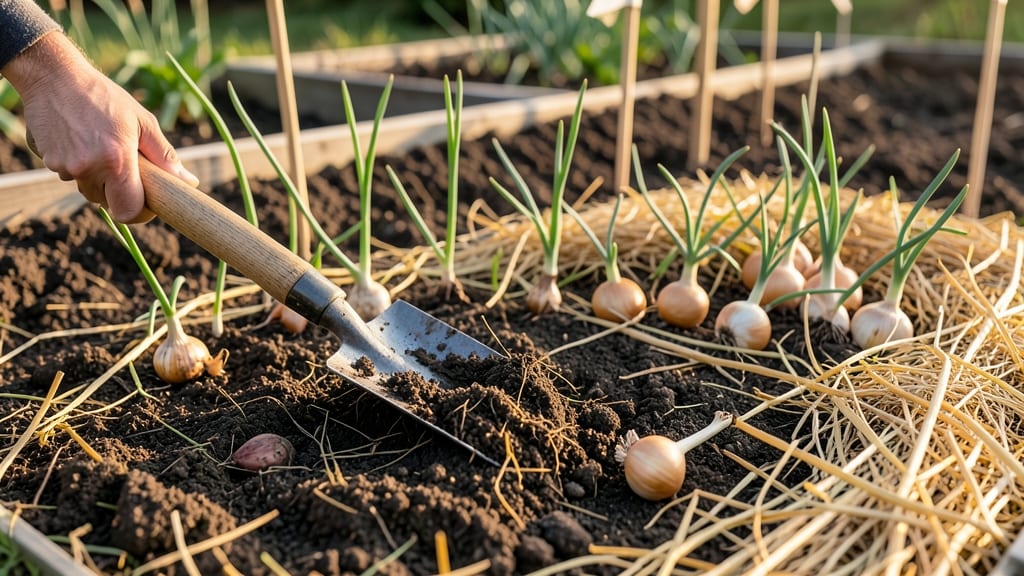
Planting onion bulbs in North Carolina at the right time means the difference between a bumper crop and a sad, stunted harvest.
If you’ve ever watched your 🧅 plants bolt too early or rot in the ground because of a late frost, you know timing is everything. North Carolina’s climate varies wildly from the mountains to the coast, and getting it wrong can leave you with nothing but frustration.
Most gardeners in zones 7a-8b should aim for early spring (February–March) or early fall (August–September), but the exact dates depend on your county’s frost patterns. I’ll break down the best windows, soil prep tips, and how to adjust for short-day vs. long-day onions so you can avoid common mistakes.
By the end, you’ll know exactly when to plant for your region—and how to protect your crop from North Carolina’s unpredictable weather. Let’s get those onions in the ground the right way.
NC onion planting calendar: frost-free dates by county for optimal growth
North Carolina's diverse climate zones create challenges for onion growers. Planting at the wrong time can lead to bolting (premature flowering) or stunted bulbs. The key is understanding your last frost dates and adjusting for short-day vs. long-day varieties.
Let's break down the best planting windows by county to ensure your onions thrive.
Onions are classified as either short-day (southern varieties) or long-day (northern varieties). NC's transitional climate means you can grow both, but timing is critical. Short-day varieties need 10-12 hours of daylight to form bulbs, while long-day varieties require 14+ hours.
Planting too early or late disrupts this process, leading to poor yields.
Below is a county-by-county breakdown of optimal planting windows based on historical frost data. These dates account for USDA zones 5b-8a across NC, ensuring you plant when soil temperatures are ideal (around 50-60°F). Always verify with your local Cooperative Extension Service for microclimate adjustments.
Spring Planting: Aim for 4-6 weeks before last frost. This gives onions time to establish roots before summer heat arrives. Fall Planting: Plant 90-100 days before first frost to allow bulbs to mature before winter. Fall onions often produce larger bulbs due to cooler temperatures.
Here’s your NC Onion Planting Calendar by region, including short-day and long-day variety recommendations:
For spring plantings, prioritize short-day varieties in southern counties (like New Hanover) where longer daylight hours trigger bolting in long-day onions. In the Piedmont and Mountains, you can successfully grow both types by adjusting planting dates. For example, plant
How to adjust planting times for short-day vs. long-day onion varieties in NC
North Carolina’s transitional climate creates challenges for onion growers because it straddles both short-day (southern) and long-day (northern) growing zones. Short-day onions like 'Texas Early White' thrive in NC’s coastal regions (zones 8a-8b), while long-day varieties such as 'Sweet Sandwich' perform better in the mountains (zones 5b-7a).
Choosing the wrong variety for your zone can lead to small bulbs or even bolting before harvest.
Understanding these differences is key because daylight exposure triggers bulb formation. Short-day onions need 12-14 hours of daylight to mature, while long-day onions require 14-16 hours.
In NC’s Piedmont region, where daylight stretches beyond 14 hours by late spring, planting short-day varieties too early will cause them to bolt prematurely. Conversely, long-day onions planted in coastal zones may never fully mature due to insufficient daylight.
Short-Day Onions (Southern)
Long-Day Onions (Northern)
✅ Pros:
- Large bulbs in coastal NC
- Matures in 90-110 days
- Ideal for fall planting
❌ Cons:
- Bolts early in Piedmont/mountains
- Needs earlier planting (Feb-Mar)
- Smaller yields in high-altitude zones
✅ Pros:
- Better for mountain regions
- Tolerates longer daylight
- More reliable in USDA 5b-7a
❌ Cons:
- Slower to mature (120-150 days)
- Needs later planting (Mar-Apr)
- Smaller bulbs in coastal NC
For coastal NC gardeners (e.g., New Hanover, Craven counties), plant short-day varieties like 'Candy' or 'Red Creole' in February-March for a May-June harvest. These varieties excel in USDA zone 8a where shorter daylight hours prevent bolting.
In mountain regions (e.g., Haywood, Mitchell counties), opt for long-day onions such as 'Yellow Sweet Spanish' and plant them 4-6 weeks later (late March-early April) to align with 14+ daylight hours.
NC’s Piedmont region (e.g., Wake, Guilford counties) sits in a transitional zone where both varieties can work—but timing is critical. I’ve had success with intermediate-day varieties like 'Texas Early White' planted in early March for a late June harvest.
These adapt better to NC’s variable daylight patterns. Always check your last frost date (typically mid-March in Piedmont) and plant 4-6 weeks before to ensure bulbs mature before summer heat sets in.
Bulb size expectations vary dramatically: short-day onions in coastal NC can reach 3-4 inches in diameter, while long-day varieties in the mountains often max out at 2-3 inches. To maximize size, use fertile soil (pH 6.0-7.0) and consistent moisture.
In my Raleigh garden, I’ve found that mulching with straw helps retain moisture and prevents bolting during NC’s unpredictable spring rains.
Regional success stories highlight these adjustments: A coastal gardener in Wilmington reported 80% larger bulbs when planting short-day onions in early February, while a mountain grower in Boone achieved consistent harvests with long-day varieties planted in late March.
The key takeaway? Match your variety to your zone and plant at the right time to avoid common pitfalls like premature bolting or stunted growth.