
Planting
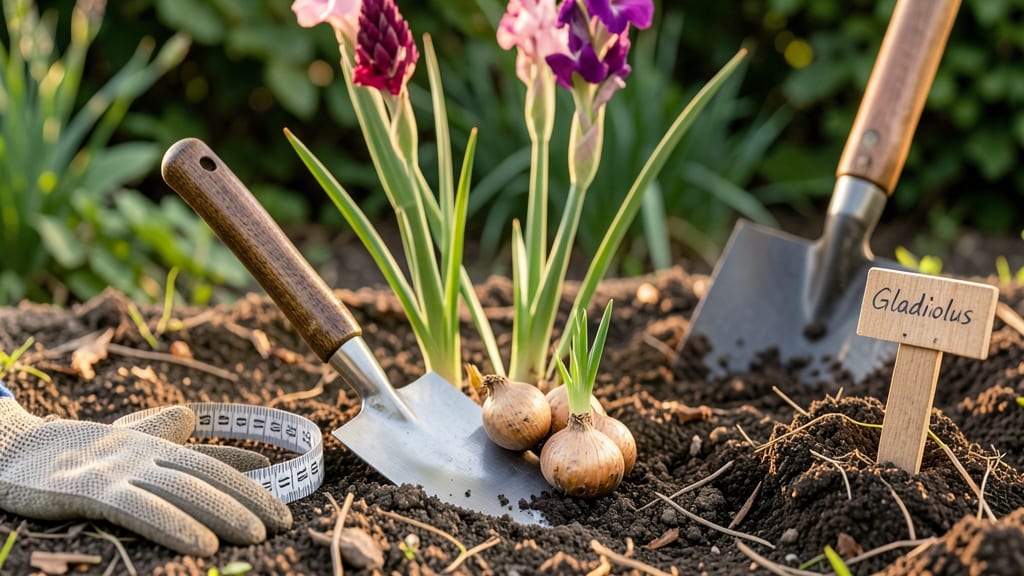
Planting gladiolus bulbs the right distance apart ensures those dramatic, tall spikes of color stand strong all summer—without flopping or fighting for nutrients.
Gladiolus bulbs are showstoppers in any garden, but planting them too close can lead to weak stems, disease, and crowded blooms. Get the spacing right, and you’ll enjoy healthy, crowd-free growth that steals the show.
Most gardeners aim for 4 to 6 inches apart, but soil type, variety, and climate can tweak that rule. Loose soil? You might stretch to 6 inches. Heavy clay? Closer to 4 inches keeps them stable.
Below, I’ll break down the exact spacing for standard, dwarf, and giant varieties, plus how to fix common mistakes—so your gladiolus thrives from bulb to bloom.


Optimal gladiolus bulb spacing by variety and growth habit
Gladiolus bulbs thrive when planted with just the right spacing—too close, and you’ll end up with weak stems and crowded blooms. The key lies in understanding how each gladiolus variety grows and how your local climate affects spacing needs.
Standard varieties need more room than dwarf types, while heavy clay soil may require adjustments to prevent waterlogging. Let’s break down the science behind proper bulb placement for strong stems and airflow circulation, so your glads stand tall and proud all season.
Proper spacing isn’t just about aesthetics—it’s about disease prevention and nutrient access. When bulbs are too close, they compete for water and nutrients, leading to leggy stems and smaller blooms. The rule of thumb?
Give each bulb enough room to develop a sturdy flower spike without crowding its neighbors. In this section, we’ll cover spacing for standard, dwarf, and giant varieties, plus how to adjust for your soil type and climate zone.
Soil type plays a surprising role in spacing. Sandy soil drains quickly, allowing roots to spread wider, while clay soil holds moisture longer, slowing root expansion. In heavy clay, you might need to space bulbs 1-2 inches farther apart to avoid root rot. Meanwhile, humid climates demand wider spacing to improve air circulation and reduce fungal risks. Below, find the exact spacing guidelines tailored to your gladiolus type and growing conditions.
For standard gladiolus varieties (like ‘Green Star’ or ‘Picasso’), aim for 6 inches between bulbs and 12-15 inches between rows. This spacing ensures each bulb has enough room to develop a 4-5 foot spike without competing for nutrients.
If you’re growing dwarf varieties (such as ‘Pygmy’ or ‘Tom Thumb’), reduce spacing to 4 inches between bulbs and 8-10 inches between rows. These compact types are perfect for container gardening or front-of-bed displays.
When planting giant gladiolus varieties (like ‘Black Star’ or ‘White Friendship’), increase spacing to 8 inches between bulbs and 18-24 inches between rows. These towering beauties need extra room to support their 5+ foot stems.
Plant them in groups of 3-5 for a dramatic focal point, and always use sturdy support stakes to prevent flopping in wind or rain.
Adjust your spacing based on soil drainage. In sandy soil, roots spread quickly, so you can plant slightly closer (e.g., 5 inches apart for standard varieties). However, in heavy clay soil, increase spacing by 2 inches between bulbs and
Common gladiolus spacing mistakes and how to fix them
Even experienced gardeners sometimes make spacing mistakes with gladiolus bulbs. Overcrowding, uneven planting, or planting too deep can stifle growth and reduce those stunning flower spikes you love. The good news? Most issues are easy to fix with a little adjustment—even mid-season.
Let’s tackle the 5 most common spacing errors and how to correct them without losing your gladiolus blooms for the year. Proper spacing ensures strong stems, better airflow, and fewer disease problems like botrytis blight.
Standard spacing: 4-6 inches apart (10-15 cm) and 4-6 inches deep. Dwarf varieties can be planted 3-4 inches apart, while giant varieties need 6-8 inches apart.
Why it matters: Too close = weak stems, disease, and fewer blooms. Too far = wasted space and poor visual impact.
First, let’s address overcrowding, the #1 spacing mistake. When bulbs are planted too close, they compete for nutrients and sunlight, resulting in thin, leggy stems and smaller flowers. If you’ve already planted too tightly, gently separate the bulbs by hand, trimming excess foliage to reduce stress.
Next, uneven planting depth causes uneven growth. Some bulbs may emerge too shallow, while others sink too deep. To fix this, dig up bulbs planted at the wrong depth, replant them at 4-6 inches deep, and water thoroughly. This ensures all bulbs have equal access to moisture and nutrients.
Skipping soil prep is another hidden spacing mistake. Gladiolus bulbs need well-draining soil mixed with compost. If your soil is heavy clay or sandy, amend it before replanting. Add a 2-inch layer of compost around each bulb to improve drainage and root development.
For over-deepened bulbs, which can rot or fail to sprout, carefully lift the bulbs and replant them at the correct depth. If the season is already advanced, focus on mulching heavily to protect shallow roots and encourage new growth.
Finally, planting in clusters without spacing creates a "forest" of foliage with no airflow. Thin out crowded clusters by removing every other bulb, leaving 4-6 inches between remaining plants. This opens up the bed for better airflow and reduces fungal diseases.