
Plants
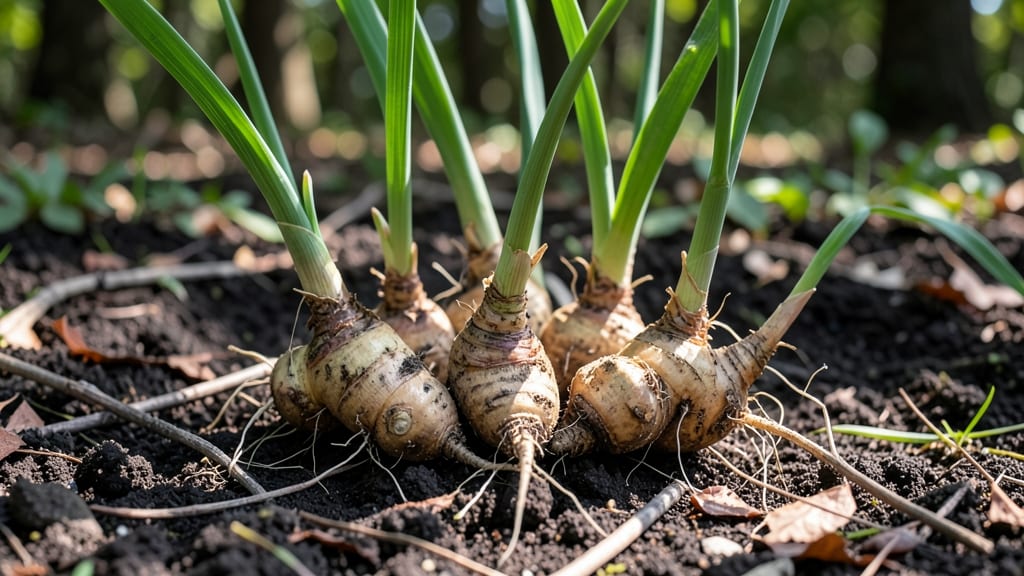
Iris bulbs aren't bulbs at all—they're fleshy, horizontal rhizomes that look nothing like tulip bulbs. 🌱 These thick, finger-like roots grow just below the soil surface, often with a slight upward curve and a rough, leathery texture.
Their size varies from 2 to 6 inches long, with a small, circular growth point at the top where new shoots emerge.
One of the easiest ways to spot them is their location: iris rhizomes spread outward from the plant's center, while true bulbs (like daffodils) grow vertically below the soil.
They also have a distinctive color—often tan, brown, or even slightly greenish—with a firm, sturdy feel that makes them easy to handle during division. Unlike soft bulbs, iris rhizomes can handle rougher treatment when replanting.
When you dig them up, you'll notice the top side is usually smoother and slightly lighter in color, while the bottom side has root attachments. This orientation matters when replanting—always keep the growth point facing upward.
The texture is thick and rubbery, designed to store moisture and nutrients for the plant's next growing season.
If you're comparing them to other plants, think of iris rhizomes as cousins to ginger roots—thick, knobby, and spreading horizontally. Unlike tulip bulbs, which are round and layered, iris rhizomes are elongated and irregular, making them instantly recognizable once you know what to look for.
This unique shape is what gives irises their hardy, long-lived nature.
Root Causes Of Iris Bulb Confusion
Understanding why iris plants appear to have bulbs—or something bulb-like—requires diving into their unique biology. Unlike true bulbs (such as tulips or onions), irises grow from rhizomes, thick, horizontal underground stems. Here’s why their structure can be so misleading—and how nature plays a role.
Irises don’t form traditional bulbs (compact layers of fleshy scales). Instead, they develop rhizomes—stout, creeping stems that store nutrients and produce roots and shoots. Here’s why this causes confusion: - Visual Similarities: Rhizomes resemble bulbs because they’re thick, fleshy, and grow underground.
Their topside "neck" (where leaves and flowers emerge) can mimic the stem of a bulb. - Growth Pattern: True bulbs grow vertically (like an onion), while iris rhizomes spread horizontally.
This lateral growth makes them harder to spot until they’re mature. - Seasonal Changes: In late summer, rhizomes swell with stored energy, making them look more bulb-like. Without digging, gardeners might assume they’re dealing with a different plant entirely.
Pro Tip: 💡 Run your finger along the top of an iris "bulb." If it feels rough and segmented (like a segmented worm), it’s a rhizome—not a bulb!
Irises evolved rhizomes as a survival strategy in their native habitats (Eurasia and North Africa).
Here’s how their structure serves them: - Water & Nutrient Storage: Rhizomes act as reservoirs, allowing irises to thrive in drought-prone or rocky soils where true bulbs might fail. - Vegetative Propagation: Each segment of a rhizome can sprout new plants, enabling rapid spread.
This is why iris clumps expand yearly—it’s not a bulb dividing, but a rhizome elongating! - Cold Hardiness: Unlike delicate bulbs, rhizomes insulate roots during winter, making irises resilient in zones where other plants struggle.
Fun Fact: 🌡️ Some iris species (like Iris germanica) develop pseudo-bulbs—thickened underground stems—but these are still rhizome-derived, not true bulbs.
Even with the right plant, how you handle irises can make their rhizomes look like bulbs—or worse, cause them to rot. Common gardening errors include: - Planting Depth: Burying rhizomes too deep (below 2 inches) suffocates them, while planting them too shallow exposes them to drying out.
Both scenarios can distort their natural shape. - Overwatering: Rhizomes hate soggy soil. Excess moisture causes them to swell abnormally, mimicking the puffy appearance of a bulb.
Drainage issues are the #1 culprit for "bulb-like" deformities. - Improper Division: Cutting rhizomes incorrectly (e.g., severing the growing tip) can lead to malformed regrowth, making them look like failed bulbs.
Actionable Fix: ⏰ After blooming (late summer), lift and divide iris clumps. Discard old, woody rhizomes and replant healthy segments with the neck exposed—this prevents confusion and encourages proper growth.
Sometimes, what looks like an iris "bulb" is actually a rhizome under siege. Common issues include: - Soft Rot (Erwinia): A bacterial infection causes rhizomes to mushy and discolored, mimicking a rotting bulb.
Look for foul smells and slimy texture. - Rhizome Borers: Insect larvae tunnel into rhizomes, creating hollowed-out, irregular shapes that resemble damaged bulbs. - Fungal Infections (e.g., Rhizoctonia): These cause blackened, sunken spots on rhizomes, distorting their natural form.
Prevention Tip: ✨ Plant irises in full sun and well-draining soil to reduce fungal risks. Inspect rhizomes annually for pests—healthy ones should be firm, plump, and free of holes.
Not all irises look the same!
Some varieties have rhizomes that closely resemble bulbs due to: - Thickened Underground Stems: Species like Iris xiphium (dwarf iris) have smaller, more bulb-like rhizomes compared to bearded irises. - Pseudo-Bulb Formation: Certain tropical irises (e.g., Iris ensata) develop tuber-like rhizomes that store water, blurring the line between bulb and rhizome. - Hybrid Variations: Garden hybrids may inherit traits from both rhizomatous and bulbous ancestors, leading to unpredictable underground structures.
Key Takeaway: 🎯 If you’re unsure, dig up a sample. A true iris rhizome will have visible nodes (growth points) along its length, while a bulb will have concentric layers.
Fixing Iris Bulb Confusion
Now that you understand the differences between iris rhizomes and true bulbs, let’s tackle how to identify and care for them correctly. Misidentifying iris bulbs can lead to improper planting, stunted growth, or even plant death—but don’t worry! With a few simple steps, you can keep your irises thriving.
Before digging in, visually inspect your iris bulbs to determine whether you’re dealing with rhizomes (horizontal, fleshy stems) or true bulbs (round, layered underground structures).
- For Iris Rhizomes (Most Common):
- Look for thick, flat, finger-like growths with a pointed end (the "neck").
- They often have roots growing downward from the bottom and fan-like leaves emerging from the top.
- Pro Tip: 💡 If it looks like a flat, creeping root, it’s a rhizome—irises almost always grow this way!
- For True Bulbs (Rare in Irises):
- True bulbs are round, layered, and onion-like.
- If you’re unsure, check the plant’s history—most "iris bulbs" sold are actually rhizomes.
- Exception: Some hybrid irises or mislabeled plants might resemble bulbs, but genuine iris rhizomes dominate.
Since most irises grow from rhizomes (not true bulbs), planting them wrong is the #1 mistake. Follow these steps for success:
⏰ Best Planting Time
- Fall (September–October) is ideal—rhizomes need 6–8 weeks to establish roots before winter.
- Avoid spring planting—rhizomes may rot if soil is too wet.
👨🍳 Digging & Prepping
- Remove old foliage (but leave some leaves until they turn brown—this feeds the rhizome!).
- Separate clumps if they’re overcrowded (dig up, split, and replant sections).
- Trim roots to 3–4 inches if they’re too long (but keep the rhizome intact).
🥘 Planting Depth & Position
- Depth: Rhizomes should sit partially exposed—only the top ⅓ should be covered with soil.
- Mistake Alert: 🚫 Burying them too deep = rot.
Leaving them too exposed = drying out. - Direction: The pointed end (neck) should face upward, and the roots should hang downward. - Spacing: Plant 12–24 inches apart for full, airy growth.
🌡️ Soil & Sunlight Needs
- Soil: Well-draining, slightly sandy mix (irises hate soggy roots).
- Sunlight: Full sun (6+ hours/day)—partial shade may reduce blooms.
- Pro Tip: ✨ Add gravel or coarse sand to the planting hole to improve drainage.
| Mistake | Why It’s Bad | Fix It Like This |
|---|---|---|
| Planting too deep | Rhizomes rot from lack of air | Only cover top ⅓ of the rhizome. |
| Overwatering | Causes fungal diseases | Water only when soil is dry (1–2x/week). |
| Not dividing clumps | Crowded rhizomes = fewer flowers | Dig up every 3–4 years and split. |
| Using rich, heavy soil | Suffocates roots | Mix in compost or perlite for airflow. |
| Cutting leaves too soon | Stops energy storage for next year | Wait until brown and crispy before trimming. |
Keep your irises blooming year after year with these low-effort habits:
- 💡 Mulch Lightly: Use straw or pine needles (not thick mulch) to retain moisture without smothering rhizomes.
- 🔥 Fertilize Smart: Apply a balanced, low-nitrogen fertilizer (like 5-10-10) in early spring—too much nitrogen = leafy, no flowers.
- 🌡️ Watch for Pests: Slugs and iris borers love rhizomes. Handpick slugs or use neem oil for borers.
- ✨ Divide Every Few Years: Overcrowded rhizomes = smaller blooms. Spring or fall is best for replanting sections.
- 📊 Mark Your Planting Spots: Use stakes or flags so you don’t accidentally dig up rhizomes when weeding.
By following these steps, you’ll never confuse iris rhizomes with true bulbs again—and your irises will reward you with bold, vibrant blooms for seasons to come! 🌸💜
Frequently asked questions
Are iris rhizomes the same as true bulbs like tulips?
No, they're completely different! Iris rhizomes are flat, horizontal, and finger-like (2-6 inches long), while tulip bulbs are round, layered, and onion-shaped. The key difference: rhizomes grow sideways just below the soil surface, while true bulbs grow vertically underground. Think of rhizomes as ginger roots rather than bulbs.
How can I tell if I'm looking at a healthy iris rhizome?
Healthy iris rhizomes should be firm, plump, and tan/brown with a slightly rough texture. Look for a small circular growth point at the top (where leaves emerge) and roots growing downward. Avoid rhizomes that feel mushy, smell foul, or have black spots—these signs indicate rot or disease.
Can I plant iris rhizomes too deep in the soil?
Yes, planting rhizomes too deep (below 2 inches) is a common mistake. They need to be partially exposed—only cover the top ⅓ with soil. Burying them completely suffocates the rhizome and causes rot. The pointed end (neck) should always face upward, and roots should hang downward for proper growth.
What's the difference between iris rhizomes and other underground plant parts? Iris rhizomes are unique because they're thick, flat, and segmented with visible nodes. Compare them to:
- Tubers (like potatoes): Round and knobby, not elongated
- Corms (like crocuses): Solid and bulb-like, without segments
- True bulbs (like daffodils): Round with concentric layers
The segmented, horizontal shape is what makes iris rhizomes instantly recognizable once you know what to look for.
Why do some iris rhizomes look different from others?
Variations in iris rhizomes come from different species and growing conditions. Some may appear smaller or more bulb-like (like dwarf iris varieties), while others develop thicker, more segmented rhizomes in nutrient-rich soil. Age also plays a role—older rhizomes become woody and less productive, while younger ones are plump and firm. Always plant the healthiest-looking segments.