
Plants
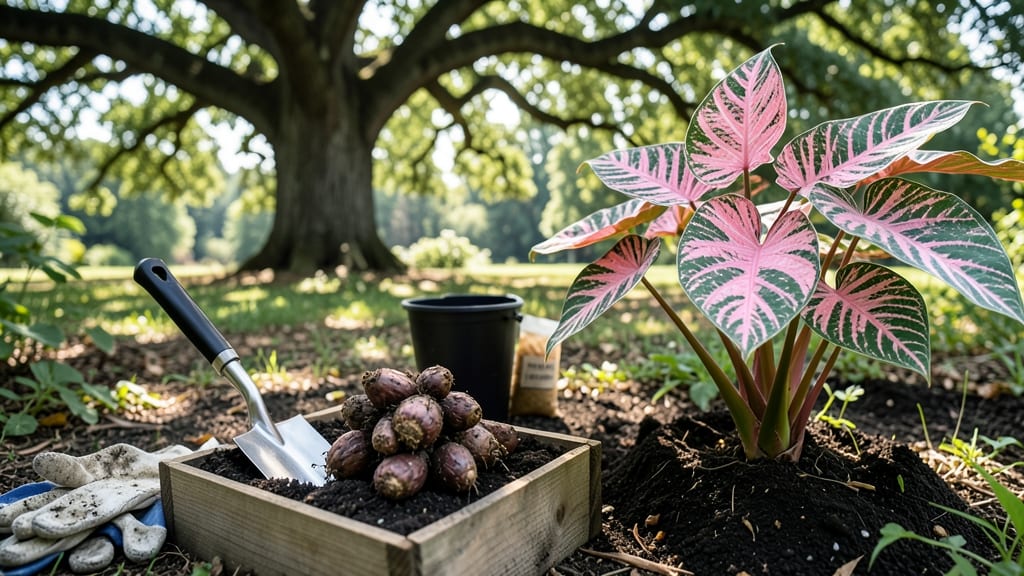
Planting caladium bulbs in Texas after your last frost date — usually between mid-March and early April — is the secret to show-stopping summer foliage that lasts all season.
Texas gardeners know the struggle—scorching summers can turn delicate plants into crispy casualties, but caladiums thrive in the heat when planted just right. Timing these tropical beauties correctly means vibrant foliage all season long, but get it wrong, and you’ll spend June chasing wilted leaves instead of admiring them.
Your USDA 8a-11 zone gives you flexibility, but the key is waiting for soil to warm to 65°F and all frost danger to pass.
North Texas gardeners should aim for early April, while South Texas can start as early as late February—just don’t rush it, or you’ll risk stunted growth from lingering cool snaps.
Below, I’ll walk you through the exact planting schedule by region, soil prep tricks to beat Texas heat, and how to keep your caladiums lush and thriving from spring through fall—no guesswork, just stunning results.
Optimal Texas planting windows for caladium bulbs: month-by-month heat tolerance guide
Timing is everything when planting caladium bulbs in Texas. These tropical beauties demand precise conditions to flourish—plant too early, and frost will kill them; too late, and 100°F+ heat can scorch foliage before it even emerges.
Texas’ diverse climate zones (USDA 8a–11) mean North Texas and South Texas have wildly different windows for success.
Caladiums thrive in warm soil temperatures (65°F+) and humid air, but they’re frost-sensitive. In East Texas, where humidity lingers, bulbs can go in as early as mid-February in sheltered spots.
Meanwhile, West Texas gardeners must wait until mid-April to avoid wilting under dry heat. Let’s break it down by month and zone to keep your foliage vibrant all summer.
Pro Tip: Use a soil thermometer to confirm 65°F+ soil temps before planting—this is your green light to start. In North Texas (Zones 8a–8b), wait until April 15 at the earliest; in South Texas (Zones 9a–11), you can plant as early as March 1 in protected microclimates.
In North Texas, where last frost dates hover around March 15, rushing to plant before April 15 risks frost damage.
Instead, wait until soil warms consistently—test it with a thermometer for accuracy. South Texas gardeners have a head start, but February plantings in exposed areas can still fail if nights dip below 50°F.
For East Texas, prioritize humidity-loving varieties like ‘White Queen’ or ‘Flamingo Pink’—these handle the region’s muggy summers better. In West Texas, opt for drought-tolerant types such as ‘Carolyn Wharton’ and mulch heavily to retain moisture.
Both regions should avoid planting after May 15, as peak summer heat (June–August) can stress bulbs before they establish.
Watch for leaf scorch if planting in full sun—caladiums need partial shade (4–6 hours of morning sun max). In humid East Texas, space bulbs 12–18 inches apart to prevent fungal diseases; in dry West Texas, reduce spacing to 8–12 inches and water deeply twice weekly during heatwaves.
If you miss the ideal window, don’t panic! Container planting extends your timeline—pop bulbs into pots in late April and move them to shaded patios once soil warms. Just ensure containers have drainage holes to avoid root rot in Texas’ heavy clay soils.
Remember: Caladiums are summer’s showstoppers, but they demand patience. Plant at the right time, and you’ll enjoy lush foliage from June through October—just in time for Texas’ hottest months.
Start your schedule now, and your garden will thank you with bold, tropical splashes of color all season long. 🌿
Pre-planting prep for Texas heat: soil, sun, and spacing secrets to maximize caladium success
Texas’ heavy clay soils and intense humidity demand special prep before planting caladium bulbs. These tropical beauties need well-draining soil to prevent bulb rot, while morning sun and afternoon shade protect their delicate leaves from scorching.
Without proper prep, your $20 investment in bulbs could turn into a sad, wilted mess by summer’s peak.
Start by testing your soil’s drainage capacity. Dig a 6-inch hole, fill it with water, and time how long it takes to drain. If it takes more than 30 minutes, you’ve got clay-heavy soil that needs amending.
Mix in 2-3 inches of compost or aged manure plus sand (50/50 ratio) to improve aeration. This mimics their native tropical forest habitat where water drains quickly.
⚠️ callout warning ⚠️
Spacing is just as critical as soil in Texas’ humid summers. Crowded bulbs trap moisture, creating the perfect conditions for fungal diseases like botrytis. Plant bulbs 6-8 inches apart in rows 12 inches apart to allow airflow.
For container growing, use one bulb per 6-inch pot with drainage holes—this prevents water from pooling at the bulb’s base.
Texas’ unpredictable rainfall means you’ll need to mulch heavily after planting. Apply 3 inches of mulch (straw or pine bark) to retain moisture during dry spells while keeping roots cool.
Avoid wood chips, which can compact and suffocate bulbs. Replenish mulch every 4-6 weeks to maintain its protective barrier against heat and drought.
One final pro tip: Soak bulbs in a 10-10-10 fertilizer solution (1 tbsp per gallon of water) for 30 minutes before planting. This jumpstarts root growth in Texas’ fast-warming soils. Plant bulbs 2 inches deep—deeper in sandy soils, shallower in clay—to ensure they’re stable but not waterlogged.
With these prep steps, your caladiums will burst into vibrant foliage by Memorial Day, thriving through Texas’ brutal summers without a single crispy leaf in sight. The key? Drainage, shade strategy, and proper spacing—Texas-style. 🌿