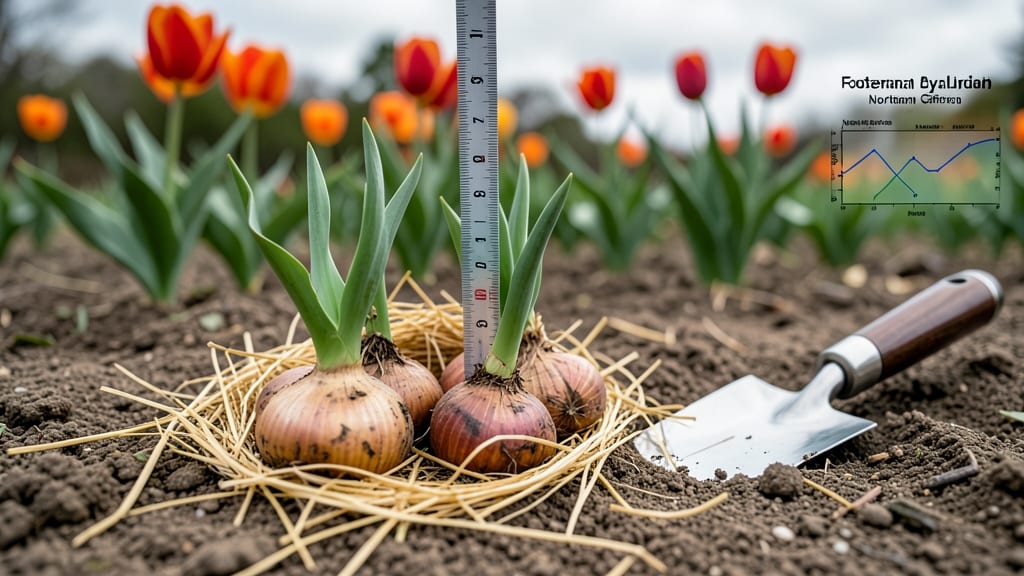
Planting tulip bulbs in Northern California between October and December ensures they’ll root before winter sets in, giving you show-stopping blooms next spring.
If you’ve ever waited a full year for tulips to bloom—or worse, watched them rot in soggy soil—you know timing is everything. The secret? Planting 6 weeks before your first frost, when soil temps hover around 50–60°F, lets bulbs establish roots without waking too early.
Northern California’s USDA zones 7b–9b mean frost dates vary wildly—from early December in the Bay Area to late January inland. That’s why I’ll break down the exact frost-date formula for your microclimate, plus how to adjust for wet winters and gopher threats.
By the end, you’ll know not just when to plant, but how to prep your soil, choose the right varieties, and protect your bulbs so they burst into color April through June—without a single hiccup.
🌷
When to Plant Tulip
Jan
🌱
Feb
❄️
Mar
🌱
Apr
🌱
May
🌸
Jun
☀️
Jul
☀️
Aug
☀️
Sep
🌱
Oct
🌷
Nov
🌷
Dec
🌷
Northern California tulip planting calendar: frost-date formula for perfect timing
Northern California’s USDA zones 7b-10a create unique challenges for tulip growers. Unlike colder climates, our mild winters and variable frost dates demand precision timing. Plant too early, and bulbs may rot in wet soil; too late, and they won’t root before winter dormancy.
The secret? Calculating your local frost window and soil temperature thresholds of 50-60°F.
Most gardeners in the Bay Area (Zone 9) can plant tulips as late as mid-December, while Sacramento (Zone 9b) should aim for early November. Mountain regions like Truckee (Zone 7b) need bulbs in the ground by late October.
This regional variation is why a frost-date formula tailored to your microclimate is essential for success.
Here’s how to determine your perfect planting window: First, find your average first frost date (typically January 15 in most of Northern CA). Then, count back 6-8 weeks—this gives you your ideal planting range.
For example, if your frost date is January 10, plant between November 15 and December 1.
Soil temperature plays an equally critical role. Tulip bulbs need consistent soil temps between 50-60°F to establish roots before dormancy. Use a soil thermometer to verify conditions. If your soil stays above 60°F past November, delay planting until temperatures drop.
Northern California’s coastal areas (like San Francisco) often experience warmer microclimates than inland regions. This means coastal gardeners may need to plant 2-3 weeks later than those in Sacramento or Davis. Elevation also matters—areas above 2,000 feet (like the Sierra foothills) should plant 4-6 weeks earlier.
Don’t rely solely on calendar months. Check the National Weather Service’s frost probability maps or local CoCoRaHS weather stations for real-time data. Even a 10°F difference in nighttime temps can shift your ideal planting window by 2-3 weeks.
| Region |
USDA Zone |
Avg. First Frost |
Ideal Planting Window |
Soil Temp Threshold |
Key Consideration |
| Bay Area (San Francisco) |
9b-10a |
January 15 |
Mid-December to early January |
55-60°F |
Warmer microclimates; delay if soil >60°F |
| Sacramento Valley |
9a-9b |
January 10 |
Early November to mid-December |
50-55°F |
Cooler nights; plant earlier |
| Northern Coast (Redwoods) |
8b-9a |
December 20 |
Late October to November 15 |
48-52°F |
Higher rainfall; ensure drainage |
| Sierra Foothills (2,000+ ft) |
7b-8a |
December 1 |
Late September to early November |
45-50°F |
Cooler temps; plant earliest |
| Central Valley (Modesto) |
9b |
January 5 |
Early November to December 15 |
52-58
Best tulip varieties for Northern California climates (and when to plant them)
Northern California’s mild winters and long growing seasons create perfect conditions for tulips—but not all varieties thrive here. The right choice depends on your microclimate and desired bloom time.
For USDA zones 7b-9b, focus on hardy types like Darwin Hybrids and Fosteriana, which handle our wet winters better than delicate Dutch varieties.
Timing is critical: Plant bulbs 6-8 weeks before your first frost (typically October-November in most of Northern CA). This ensures roots establish before winter, while avoiding early planting that can cause rot. For early blooms, prioritize Fosteriana (late winter) or Greigii (spring).
🌷 Top 5 Tulip Varieties for Northern CA + Planting Windows
- Darwin Hybrids (e.g., 'Paul Scherer') – October-November | 6-24" | Late spring blooms | Thrives in full sun; drought-tolerant once established.
- Fosteriana (e.g., 'Red Emperor') – October | 18-24" | Early spring | Cold-hardy; large cup-shaped flowers for winter interest.
- Greigii (e.g., 'Red Riding Hood') – November-December | 12-18" | Mid-spring | Striped petals; loves well-draining soil to prevent rot.
- Fringed (e.g., 'Queen of Night') – November | 15-20" | Early spring | Lacy edges; perfect for cut flowers.
- Parrot Tulips (e.g., 'Black Parrot') – October-November | 16-20" | Mid-spring | Exotic, feathered blooms; needs protection from heavy rain.
💡 Pro Tip: For extended blooms, mix early (Fosteriana) and late (Greigii) varieties in the same bed.
Northern CA’s coastal vs. inland differences matter: Coastal areas (e.g., San Francisco) can plant later (November) due to milder winters, while Sacramento may need to plant by mid-October. Test soil temperature—aim for 50-60°F at planting depth (6-8"). Use a soil thermometer if unsure.
To extend blooms through early spring, add a 2-inch layer of mulch (straw or shredded bark) after planting. This insulates bulbs from temperature swings and preserves moisture. Avoid organic mulches like wood chips near stems, as they can cause rot. Instead, create a donut-shaped barrier around each bulb.
For container gardening, choose dwarf varieties like 'Tiny Pink' or 'Tiny Star' (6-12" tall) and plant in well-draining pots with sand or perlite mixed into soil. Containers warm faster in spring, triggering earlier blooms—ideal for urban gardens with limited space.
Once planted, water deeply once and then only when soil feels dry 1-2 inches below the surface. Overwatering in winter can drown bulbs, while underwatering stresses them. In late winter, resume weekly watering as shoots emerge—this jumpstarts root growth for vibrant blooms.
★★★★★5.0(11 reviews)
|